Astana Hub IT companies billing foreign clients: tax incentives and getting paid
Kazakhstan's Astana Hub technology park offers participants exemptions from corporate income tax and other taxes on qualifying IT activities. Many participants sell mostly abroad. Their foreign revenue still moves through Kazakhstan's currency control system.
- Published
- Reading time
- 1 min read
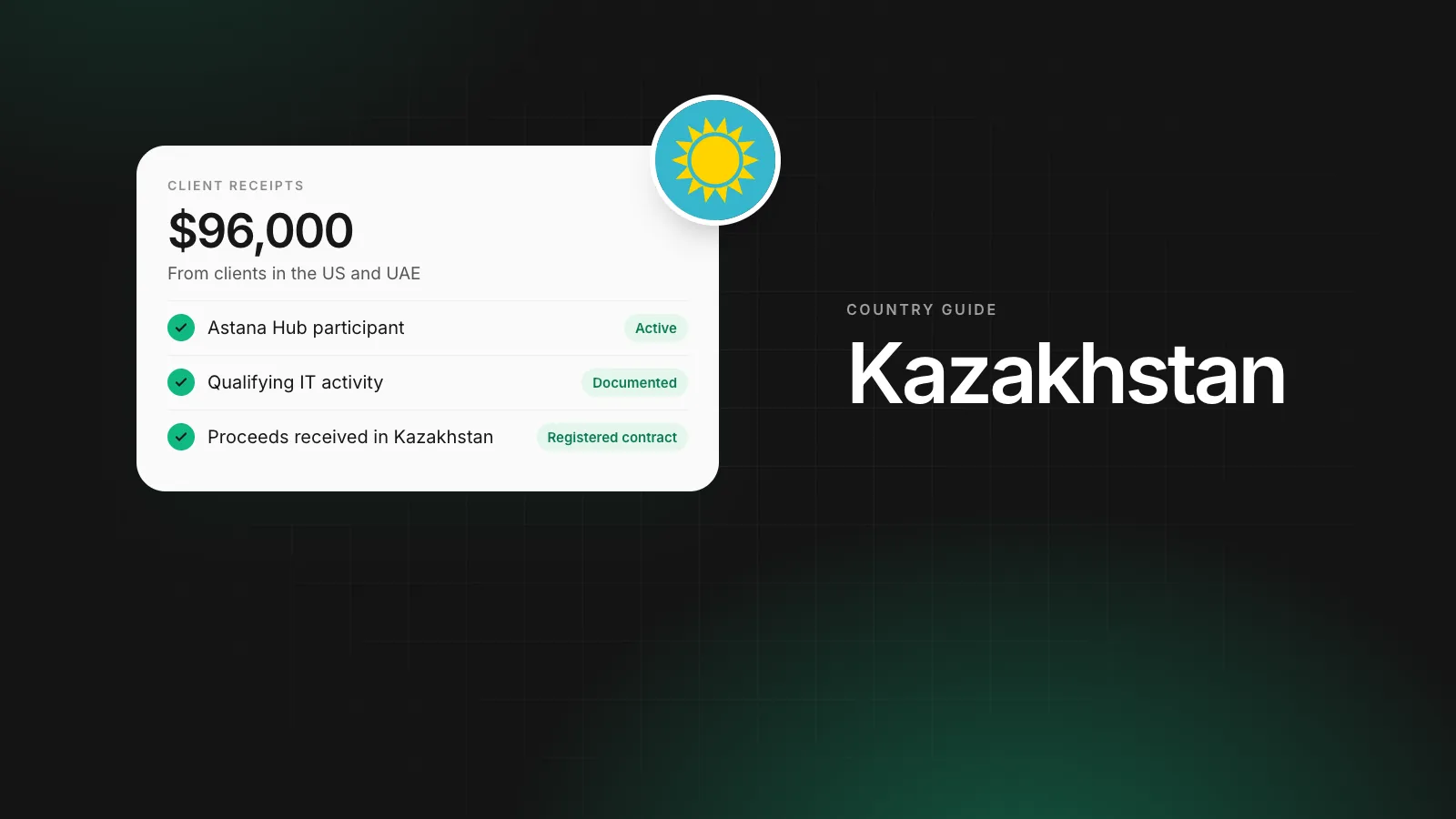
An Astana fintech software company is an Astana Hub participant. It builds payment systems for a client in Dubai and an analytics tool for a startup in Austin. Its income from these qualifying IT activities is exempt from corporate income tax under the Hub's rules. Its contracts are registered with its bank, and its dollars arrive at a Kazakh bank account.
The incentives
Astana Hub, Kazakhstan's international technology park, offers participants:
- exemption from corporate income tax on income from qualifying IT activities,
- exemptions from VAT on certain supplies and from some social and property taxes,
- simplified visa and work permit rules for foreign employees.
Participants must carry out activities on the approved list and meet the participation conditions.
Separate the income
Incentives apply to qualifying activities only. A participant that also earns other income, such as hardware resale or unrelated consulting, pays normal tax on it. Separate revenue streams in your accounts and contracts.
Foreign payments
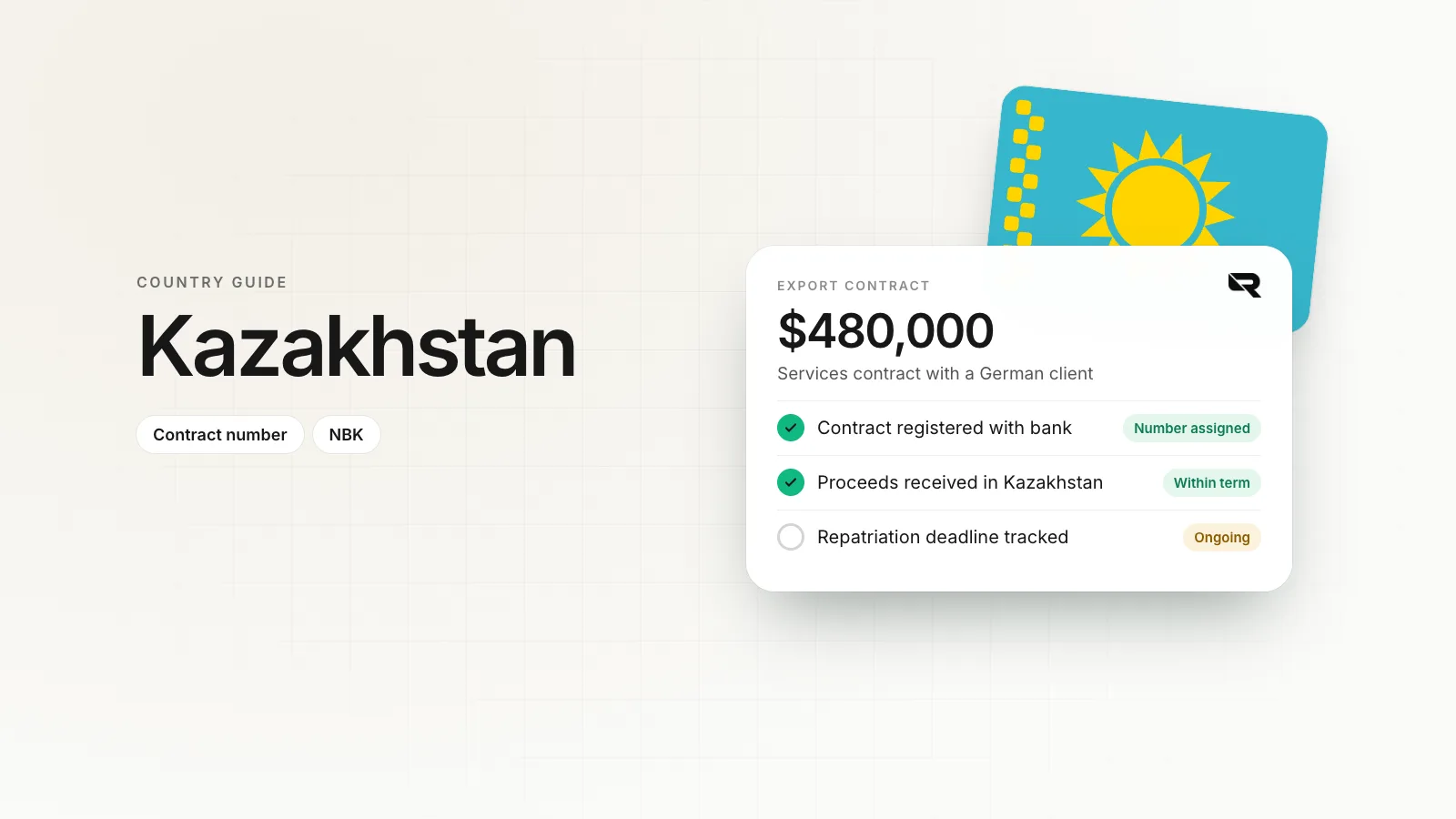
Participants receive foreign revenue through Kazakh banks. Export contracts above the threshold are registered with the bank under currency control rules, and proceeds must arrive within the repatriation term.
Converting tenge
Dollar revenue and tenge costs mean exchange rate exposure. Converting a planned amount ahead of payroll helps.
Paying into Kazakhstan: the local rail
| What | Detail |
|---|---|
| Local rail | Instant payments over the National Payment System |
| Run by | National Payment Corporation of the National Bank of Kazakhstan |
| Settlement | Seconds, 24/7 |
Source: National Bank of Kazakhstan: payment systems. Checked when this guide was last updated; the scheme's own page has the current figures.
Where Rivet fits
Rivet opens business accounts for registered companies after verification. Kazakhstan-registered Astana Hub participants follow currency control and repatriation rules, so check with your bank before receiving funds abroad. Participants' companies registered elsewhere can use a Rivet business account with US account details on every plan. Rivet is not a bank; regulated partner institutions hold the funds.
Questions people ask
What incentives do Astana Hub participants get?
Exemptions from corporate income tax, VAT on certain supplies and some social and property taxes on income from qualifying IT activities, under the participation rules.
Do incentives apply to all income?
Only to income from qualifying activities on the approved list. Other income is taxed normally.
How do participants receive foreign payments?
Through Kazakh banks, with export contracts above the threshold registered under currency control rules.
Can participants hire foreign staff more easily?
Astana Hub offers simplified visa and work permit arrangements for participants' foreign employees.
Sources
Rashidatou writes Rivet's guides to how money moves between countries: the payment rails, what each one costs, and the account details a company needs to get paid in another currency. Every figure in Rashidatou's articles is traced to the scheme rulebook, the regulator or the provider's published price list, and those sources are listed at the end.
More from Rashidatou K. →This article is general information, not legal, tax or financial advice. Rules and fees change; check the sources above and the provider’s current terms before you act on them.
- kazakhstan
- astana hub
- it companies
- tax incentives
- usd
- kzt