Japan consumption tax on cross-border digital services: 2025 platform rules
Foreign sellers of digital services to Japan face consumption tax rules that split business and consumer sales. Since April 2025, large platforms collect the tax on some app and software sales by foreign developers.
- Published
- Reading time
- 2 min read
Google's suggestions for "Japan e-invoicing" include "japan invoice system 2024" and "does japan have e invoicing". The questions sit next to a bigger one for anyone buying or selling software across the border: who pays Japanese consumption tax on digital services?
The split
| Sale | Who accounts for consumption tax |
|---|---|
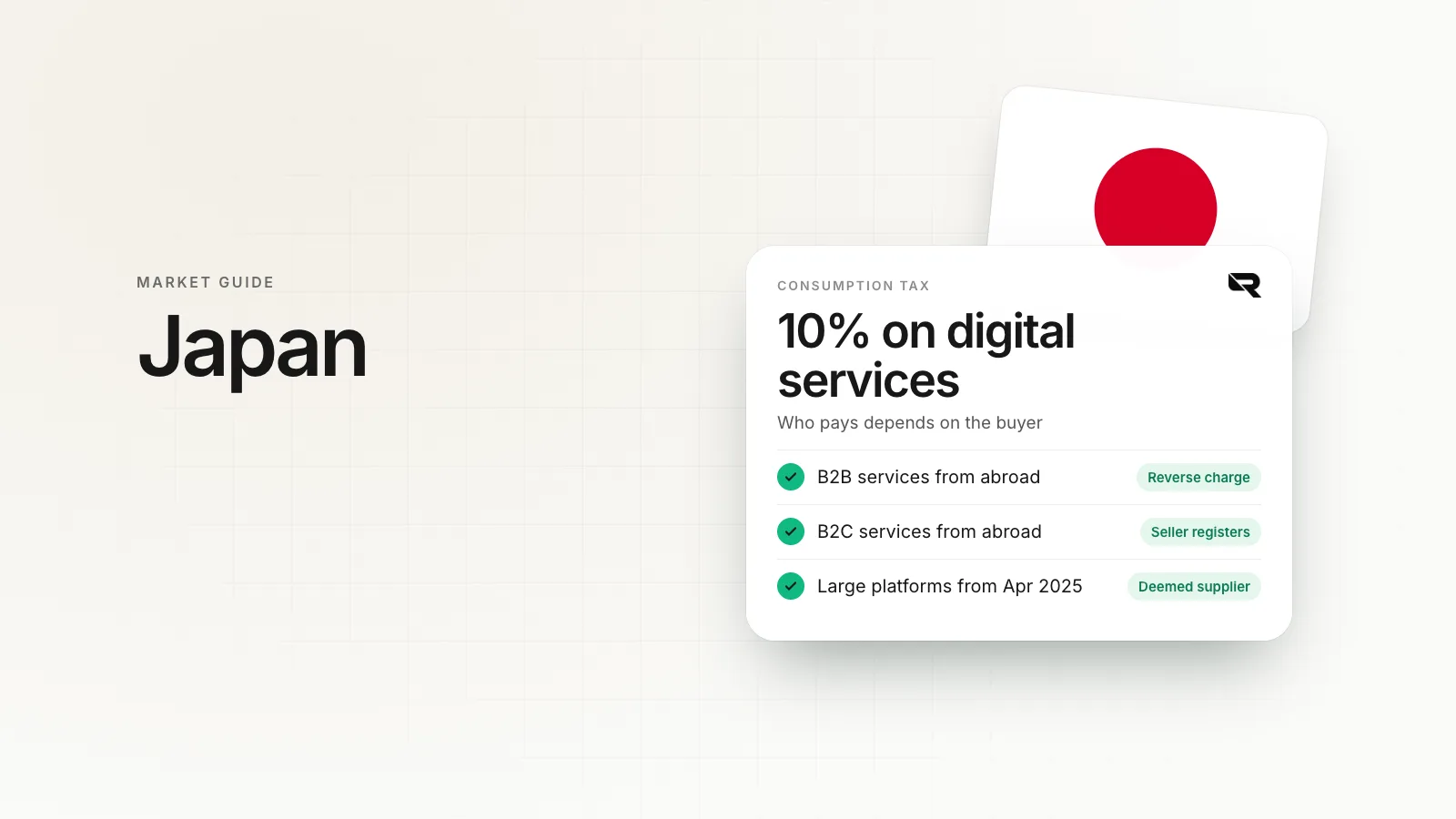
| Foreign business to Japanese business (B2B digital services) | Japanese buyer, under the reverse charge |
| Foreign business to Japanese consumer (B2C) | Foreign seller, which registers in Japan |
| App or digital sale through a large designated platform (from April 2025) | The platform, as deemed supplier |
The standard rate is 10%.
The April 2025 platform rule
Japan's 2024 tax reform made large platforms collect consumption tax on digital services that foreign developers sell to Japanese consumers through them. The rule applies to platforms designated by the NTA with more than 5 billion yen of such sales a year, and took effect on 1 April 2025. A foreign developer selling only through such a platform may no longer need to charge the tax itself on those sales.
For Japanese buyers
A Japanese company paying a foreign SaaS provider should check two things:
- Whether the reverse charge applies to its purchase, which depends on the company's taxable sales ratio.
- Whether the supplier is a registered qualified invoice issuer, which affects input tax credits on B2C-type services.
Paying the supplier
Most foreign SaaS suppliers bill in USD or EUR by card. A yen card converts every charge at the issuer's rate, plus any foreign transaction fee. Paying from a USD balance avoids converting yen for each charge.
Paying into Japan: the local rail
| What | Detail |
|---|---|
| Local rail | Zengin System |
| Run by | Japanese Banks' Payment Clearing Network (Zengin-Net) |
| Settlement | Within the day in core hours; the More-Time System settles around the clock for participating banks |
Source: Zengin-Net. Checked when this guide was last updated; the scheme's own page has the current figures.
Where Rivet fits
Rivet issues unlimited digital cards on every plan, spending from the company's USD balance, so software and ad subscriptions billed in dollars are paid in dollars. Each card has its own limit and receipts sit on one ledger. Check our eligibility list for Japanese companies. Rivet is not a bank; regulated partner institutions hold the funds. See Cards and Japan's qualified invoice system.
Questions people ask
Does a foreign SaaS company have to register for consumption tax in Japan?
If it sells to consumers in Japan above the thresholds, generally yes. For sales to Japanese businesses, the buyer usually accounts for the tax under the reverse charge.
What is the platform taxation rule?
Since 1 April 2025, platform operators designated by the NTA, with over 5 billion yen of digital sales by foreign businesses through them, are treated as the supplier and collect consumption tax on those sales.
What does this mean for a Japanese company buying software?
Check whether the supplier is registered and whether the reverse charge applies to you. It affects both your consumption tax return and input tax credits.
What is a qualified invoice?
The invoice format required since October 2023 for buyers to claim input tax credits. It includes the seller's registration number.
Sources
Alexia compares the accounts, cards and payment tools companies weigh before they switch, and writes Rivet's market guides for founders in a specific country. Prices in Alexia's comparisons come from each provider's own pricing page on the date given in the article, rules come from the regulator or tax authority that sets them, and every source is listed at the end.
More from Alexia M. →This article is general information, not legal, tax or financial advice. Rules and fees change; check the sources above and the provider’s current terms before you act on them.
- japan consumption tax
- digital services
- reverse charge
- platform taxation
- qualified invoice
- japan e-invoicing