ITIN vs EIN: which one does a non-resident business owner need?
An EIN is a tax number for an entity, such as your US LLC. An ITIN is a tax number for an individual who needs one but cannot get a Social Security number. Most foreign owners of a US LLC need the EIN; many never need an ITIN.
- Published
- Reading time
- 2 min read
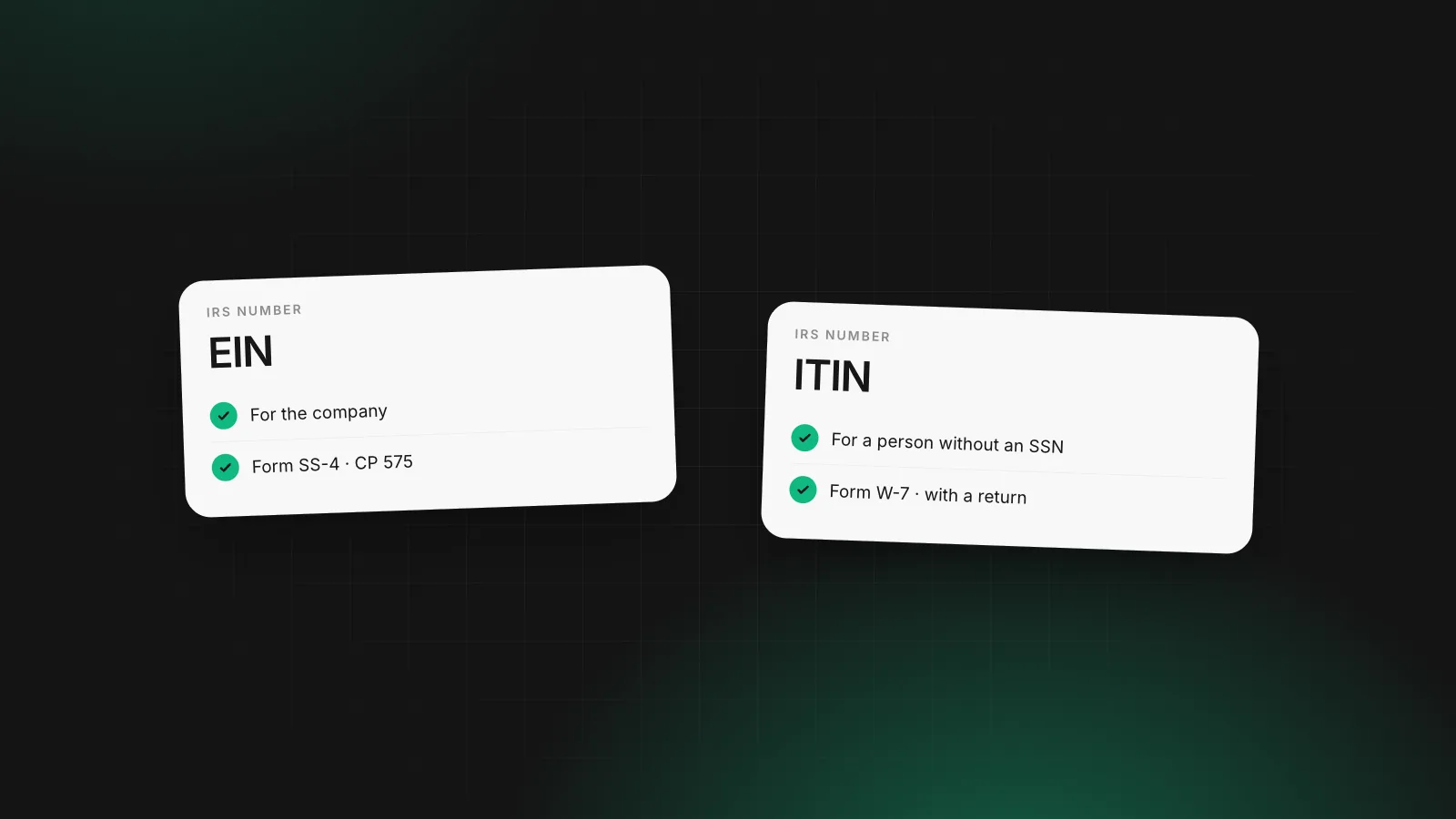
Founders who set up a US LLC from abroad meet two IRS numbers early on: the EIN and the ITIN. They are often confused, and agents sometimes sell an ITIN to people who do not need one. The rule is simple: the EIN is for the company, the ITIN is for a person.
What is the difference between an ITIN and an EIN?
| EIN | ITIN | |
|---|---|---|
| Identifies | A business entity (LLC, corporation, partnership) or employer | An individual |
| Who gets one | Businesses that file returns, hire, or open bank accounts | People who need a US tax number but cannot get an SSN |
| Form | SS-4 | W-7 |
| Format | 12-3456789 | 9XX-XX-XXXX |
| Cost from the IRS | Free | Free |
| Typical time | Same day by phone, about 4 weeks by fax, longer by mail | About 7 weeks, more in peak season |
| Expires | No | Yes, if not used on a return for 3 years |
Does a non-resident LLC owner need an EIN?
Almost always. A foreign-owned single-member LLC must file Form 5472 with a pro forma Form 1120 every year, and that needs an EIN. Banks, payment providers and clients also ask for it. See what an EIN is and the Form 5472 guide.
You can get one without an SSN or ITIN. On Form SS-4, a foreign responsible party leaves the SSN/ITIN line blank or writes "foreign". The online EIN application needs an SSN or ITIN, so non-residents apply by:
- Fax, usually returned in about four business days.
- Mail, which can take several weeks.
- Phone, on the IRS line for international applicants, which can issue the EIN during the call.
When does an owner need an ITIN?
An ITIN is for individuals who have a US tax filing or reporting requirement and are not eligible for a Social Security number. For a non-resident business owner, common triggers are:
- The owner has US-source income that must be reported on a personal return, Form 1040-NR. This happens when the LLC's income is effectively connected with a US trade or business.
- The owner is claiming a treaty benefit that requires a US tax number.
- A spouse or dependant must be listed on a US return.
A foreign-owned LLC with no US office, staff or agents usually has no effectively connected income, and the owner often never needs an ITIN.
How do you apply for an ITIN?
- Complete Form W-7.
- Attach the federal tax return that requires the ITIN, unless you qualify for an exception.
- Send original or certified identity documents, usually a passport.
- Apply by mail to the IRS, through a Certifying Acceptance Agent who can verify documents, or at an IRS office.
Using a Certifying Acceptance Agent means you do not have to post your passport.
Do banks require an ITIN?
US law does not. Some banks have their own policy and ask for one for each owner. Others, and most fintech providers, open accounts with the company's EIN and the owners' passports. Our guide to a US business bank account without an SSN covers options.
How Rivet handles it
Rivet opens accounts for registered companies, including US LLCs owned by non-residents. We verify the company with its formation documents and EIN, and each beneficial owner with a passport. Owners do not need an SSN or ITIN to get USD account details in the LLC's name.
Questions people ask
Can I get an EIN without an SSN or ITIN?
Yes. On Form SS-4, a foreign responsible party can apply without an SSN or ITIN. The online application requires one, so non-residents apply by fax or mail, or by phone on the IRS international line.
Do I need an ITIN to open a US business bank account?
Not legally. Some banks ask for one for the owners, but many accept a passport and the company's EIN. Fintech providers usually work from the EIN and the owners' passports.
How long does an ITIN take?
The IRS typically processes Form W-7 in about seven weeks, longer in peak tax season or for applications from abroad.
Does a foreign-owned single-member LLC need an ITIN to file Form 5472?
The LLC files Form 5472 with a pro forma 1120 using its EIN. The owner is identified on the form, and may use a foreign tax ID if there is no US number. An ITIN becomes necessary when the owner must file their own US return.
Sources
William covers what happens once a company starts moving money: getting the business verified, paying contractors and suppliers abroad, and keeping card spend under control. William writes for the founder or finance lead who has to make it work this week, and links every rule cited to the text it comes from.
More from William Sunjo M. →This article is general information, not legal, tax or financial advice. Rules and fees change; check the sources above and the provider’s current terms before you act on them.
- itin
- ein
- non-resident
- us llc
- irs
- form w-7