Italy's SDI and foreign clients: how cross-border invoices are reported since the esterometro ended
Italy has required e-invoices through the Sistema di Interscambio since 2019. Since July 2022 cross-border transactions go through the SDI too, replacing the old esterometro. Invoices to foreign clients still reach them however you like, but Italy's tax authority sees them first.
- Published
- Reading time
- 2 min read
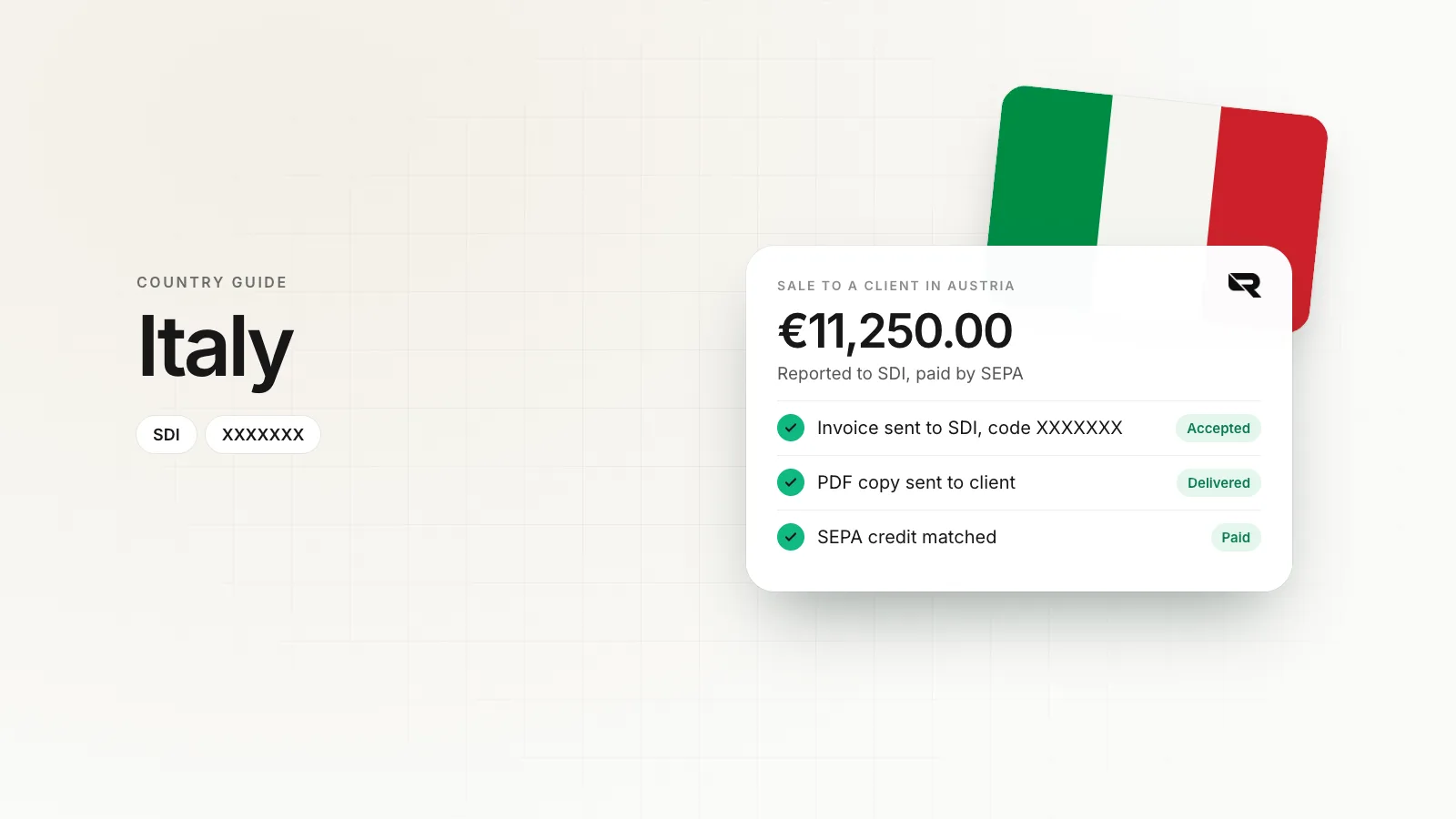
A Bologna machinery parts company invoices a customer in Graz. The invoice goes out as an XML file through the Sistema di Interscambio with the recipient code XXXXXXX, and a PDF copy goes to Graz by email. The Austrian customer never sees the XML. Italy's tax authority sees it within minutes.
That is the cross-border half of Italian e-invoicing, and it is where many small companies still make mistakes.
Domestic invoices: the SDI
Since 2019, Italian companies issue invoices as structured XML files (FatturaPA format) through the Sistema di Interscambio (SDI), run by the Agenzia delle Entrate. The SDI checks each file and delivers it to the recipient using a seven-character recipient code or a PEC address. A PDF invoice between two Italian companies has no legal standing.
Sales to foreign clients
Since July 2022 cross-border invoices also pass through the SDI. The old esterometro, a separate periodic return of foreign transactions, no longer exists.
For a sale to a foreign client:
- Issue the invoice in XML and send it to the SDI with recipient code XXXXXXX.
- Fill the client's foreign VAT number or identifier and address.
- Send the client a copy in whatever format you agree, usually PDF.
The SDI does not deliver anything abroad. Its job here is to give Italy the data.
Purchases from foreign suppliers
The other direction catches more people out. A US software subscription, a German consultant or a Polish contractor sends a normal invoice. The Italian company then reports it through the SDI with an integration or self-billing document:
- TD17 for services bought from abroad,
- TD18 for intra-EU purchases of goods,
- TD19 for goods located in Italy bought from a foreign supplier.
The deadline is generally the 15th of the month after receipt. Missing these is a common finding, with penalties per document.
VAT wording
For services to EU businesses, the invoice shows no Italian IVA and cites the reverse charge (inversione contabile). For services to businesses outside the EU, it states the operation is not subject to IVA under the relevant article. Goods exports need customs evidence.
Getting paid by foreign clients
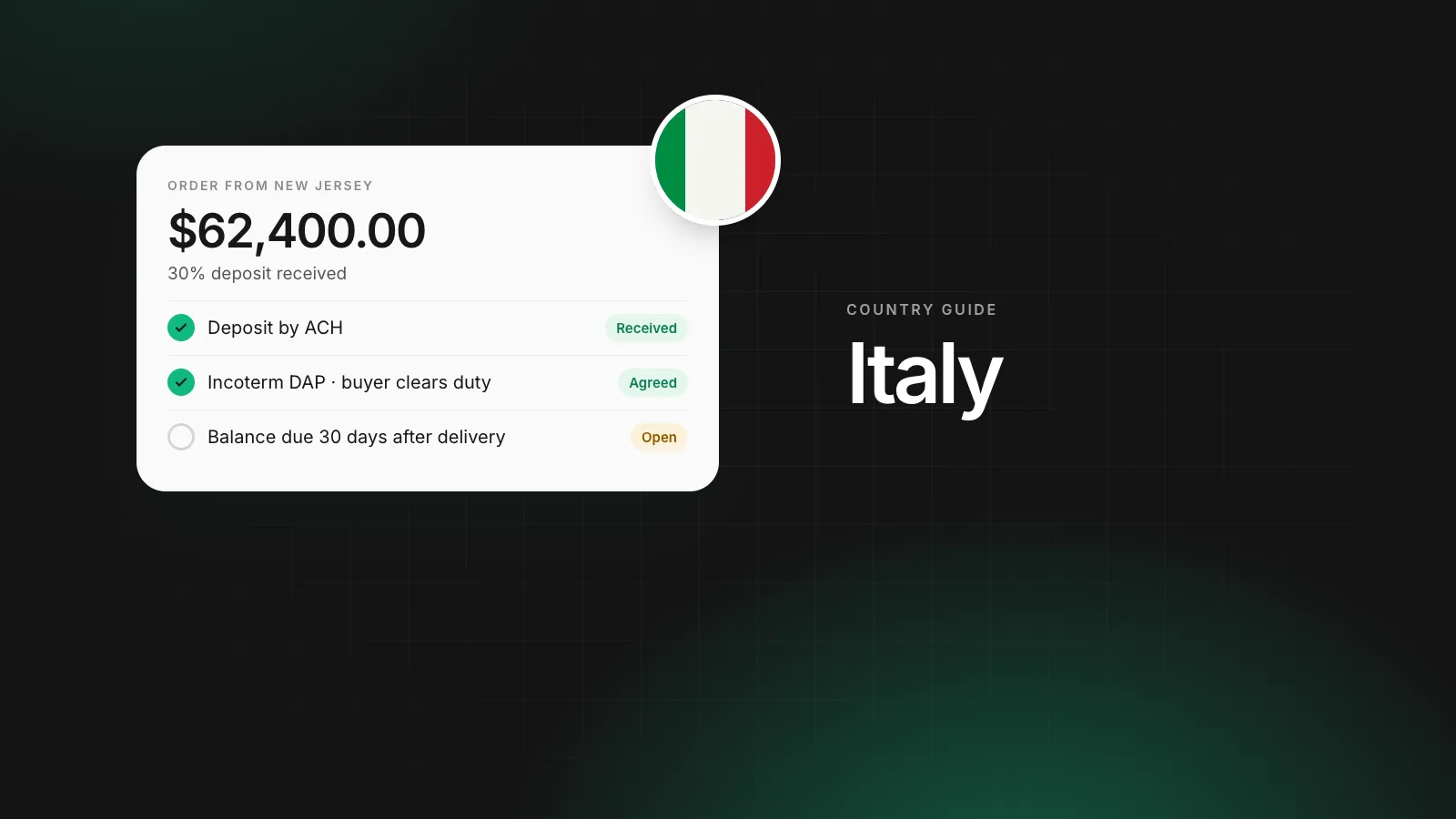
Graz pays by SEPA in seconds. A customer in Chicago, asked to pay an Italian IBAN, sends an international wire that may arrive short and is converted at the receiving bank's rate. US account details let American customers pay domestically, by ACH, in full.
Paying into Italy: the local rail
| What | Detail |
|---|---|
| Local rail | SEPA Instant Credit Transfer |
| Run by | European Payments Council scheme, run by each bank |
| Settlement | Under ten seconds, 24/7 |
| Published fee | By the EU Instant Payments Regulation, no more than the bank charges for a standard SEPA transfer |
Source: European Payments Council: SEPA Instant Credit Transfer. Checked when this guide was last updated; the scheme's own page has the current figures.
Where Rivet fits
Rivet does not send invoices to the SDI; your e-invoicing software or commercialista does that. A Rivet business account handles foreign collections: US account details in the company's own name on every plan, euro and sterling details from the Growth plan, payments matched to invoices, and balances held or converted at a rate shown before you confirm. Rivet is not a bank; regulated partner institutions hold the funds.
For other countries, see e-invoicing mandates from 2026 to 2028.
Questions people ask
Do I send an e-invoice to a foreign client through the SDI?
You send the XML to the SDI with the recipient code XXXXXXX so the tax authority has the data. The SDI does not deliver it abroad; you send the client a PDF or other copy as agreed.
What are TD17, TD18 and TD19?
Document types for integrating or self-billing purchases from abroad: TD17 for services bought from foreign suppliers, TD18 for intra-EU purchases of goods, TD19 for goods already in Italy bought from foreign suppliers.
When must purchases from foreign suppliers be reported?
Generally by the 15th of the month after the one in which the invoice was received or the transaction took place.
Do foreign invoices need Italian IVA?
For most services to foreign businesses, no; the invoice cites the reverse charge (EU) or that the operation is outside Italian IVA (non-EU).
Sources
William covers what happens once a company starts moving money: getting the business verified, paying contractors and suppliers abroad, and keeping card spend under control. William writes for the founder or finance lead who has to make it work this week, and links every rule cited to the text it comes from.
More from William Sunjo M. →This article is general information, not legal, tax or financial advice. Rules and fees change; check the sources above and the provider’s current terms before you act on them.
- italy
- sdi
- fattura elettronica
- esterometro
- cross-border
- iva