Italian exporters selling to the US: the 15% tariff, payment terms and collecting dollars
Since August 2025 most EU goods entering the US pay a tariff of up to 15 percent. For Italian food, fashion and machinery exporters, that changed price conversations with American buyers. It also made currency and payment terms matter more.
- Published
- Reading time
- 2 min read
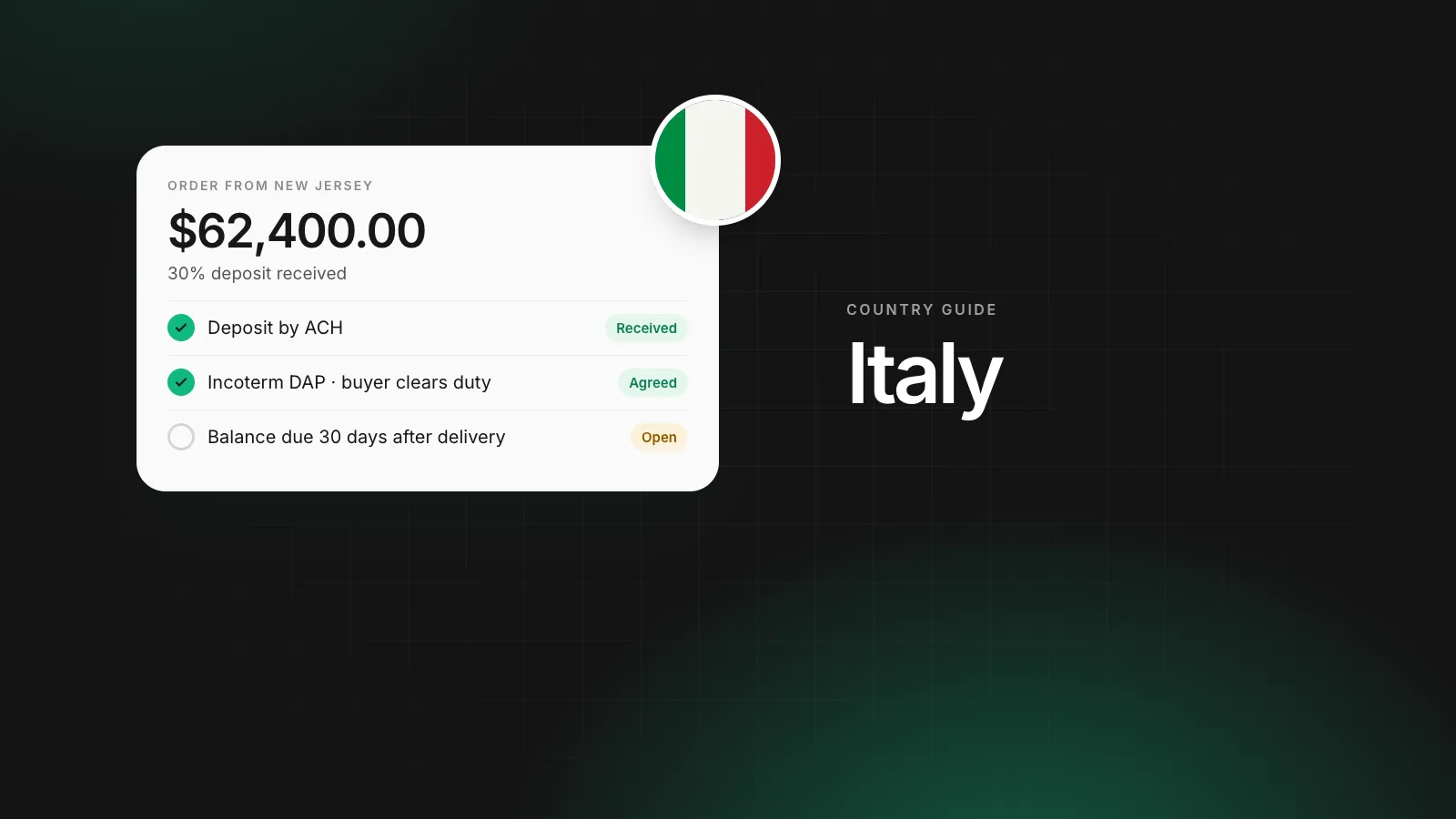
A Parma food producer quotes a New Jersey distributor for a container of cured meats and cheese. Two years ago the conversation was about price per kilo and shipping dates. Now the buyer's first question is who carries the tariff, and the second is whether the price can be in dollars.
The tariff
Under the framework the EU and the US agreed in summer 2025, most EU goods entering the US pay a tariff of up to 15 percent, applied as an all-in ceiling. Some sectors are treated differently, including certain metals and products covered by separate US measures. Your HS code decides which rule applies, so check it with a customs broker before quoting.
The duty is paid to US Customs by the importer of record. Who that is depends on the Incoterm:
- EXW or FCA: the buyer arranges transport and imports; the buyer pays duty.
- DAP: you deliver to the buyer's door; the buyer clears customs and pays duty.
- DDP: you deliver duty paid; you pay the duty and need a US importer arrangement.
Most small Italian exporters stay on DAP or FCA. Our Incoterms guide explains each in plain terms.
Price in dollars
An American distributor already carries a tariff it did not choose. Asking it to also carry euro risk is a hard sell. Dollar pricing is normal in US trade, and it lets the buyer compare you with domestic and other foreign suppliers on one basis.
Pricing in dollars moves the currency risk to you. Two habits reduce it: keep the dollars you receive in dollars until you need euros, and pay any dollar costs, such as US freight forwarders, trade shows or marketing, from that balance.
Payment terms
Goods to the US spend weeks at sea and days in customs. Terms that start the clock at shipment leave you waiting a long time.
A common structure for new buyers:
- A deposit of 30 to 50 percent on order confirmation.
- The balance 30 days after delivery, or against shipping documents.
- For large orders or unproven buyers, a letter of credit or credit insurance.
Getting paid in dollars
American companies pay suppliers by ACH. Asked to wire dollars to an Italian IBAN, they must send an international wire, which some smaller buyers find awkward. It may lose an intermediary fee on the way and is converted at the receiving bank's rate on arrival.
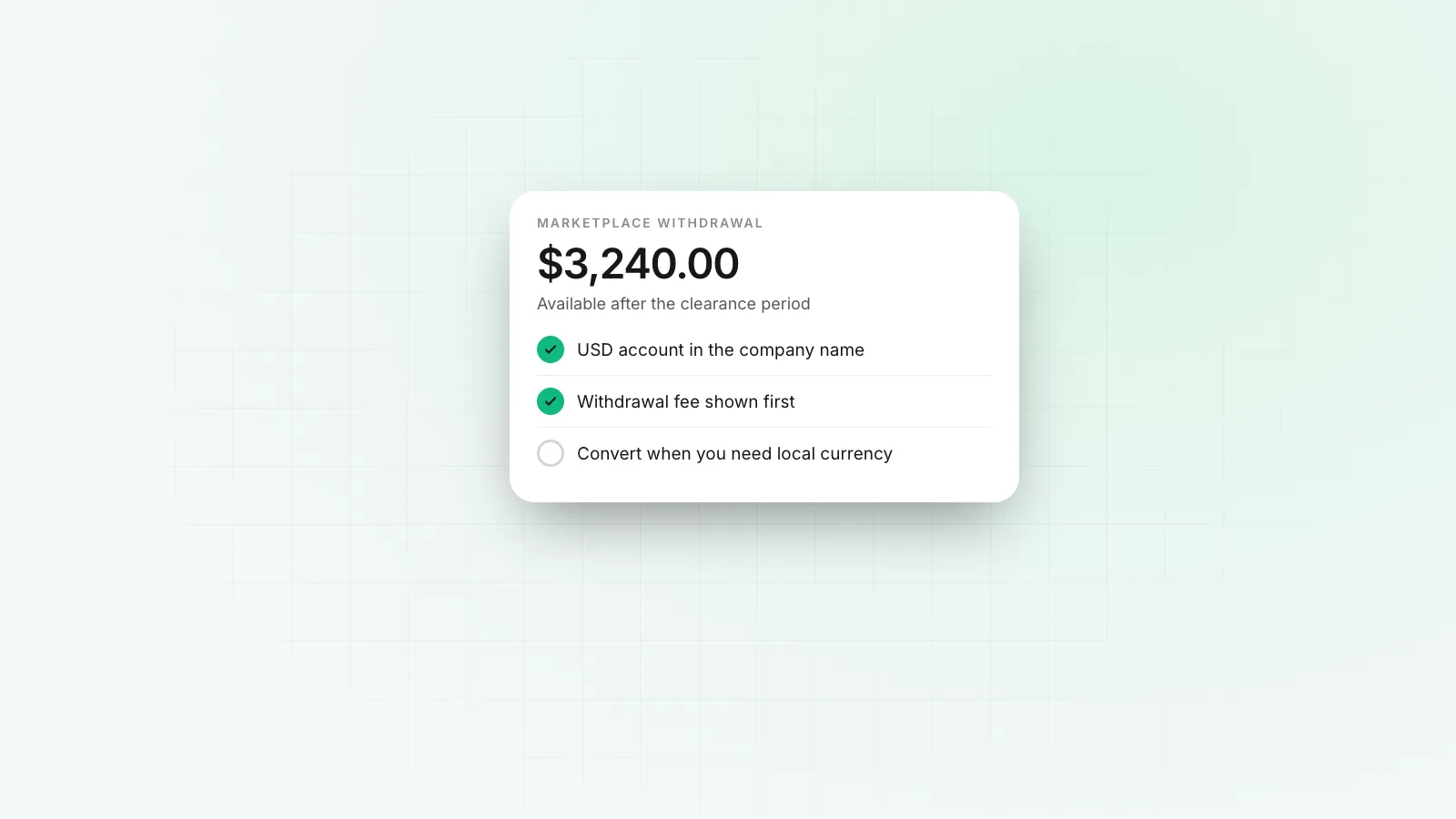
US account details in your company's name make you look like a domestic supplier to their accounts payable team. Deposits and balances arrive in full, in dollars.
Paying into Italy: the local rail
| What | Detail |
|---|---|
| Local rail | SEPA Instant Credit Transfer |
| Run by | European Payments Council scheme, run by each bank |
| Settlement | Under ten seconds, 24/7 |
| Published fee | By the EU Instant Payments Regulation, no more than the bank charges for a standard SEPA transfer |
Source: European Payments Council: SEPA Instant Credit Transfer. Checked when this guide was last updated; the scheme's own page has the current figures.
Where Rivet fits
A Rivet business account gives an Italian company US account details in its own name on every plan, so American buyers pay by ACH or domestic wire. From the Growth plan it adds euro and sterling details. Dollars can be held, converted at a rate shown before you confirm, or used to pay US costs. Rivet is not a bank; regulated partner institutions hold the funds.
Questions people ask
Who pays US tariffs on Italian goods?
The importer of record in the US pays the duty to US Customs. On EXW, FCA or DAP terms that is usually the American buyer. On DDP terms the Italian exporter takes it on.
Is the 15 percent tariff on top of normal duties?
Under the framework, the 15 percent is an all-in ceiling for most goods, replacing the normal duty where that is lower. Some products, such as certain steel and aluminium goods, follow other rules. Check your HS code with a customs broker.
Should Italian exporters price in dollars?
American buyers usually expect it. Pricing in euros pushes currency risk onto them, and with a tariff already in the price, many will ask for dollars.
How do I protect against a buyer paying late?
Ask for a deposit before production or shipment, set the balance on clear terms from delivery, and for larger or newer buyers consider a letter of credit or credit insurance.
Sources
Rashidatou writes Rivet's guides to how money moves between countries: the payment rails, what each one costs, and the account details a company needs to get paid in another currency. Every figure in Rashidatou's articles is traced to the scheme rulebook, the regulator or the provider's published price list, and those sources are listed at the end.
More from Rashidatou K. →This article is general information, not legal, tax or financial advice. Rules and fees change; check the sources above and the provider’s current terms before you act on them.
- italy
- exports
- us tariffs
- incoterms
- usd account
- payment terms