Indian founders with a US company: ODI rules, LRS and banking the US entity
Indian SaaS founders often incorporate in Delaware to sell to US customers and raise from US investors. For a founder resident in India, owning that company is an overseas investment under FEMA, with rules on how it is made and reported. The US company then needs a US account of its own.
- Published
- Reading time
- 2 min read
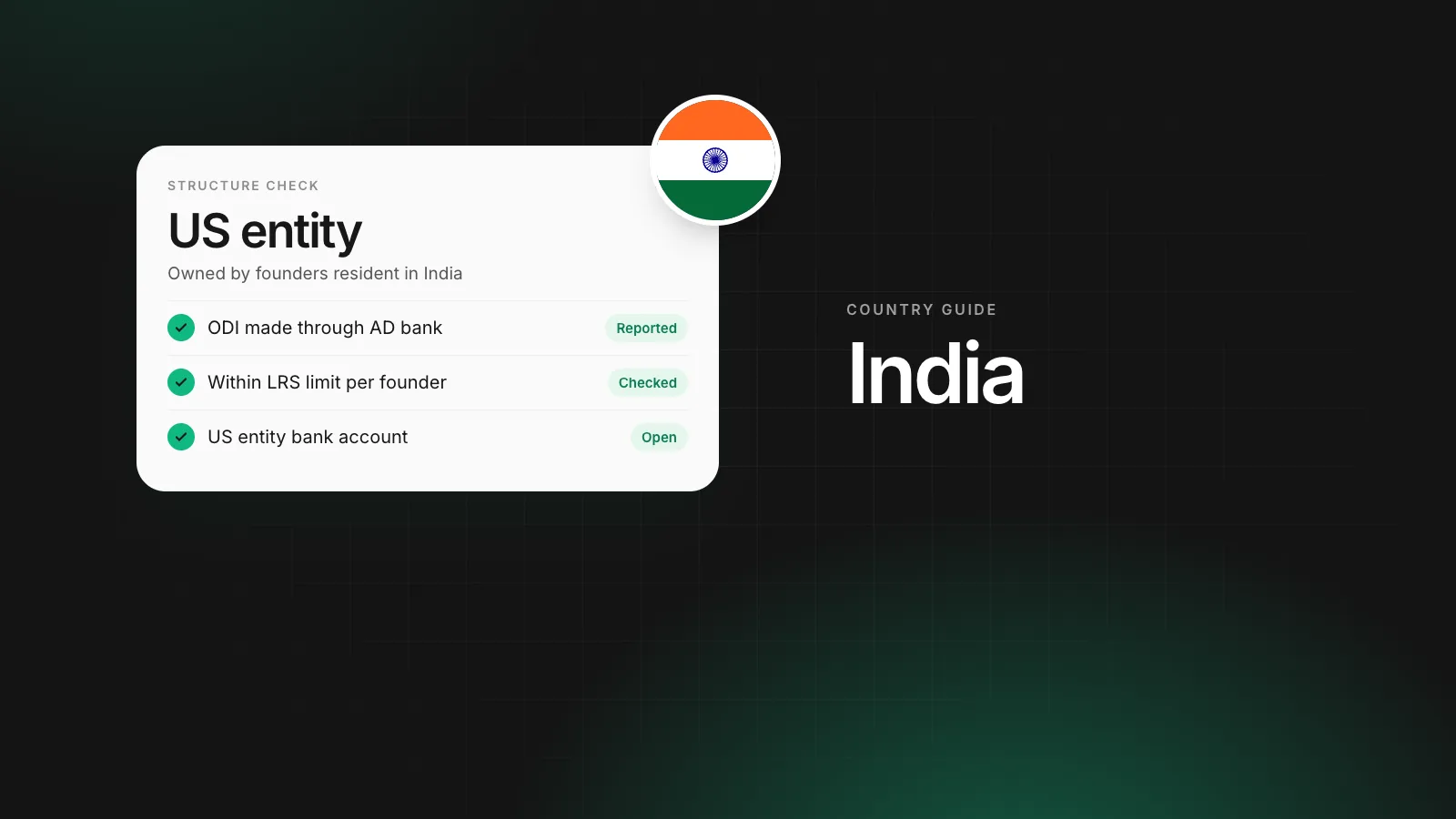
Two Bengaluru founders incorporate a Delaware C-corp to sell their analytics product to US mid-market companies and raise a seed round from US funds. Their lawyer in India raises the first question: under FEMA, each founder's shares in the Delaware company are an overseas investment, and there are rules about how that investment is made and reported.
Overseas investment rules
India's Overseas Investment Rules and Regulations of 2022 govern investment by Indian residents in foreign entities. For resident individuals:
- investment is made under the Liberalised Remittance Scheme (LRS), up to $250,000 per financial year in total remittances,
- the foreign entity should be an operating company with real business activity,
- the investment is routed and reported through an authorised dealer (AD) bank, with annual reporting after that.
Structures where an Indian resident sits in a chain that loops back into India face restrictions. Take advice before you incorporate, especially if an Indian company will also exist.
The common structure
Many Indian SaaS startups end up with:
- a US parent (Delaware C-corp) that contracts with customers and investors,
- an Indian subsidiary that employs the team and invoices the parent for development services.
The flows between them follow FEMA, transfer pricing and Indian tax rules. The Indian subsidiary is an exporter of services and follows India's realisation rules.
Banking the US company
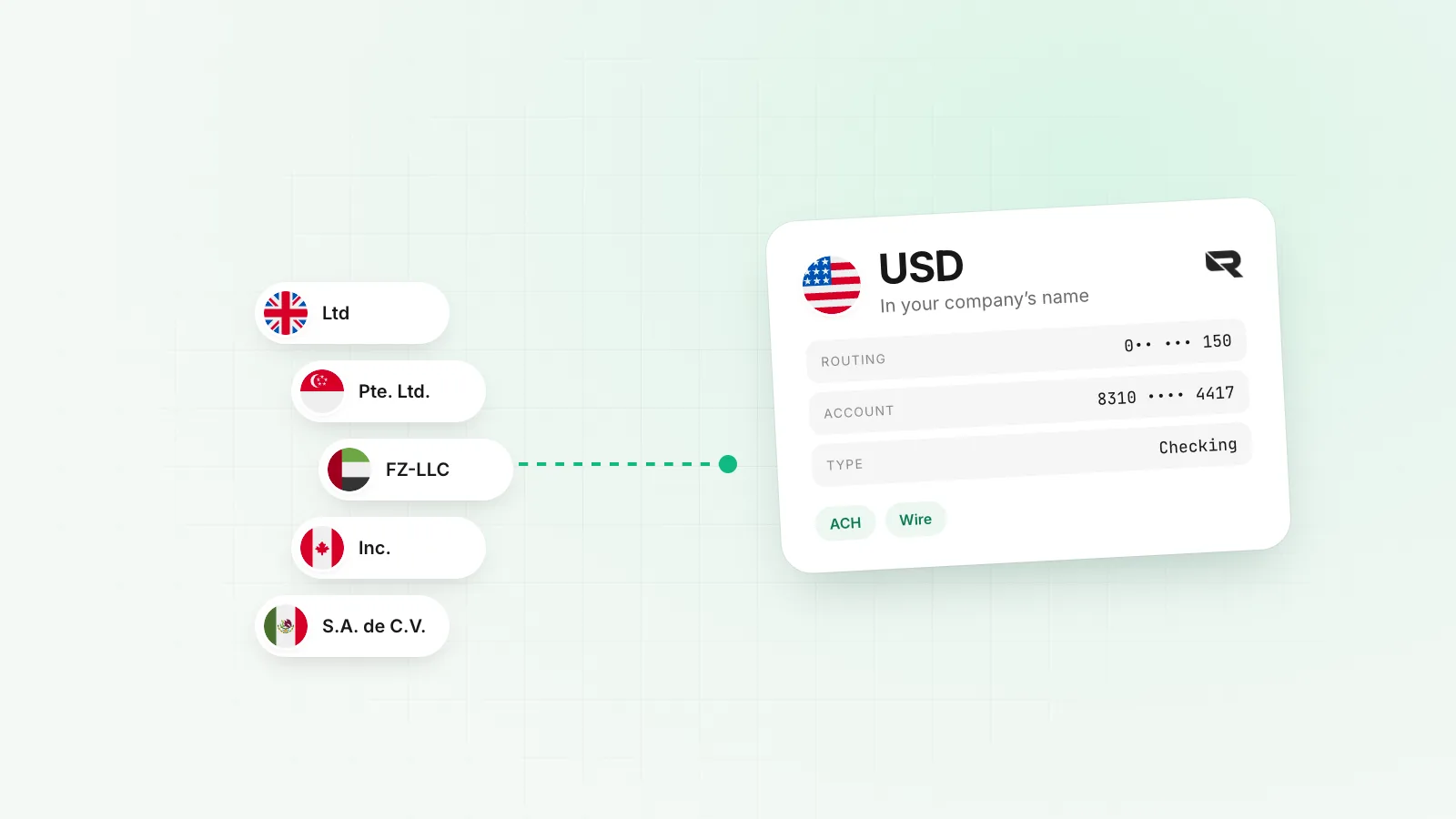
The US company needs its own account in its own name:
- Formation documents and EIN.
- Identification of beneficial owners and officers.
- A description of its business, customers and expected flows.
US customers then pay the US company by ACH, and the US company pays the Indian subsidiary's invoices.
Paying into India: the local rail
| What | Detail |
|---|---|
| Local rail | UPI for instant transfers; IMPS 24/7; NEFT in half-hourly batches |
| Run by | National Payments Corporation of India; Reserve Bank of India for NEFT |
| Settlement | UPI and IMPS in seconds; NEFT within the half hour |
| Published fee | No charge on UPI for the payer at present; IMPS and NEFT fees are set by each bank |
Source: NPCI: UPI. Checked when this guide was last updated; the scheme's own page has the current figures.
Where Rivet fits
A Rivet business account accepts US companies with non-resident founders after verification, with the document list shown up front and a decision aimed within three business days. Approved companies get US account details in their own name on every plan, euro and sterling details from the Growth plan, and payouts to 120+ countries, including India. Rivet is not a bank; regulated partner institutions hold the funds. Indian founders should confirm their own FEMA position with an adviser.
Questions people ask
Can an Indian resident own a US LLC or Delaware company?
Yes, under India's overseas investment rules, if the investment follows the conditions: generally into an operating business, within LRS limits for individuals, and reported through an AD bank.
What is the LRS limit?
Up to $250,000 per financial year per resident individual, covering all permitted current and capital account remittances, including overseas investment.
Can the Indian company and US company work together?
Many groups have an Indian subsidiary doing development for the US parent under a services agreement. Transfer pricing and FEMA rules apply to those flows.
What does the US company need to bank?
Its formation documents, EIN, beneficial owner identification and a description of its business and clients.
Sources
Rashidatou writes Rivet's guides to how money moves between countries: the payment rails, what each one costs, and the account details a company needs to get paid in another currency. Every figure in Rashidatou's articles is traced to the scheme rulebook, the regulator or the provider's published price list, and those sources are listed at the end.
More from Rashidatou K. →This article is general information, not legal, tax or financial advice. Rules and fees change; check the sources above and the provider’s current terms before you act on them.
- india
- founders
- delaware
- us llc
- odi
- lrs