Indian service exporters: realisation deadlines, inward remittance records and the GST LUT
An Indian software company billing a US client is an exporter under FEMA. It must bring the money home within the RBI's realisation period, keep the bank's inward remittance record for each receipt, and file a Letter of Undertaking to export without paying IGST. The deadlines changed twice in a year.
- Published
- Reading time
- 2 min read
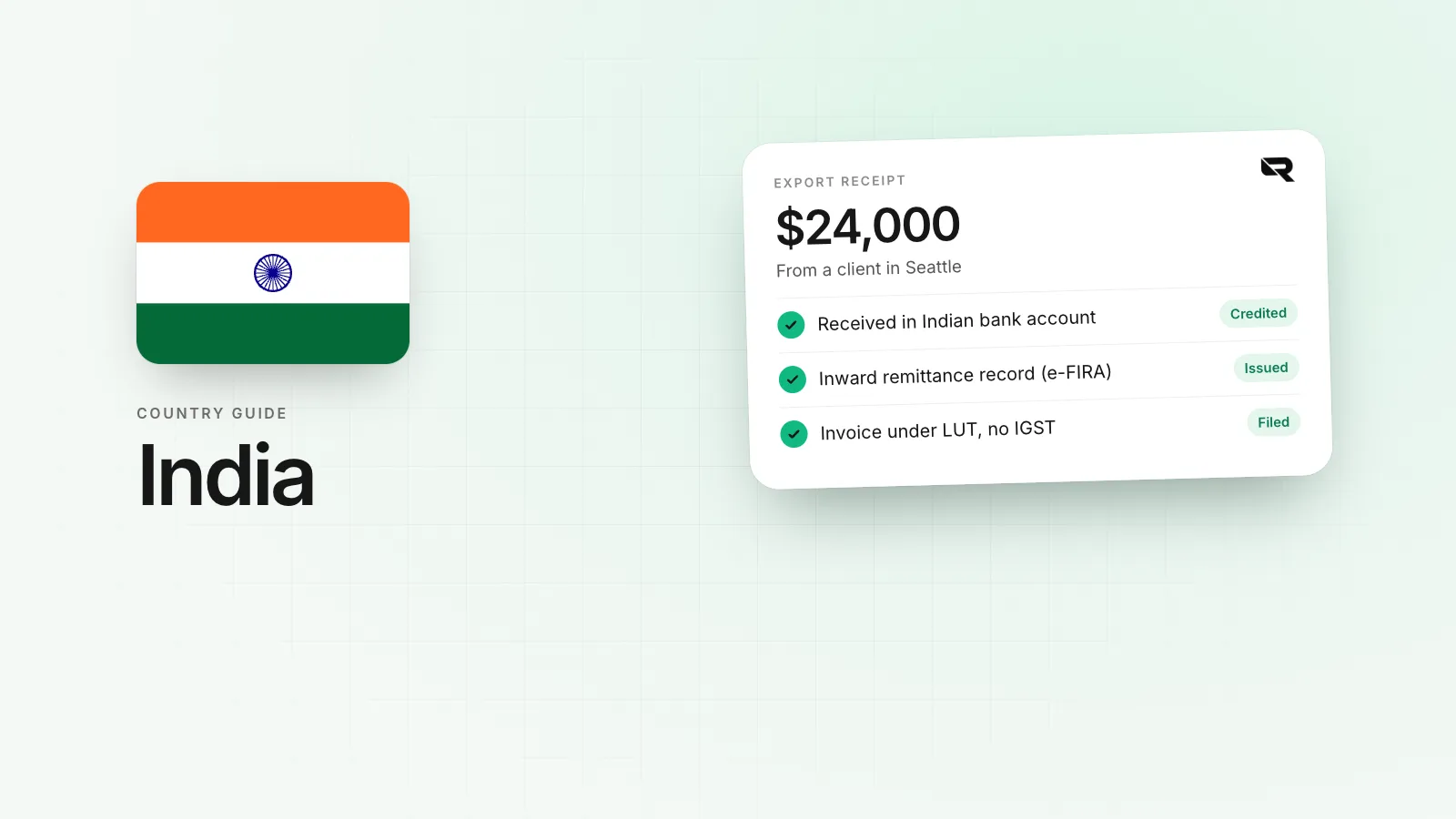
A Pune SaaS company invoices a Seattle client $24,000 a month. Each payment lands in its Indian bank, which issues an electronic inward remittance record. Each invoice is issued under the company's GST Letter of Undertaking, without IGST. And each receivable has a deadline: the RBI's realisation period, which changed twice between late 2025 and late 2026.
The realisation rule
Under FEMA and the RBI's export regulations, Indian exporters must realise and repatriate the full value of exports within a set period: from the date of shipment for goods, and from the invoice date for services.
- In November 2025 the RBI extended the period from nine to fifteen months.
- In 2026 the RBI issued new Foreign Exchange Management (Export and Import of Goods and Services) regulations, which revised the framework again.
Commentaries disagree about what the 2026 changes did to the period, so read the current RBI notification or ask your AD bank before relying on any figure. Overdue receivables are reported by banks, and non-realisation is a contravention.
Inward remittance records
For each export receipt, the bank issues a Foreign Inward Remittance Certificate or Advice (FIRC or FIRA), increasingly as an electronic e-FIRA or e-BRC. These prove the money came from abroad as export proceeds. Keep them: they support GST zero-rating, income tax and any audit.
Make sure each receipt carries the right purpose code for your service, so the bank classifies it correctly.
GST: the LUT
Exports of services are zero-rated supplies under GST. With a Letter of Undertaking filed on the GST portal for the financial year, you export without paying IGST and without waiting for a refund. File it before the first export invoice of each year.
EEFC accounts
Exporters can hold part of their foreign currency proceeds in an Exchange Earners' Foreign Currency (EEFC) account in India, avoiding conversion until they need rupees or need to pay foreign costs.
Paying into India: the local rail
| What | Detail |
|---|---|
| Local rail | UPI for instant transfers; IMPS 24/7; NEFT in half-hourly batches |
| Run by | National Payments Corporation of India; Reserve Bank of India for NEFT |
| Settlement | UPI and IMPS in seconds; NEFT within the half hour |
| Published fee | No charge on UPI for the payer at present; IMPS and NEFT fees are set by each bank |
Source: NPCI: UPI. Checked when this guide was last updated; the scheme's own page has the current figures.
Where Rivet fits
Rivet opens business accounts for registered companies after verification. An India-registered company must realise and repatriate export proceeds to India under FEMA, so it should not hold them abroad outside what the rules allow; check with your AD bank. Many Indian founders also run companies registered abroad, such as a US LLC, which follow that country's rules and can use a Rivet business account with US account details on every plan. Rivet is not a bank; regulated partner institutions hold the funds.
See also INR business payments.
Questions people ask
How long do Indian exporters have to bring in proceeds?
The RBI sets the realisation period in its export regulations. It was extended from nine to fifteen months in November 2025, and new regulations in 2026 revised the framework. Check the current RBI notification or ask your bank.
What is a FIRC or FIRA?
A Foreign Inward Remittance Certificate or Advice issued by the bank for each foreign receipt. It proves the export proceeds were received in India and supports GST and tax filings.
What is a GST LUT?
A Letter of Undertaking filed on the GST portal that lets an exporter supply goods or services as zero-rated without paying IGST and claiming a refund. It is filed for each financial year.
Can an Indian company keep export proceeds abroad?
Generally not beyond what FEMA allows. Proceeds are realised and repatriated to India, though some facilities such as EEFC accounts let exporters hold part in foreign currency in India.
Sources
William covers what happens once a company starts moving money: getting the business verified, paying contractors and suppliers abroad, and keeping card spend under control. William writes for the founder or finance lead who has to make it work this week, and links every rule cited to the text it comes from.
More from William Sunjo M. →This article is general information, not legal, tax or financial advice. Rules and fees change; check the sources above and the provider’s current terms before you act on them.
- india
- fema
- export of services
- firc
- gst lut
- rbi