Egyptian IT exporters after the 2024 float: receiving dollars and converting to pounds
Cairo's software and outsourcing companies earn dollars from clients in the Gulf, Europe and the US. Before 2024 a wide gap between official and parallel rates distorted everything. After the Central Bank of Egypt floated the pound, the gap closed, and planning became possible again.
- Published
- Reading time
- 2 min read
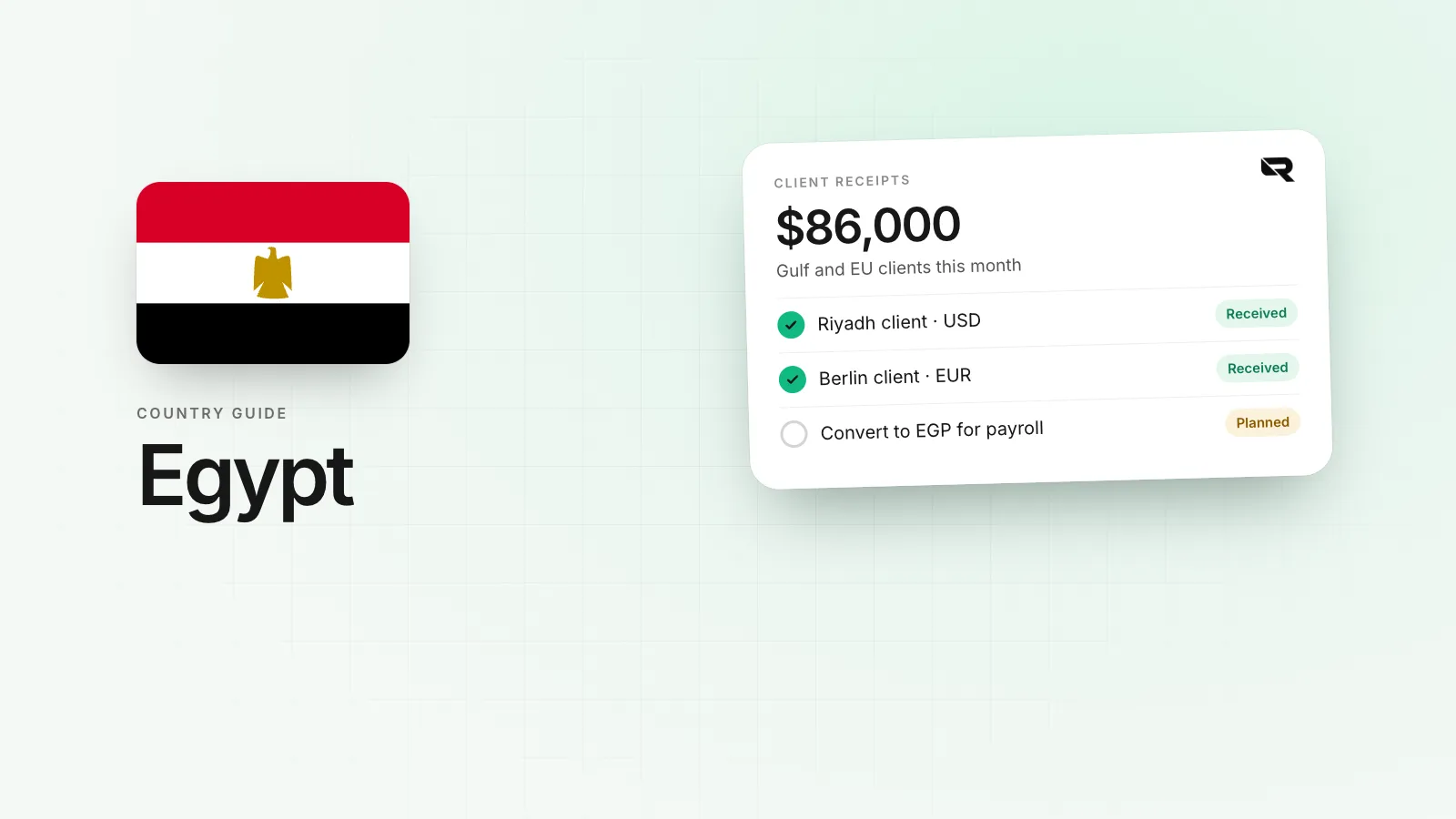
A Cairo outsourcing company with 300 agents and engineers serves clients in Riyadh, Berlin and Chicago. Before March 2024, the official exchange rate and the parallel rate were far apart, salaries were hard to set, and some clients were reluctant to pay into Egypt. After the Central Bank of Egypt floated the pound, the gap closed. The company now plans its conversions like any other exporter.
The 2024 float
In March 2024 the Central Bank of Egypt (CBE) allowed the pound to move to a market rate, raised interest rates sharply and, with large foreign investment and IMF support, cleared the backlog of unmet foreign currency demand. The parallel market gap that had distorted business for two years largely disappeared.
Receiving foreign currency
Egyptian exporters receive dollars and euros through Egyptian banks and can hold them in foreign currency accounts. Clients in the Gulf pay by international transfer; European and US clients do the same, which can take several days.
Converting to pounds
The pound has been more stable since the float, but still moves. Hold foreign currency as it arrives and convert a planned amount ahead of payroll.
Accounts abroad
Egyptian residents, including companies, generally need approval to hold accounts abroad, and export proceeds come into Egypt. Check with your bank before arranging anything else.
Incentives
ITIDA runs programmes supporting IT and outsourcing exporters, including incentives linked to export revenue and job creation. Keep export contracts and bank records that document foreign revenue.
Paying into Egypt: the local rail
| What | Detail |
|---|---|
| Local rail | InstaPay |
| Run by | Egyptian Banks Company, under the Central Bank of Egypt |
| Settlement | Seconds, 24/7 |
Source: Central Bank of Egypt: InstaPay. Checked when this guide was last updated; the scheme's own page has the current figures.
Where Rivet fits
Rivet opens business accounts for registered companies after verification. Egypt-registered companies receive export proceeds through Egyptian banks and generally need approval for accounts abroad, so check with your bank first. Where available, partners abroad who bank with Rivet can pay Egyptian bank accounts through Rivet's payouts. Rivet is not a bank; regulated partner institutions hold the funds.
Questions people ask
What changed in March 2024?
The Central Bank of Egypt let the pound float, raised interest rates and, with large foreign inflows, cleared the backlog of foreign currency demand. The parallel market gap largely closed.
Can Egyptian companies hold dollars?
Yes, in foreign currency accounts at Egyptian banks.
Can Egyptian companies keep export proceeds abroad?
Generally not without approval. Proceeds come into Egypt through banks.
What does ITIDA offer exporters?
Programmes supporting IT and outsourcing exports, including incentives linked to export revenue and job creation. Check current programmes with ITIDA.
Sources
Rashidatou writes Rivet's guides to how money moves between countries: the payment rails, what each one costs, and the account details a company needs to get paid in another currency. Every figure in Rashidatou's articles is traced to the scheme rulebook, the regulator or the provider's published price list, and those sources are listed at the end.
More from Rashidatou K. →This article is general information, not legal, tax or financial advice. Rules and fees change; check the sources above and the provider’s current terms before you act on them.
- egypt
- it exports
- outsourcing
- cbe
- usd
- egp