Costa Rican companies with US clients: dollars, colones and SINPE
Costa Rica runs one of the most service-oriented export economies in Latin America, much of it sold to the US. Dollars are used alongside colones in daily business. The cost hides in how US clients send the dollars and when they become colones.
- Published
- Reading time
- 2 min read
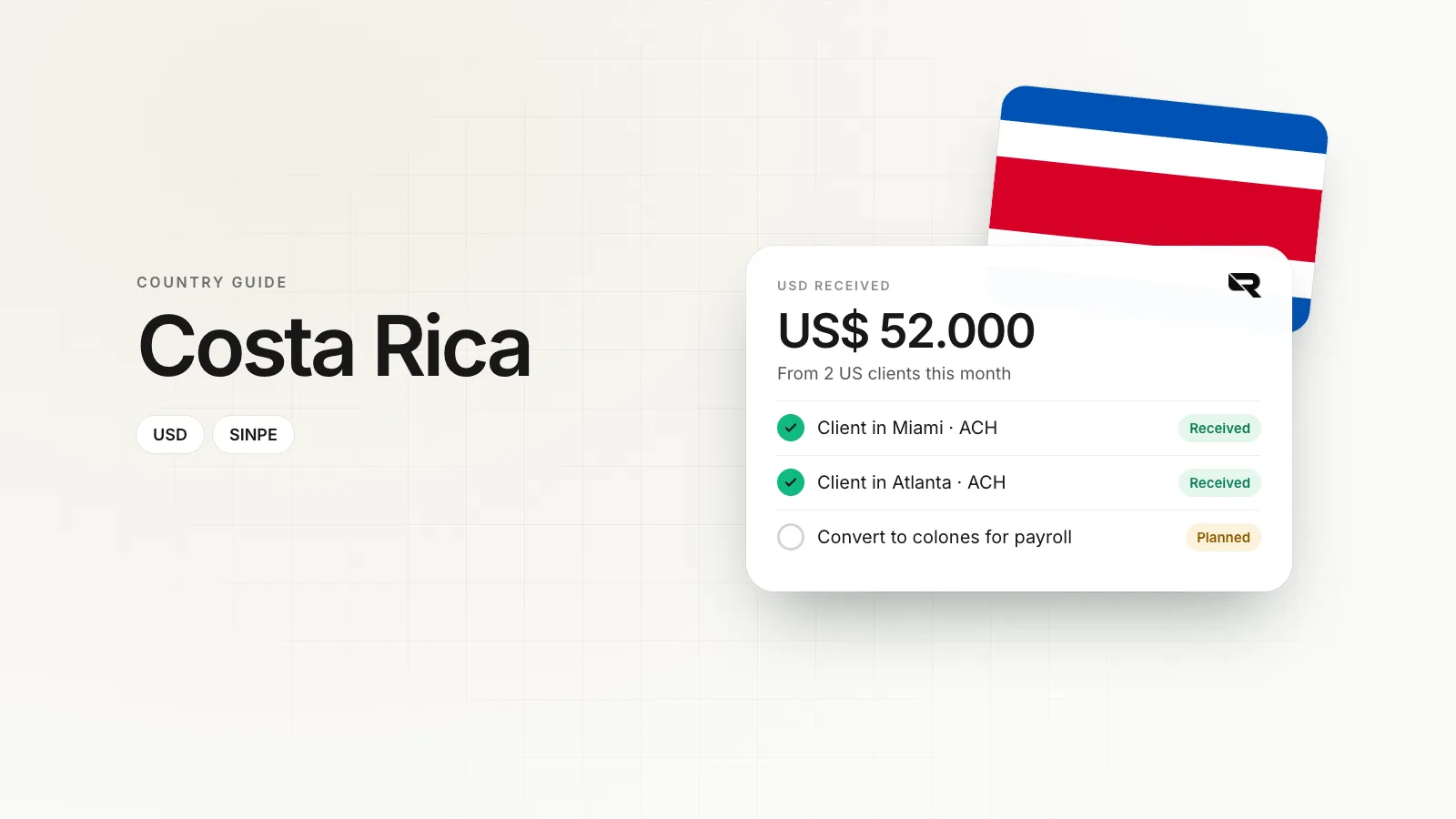
A San José digital agency bills two US clients about $52,000 a month. It pays staff partly in colones and partly in dollars, and rent in dollars. US payments arrive by international wire, three to five days after the clients send them, sometimes $30 short. Local payments go out by SINPE the same day.
Two currencies, one business
Costa Rica uses colones as its currency, but dollars are part of everyday business: contracts, rents, some salaries and many prices. Companies hold dollar and colón accounts side by side.
That makes Costa Rican service exporters less exposed to currency moves than many. The remaining costs are on the way in, from US clients, and at the conversion to colones.
The US client side
US companies pay their vendors by ACH. Paying a Costa Rican account means an international wire, often handled separately by their accounts payable team. US account details in the agency's own name let clients pay by ACH, in full, usually within one to two business days.
Converting to colones
Colón costs, such as part of payroll, local taxes, social security contributions to the CCSS and local suppliers, need colones. Converting a planned amount ahead of payroll, rather than every receipt as it arrives, keeps the colón budget steady.
SINPE for local payments
The Central Bank's SINPE system moves funds between Costa Rican accounts quickly, in colones and dollars. Once funds reach your Costa Rican bank, payroll and suppliers can be paid the same day.
Paying into Costa Rica: the local rail
| What | Detail |
|---|---|
| Local rail | SINPE Móvil and SINPE transfers |
| Run by | Banco Central de Costa Rica |
| Settlement | SINPE Móvil in seconds; SINPE transfers within the day |
Source: Banco Central de Costa Rica: SINPE. Checked when this guide was last updated; the scheme's own page has the current figures.
Where Rivet fits
A Rivet business account accepts registered companies after verification, including Costa Rican companies. Approved companies get US account details in their own name on every plan, so US clients pay by ACH, euro and sterling details from the Growth plan, and payouts in 120+ countries, including to their Costa Rican bank. Rivet is not a bank; regulated partner institutions hold the funds.
Questions people ask
Can Costa Rican companies hold dollars?
Yes. Dollars are widely used, and companies hold dollar accounts at local banks.
What is SINPE?
The Central Bank of Costa Rica's national electronic payment system. SINPE Móvil handles instant small payments by phone; SINPE transfers move funds between bank accounts.
Why do US client payments take time?
International wires pass through correspondent banks and often need extra approvals at US companies.
Do Costa Rican companies charge IVA on exported services?
Exports of services can be exempt from IVA when they meet the law's conditions. Check with your accountant.
Sources
Rashidatou writes Rivet's guides to how money moves between countries: the payment rails, what each one costs, and the account details a company needs to get paid in another currency. Every figure in Rashidatou's articles is traced to the scheme rulebook, the regulator or the provider's published price list, and those sources are listed at the end.
More from Rashidatou K. →This article is general information, not legal, tax or financial advice. Rules and fees change; check the sources above and the provider’s current terms before you act on them.
- costa rica
- usd
- crc
- sinpe
- services
- us clients