What is a confirmation statement? Companies House CS01 explained
A confirmation statement (form CS01) tells Companies House that the information it holds about your company is correct. You file at least once every 12 months, within 14 days of your review date. The online fee rose to £50 on 1 February 2026.
- Published
- Reading time
- 2 min read
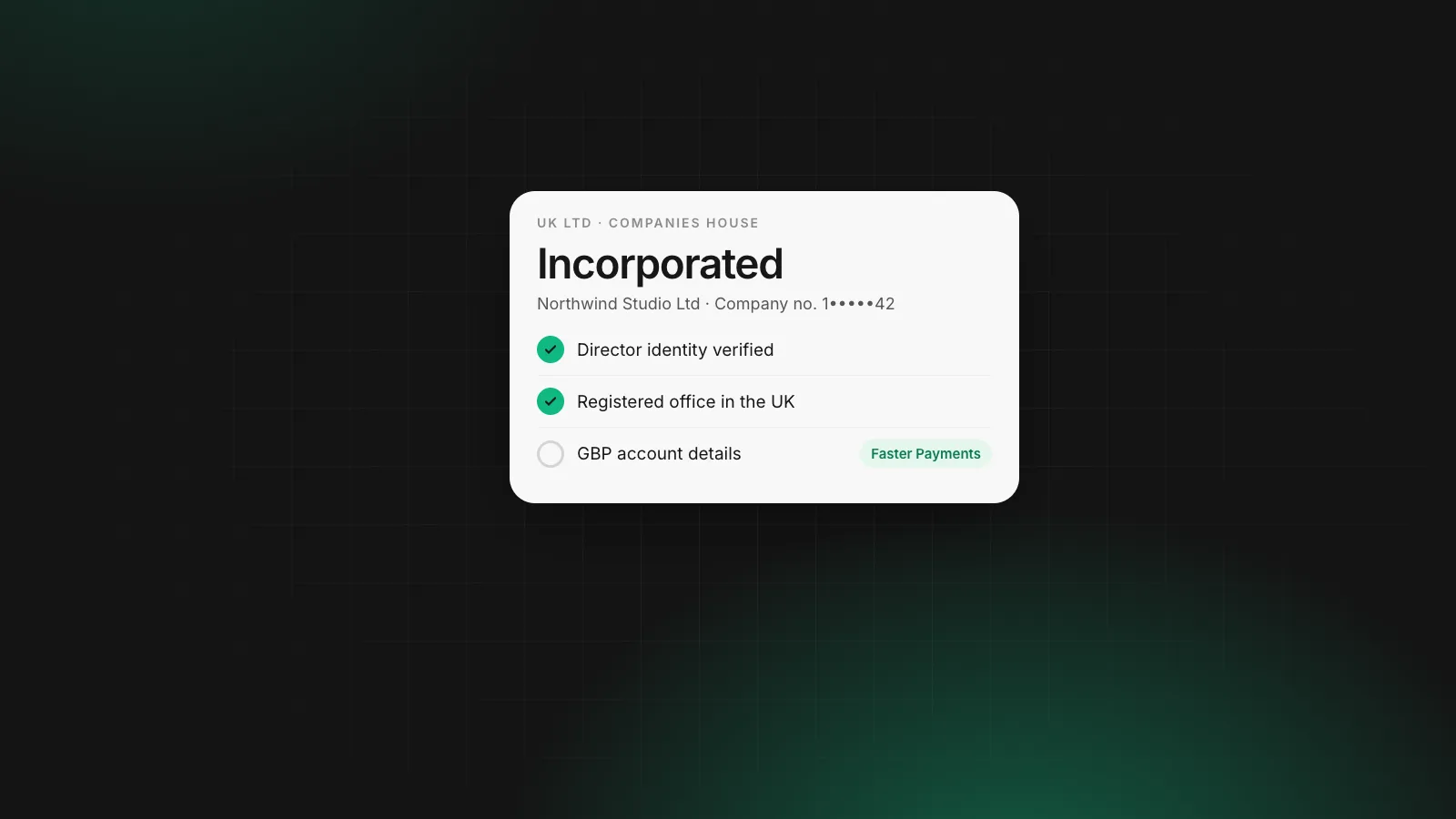
A confirmation statement is the yearly check-in every UK company sends Companies House. It replaced the annual return in 2016. You confirm that what is on the public register is correct, update what is not, and pay a fee. It takes ten minutes when the company's records are in order, and it is easy to forget because nothing about it is tied to your accounts.
What does a confirmation statement confirm?
| Item | What you check |
|---|---|
| Registered office address | The official address on the register |
| Registered email address | Required since March 2024; not public |
| Directors and secretary | Names, service addresses, dates |
| SIC codes | What the company does |
| Statement of capital | Shares issued and their value, if changed |
| Shareholders | Required for private companies, updated as needed |
| People with significant control | Anyone with more than 25% of shares or votes, or other control |
| Lawful purpose | A statement that the company's intended future activities are lawful |
Some changes, like a new director, must be filed separately and promptly, not saved up for the confirmation statement. The statement confirms that those filings were made.
When is it due?
You must file at least once every 12 months. The first review period starts on the date of incorporation. Each later period starts the day after the last statement's review date. You then have 14 days after the end of the period to file.
You can file early, and filing resets the review period from that date. Some companies file on the same day as their accounts so they only have to remember one date.
How much does it cost?
From 1 February 2026, the fee is £50 online and £110 on paper. You pay once per review period. Companies House raised the fees to fund its new duties under the Economic Crime and Corporate Transparency Act, including identity checks.
How does identity verification fit in?
Since 18 November 2025, every new director and person with significant control must verify their identity with Companies House. Existing directors and PSCs have a transition: they verify by the time of the company's first confirmation statement after that date, and the statement asks you to confirm that they have. Each verified person gets a personal code that the company uses when it files.
Our guide to Companies House identity verification covers how to verify, including from outside the UK.
What happens if you do not file?
Failing to file a confirmation statement is a criminal offence for the company and every director. Companies House usually sends reminders first, then may start the process to strike the company off the register. A struck-off company's assets, including money in its bank account, pass to the Crown. Getting a company restored is slow and expensive.
How do you file it?
- Sign in to the Companies House service with the company's authentication code.
- Check each section and update anything that changed.
- Confirm the lawful purpose statement and identity verification.
- Pay £50 and submit.
Why banks care about the register
Banks and payment providers check Companies House when they open and review business accounts. If the directors, owners or address on the register do not match what you told the bank, they will ask why, and in some cases pause the account until it is fixed. Keeping the register current avoids that. When Rivet runs business verification for a UK company, the public register is the first thing we compare against.
Questions people ask
What happens if I file my confirmation statement late?
There is no automatic late filing penalty as there is for accounts, but failing to file is an offence. Companies House can prosecute the company and directors, and can begin striking the company off the register.
Do I have to pay the fee if nothing has changed?
Yes. The fee is charged once for each 12-month review period, whether or not anything changed. Filing more than once in the same period is free.
Is the confirmation statement the same as annual accounts?
No. Accounts report the company's finances and have their own deadline. The confirmation statement confirms the company's details on the register.
Do directors need to verify their identity before the confirmation statement?
Under the transition rules, existing directors and people with significant control must verify by the time of the company's first confirmation statement after 18 November 2025. New directors must verify before appointment.
Sources
William covers what happens once a company starts moving money: getting the business verified, paying contractors and suppliers abroad, and keeping card spend under control. William writes for the founder or finance lead who has to make it work this week, and links every rule cited to the text it comes from.
More from William Sunjo M. →This article is general information, not legal, tax or financial advice. Rules and fees change; check the sources above and the provider’s current terms before you act on them.
- confirmation statement
- cs01
- companies house
- uk ltd
- company filing
- uk