Cambodian garment and footwear exporters after the 2025 US tariffs
Garments, footwear and travel goods are the core of Cambodia's exports, and the US is the largest buyer. A 2025 agreement set a 19 percent tariff on most Cambodian goods, far below the rate first threatened. Factories now negotiate who carries it.
- Published
- Reading time
- 1 min read
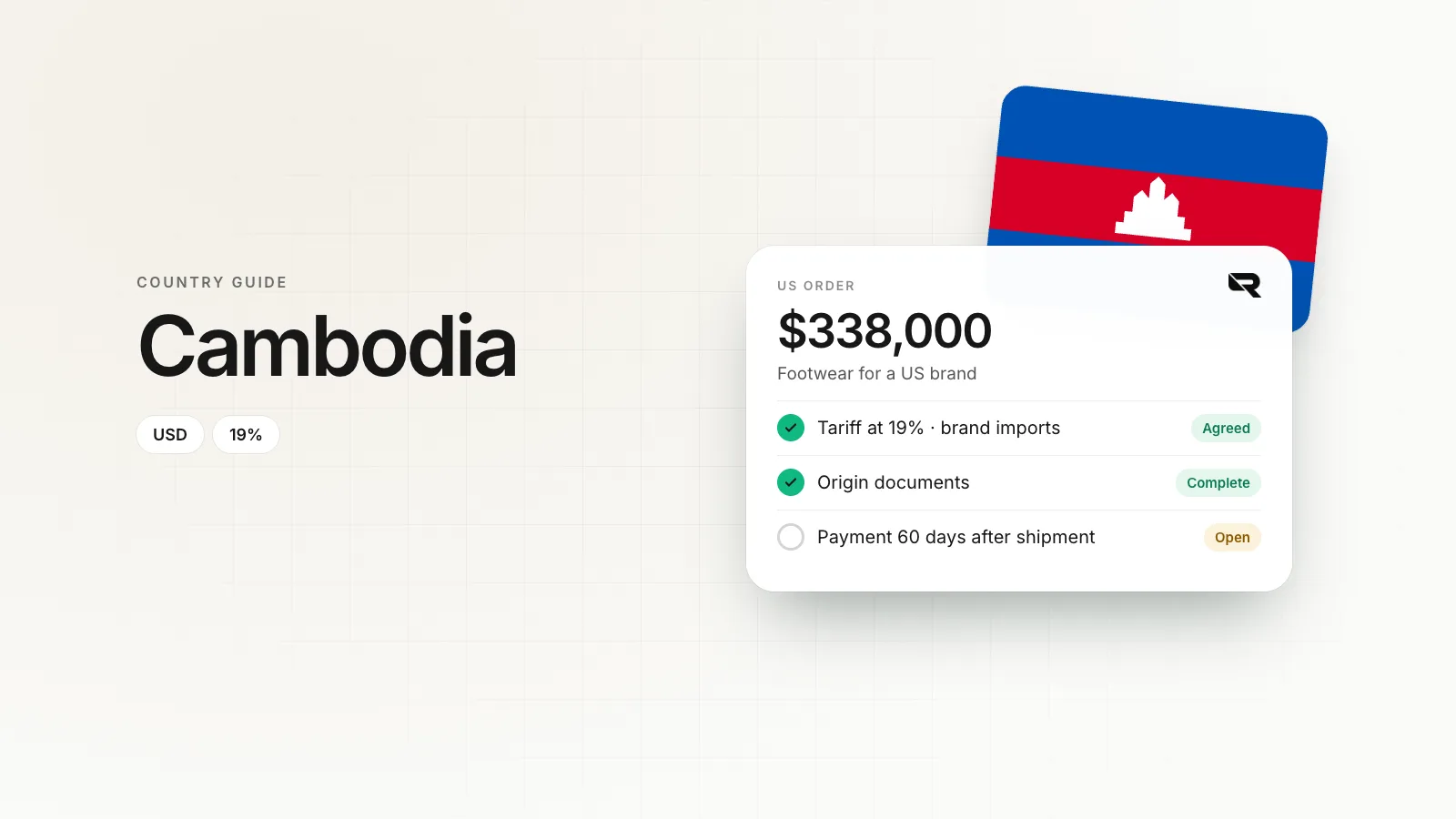
A Phnom Penh footwear factory makes trainers for a US sportswear brand. When the US announced steep tariffs on Cambodian goods in 2025, orders froze. The two governments then agreed a 19 percent rate for most Cambodian goods. Orders resumed, with the brand asking the factory to absorb part of the increase.
The tariff
Under the 2025 arrangement, most Cambodian goods entering the US pay a 19 percent tariff. Garments, footwear and travel goods are the core of Cambodia's exports, and the US is the largest market.
Who pays
The brand or importer of record pays US duty. In practice, brands negotiate prices with factories to share the cost. Factory margins are thin, so the outcome matters.
Origin
The US scrutinises goods it suspects were made elsewhere and routed through Southeast Asia. Cambodian factories should keep production records, input invoices and certificates of origin that show substantial manufacturing in Cambodia.
Dollars
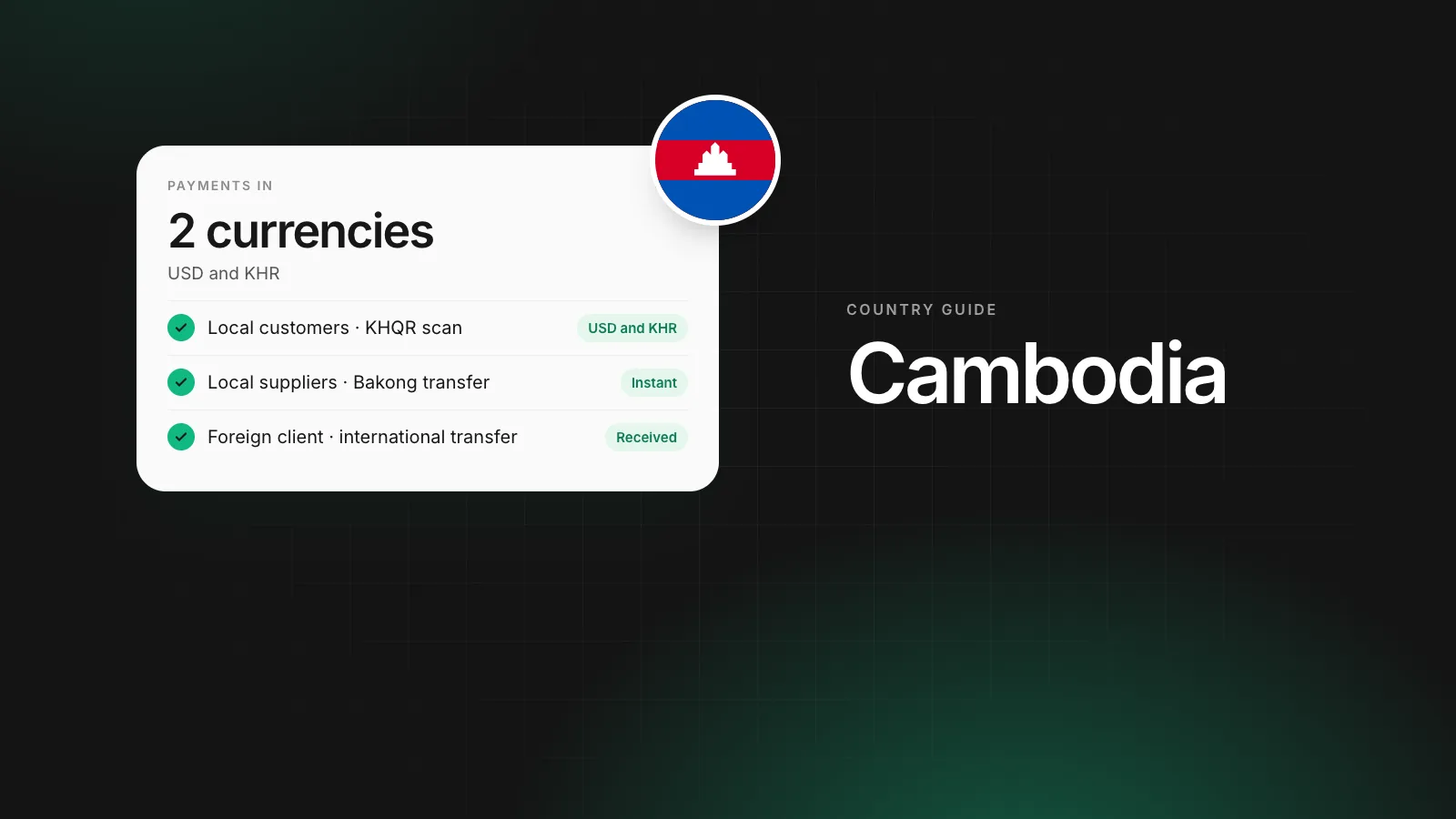
Cambodia's economy is heavily dollarised. Factories invoice and receive US dollars and pay many costs in dollars, including wages. That removes most exchange rate risk with US buyers. The costs that remain are long payment terms and international transfer fees.
Terms
Brands often pay 30 to 90 days after shipment. Factories manage cash with advances where possible, trade finance and credit insurance.
Paying into Cambodia: the local rail
| What | Detail |
|---|---|
| Local rail | Bakong |
| Run by | National Bank of Cambodia |
| Settlement | Seconds, 24/7, in riel or US dollars |
Source: National Bank of Cambodia: Bakong. Checked when this guide was last updated; the scheme's own page has the current figures.
Where Rivet fits
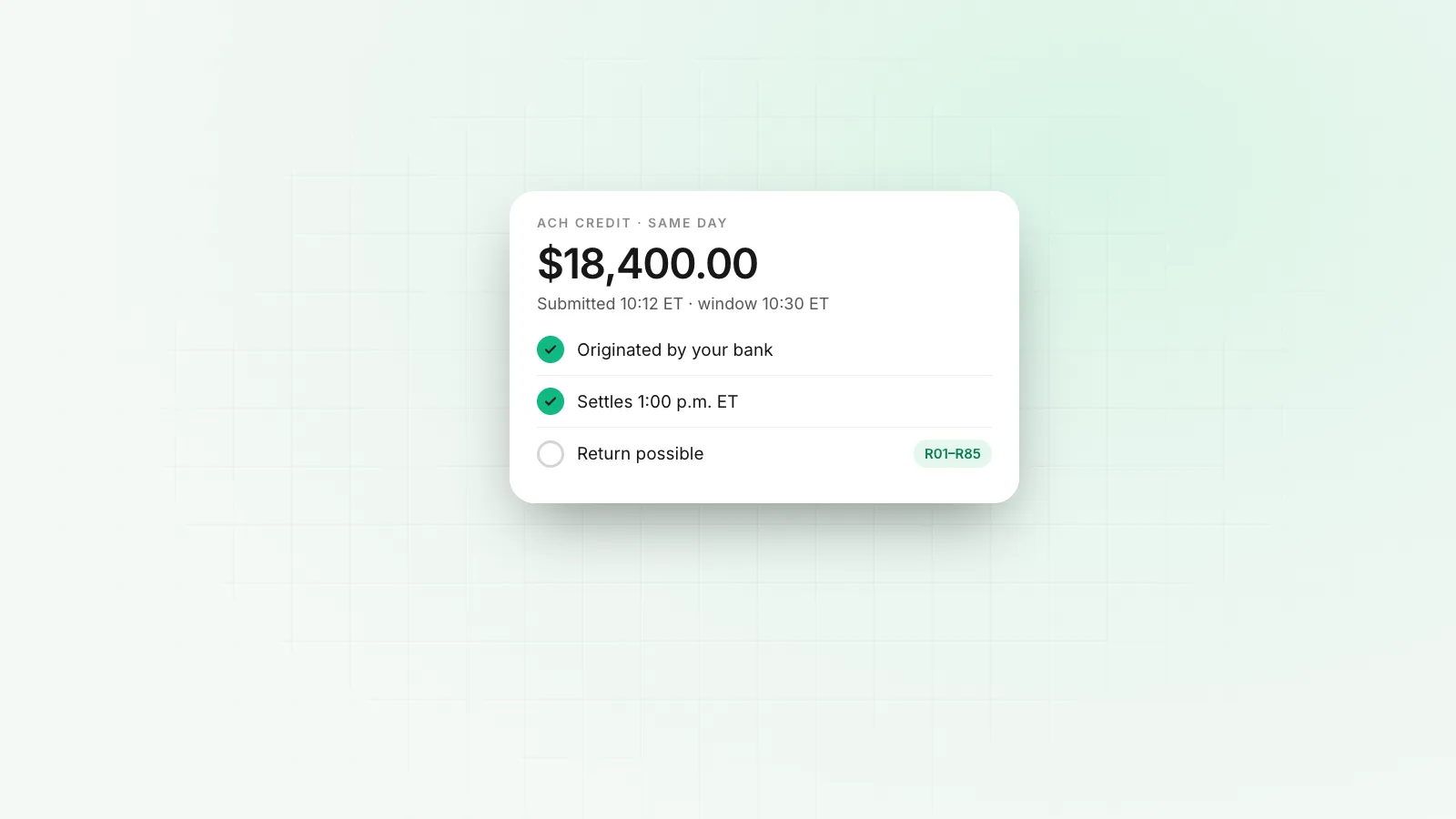
Rivet opens business accounts for registered companies after verification, including Cambodian companies, subject to National Bank of Cambodia rules. Approved companies get US account details in their own name on every plan, so US brands can pay by ACH, and payouts in 120+ countries. Rivet is not a bank; regulated partner institutions hold the funds.
Questions people ask
What tariff applies to Cambodian goods in the US?
Under the 2025 arrangement, most Cambodian goods face 19 percent. Check your product with a customs broker.
Who pays the tariff?
The US importer of record, usually the brand, though price negotiations often share the cost.
Do Cambodian factories invoice in dollars?
Yes. Cambodia's economy is heavily dollarised and garment exports are priced in US dollars.
Why does origin matter?
The US applies higher rates to goods it considers transshipped. Production records and certificates of origin show where goods were made.
Sources
Rashidatou writes Rivet's guides to how money moves between countries: the payment rails, what each one costs, and the account details a company needs to get paid in another currency. Every figure in Rashidatou's articles is traced to the scheme rulebook, the regulator or the provider's published price list, and those sources are listed at the end.
More from Rashidatou K. →This article is general information, not legal, tax or financial advice. Rules and fees change; check the sources above and the provider’s current terms before you act on them.
- cambodia
- garments
- footwear
- us tariffs
- usd
- exports