Brazilian companies receiving from foreign clients: exchange contracts, taxes and keeping funds abroad
A Brazilian software or design company paid by a client in Miami receives dollars that must pass through Brazil's foreign exchange system, unless it keeps them abroad, which Brazilian law allows exporters to do. Each route has different costs and paperwork.
- Published
- Reading time
- 2 min read
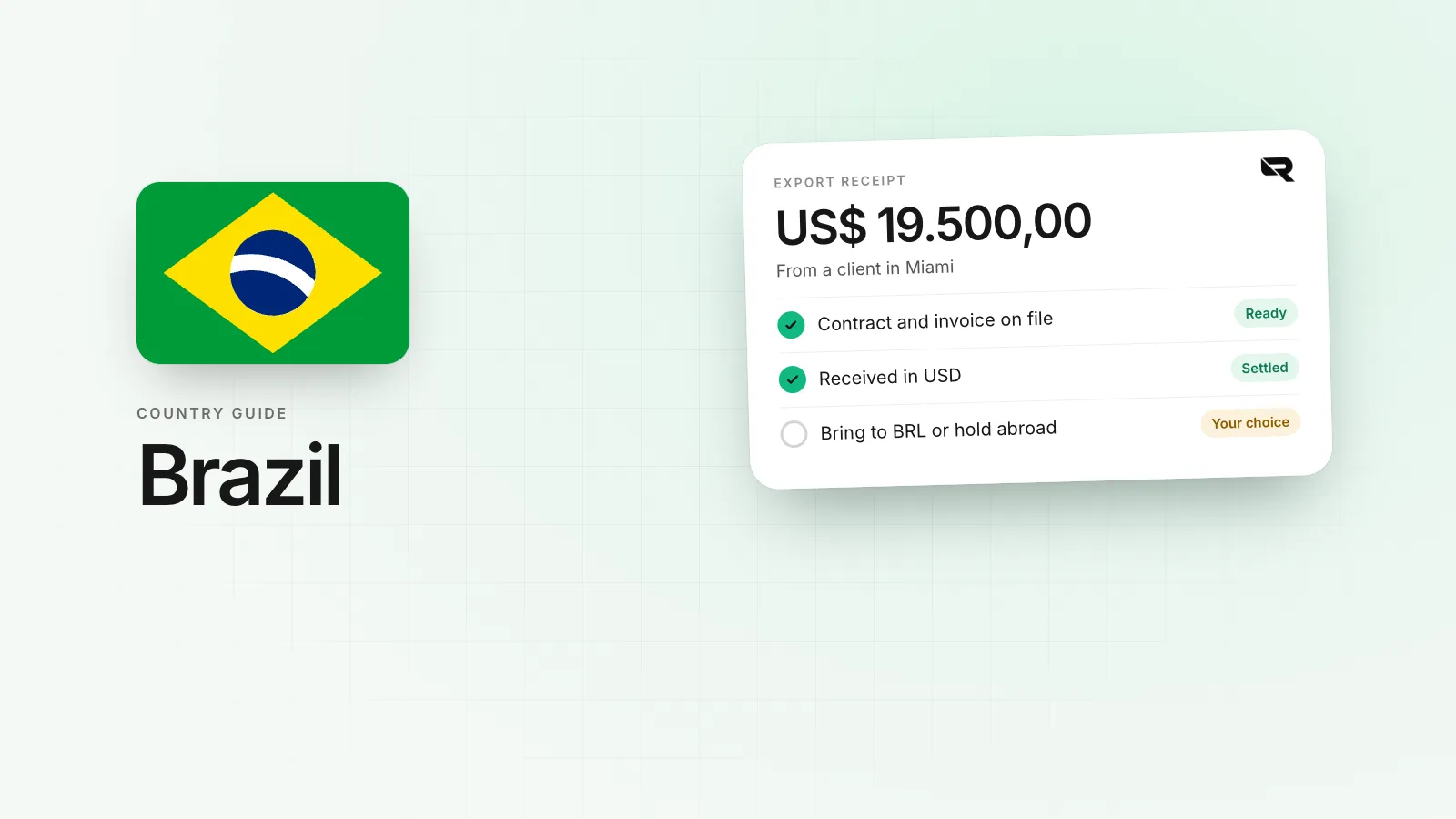
A Florianópolis software company bills a client in Miami US$19,500 a month. For years the payment arrived at its Brazilian bank, was converted to reais through an exchange contract at the bank's rate, with IOF and a spread, and landed as a figure the founders could never quite reconcile with the invoice. Then their accountant pointed out that the company could keep the dollars abroad.
Two routes for export proceeds
Bring it in. Foreign currency coming into Brazil is converted into reais through an exchange operation (câmbio) with an authorised institution. The operation carries the institution's spread and IOF on foreign exchange. The reais land in your Brazilian account.
Keep it abroad. Brazil's foreign exchange framework, modernised by Law 14.286 of 2021, allows exporters to maintain export proceeds abroad. The company can hold dollars in an account outside Brazil, pay foreign costs from them and bring funds in when it chooses. Holdings abroad above set thresholds are reported to the Central Bank, and the revenue is still taxed in Brazil.
Tax relief on exported services
Revenue from services exported to foreign residents can be exempt from PIS, COFINS and ISS, provided the service's result occurs abroad and the payment comes from abroad, whether converted into reais or kept abroad as the law allows. The details depend on the service and the municipality's ISS rules. The company still pays IRPJ and CSLL on its profit.
IOF
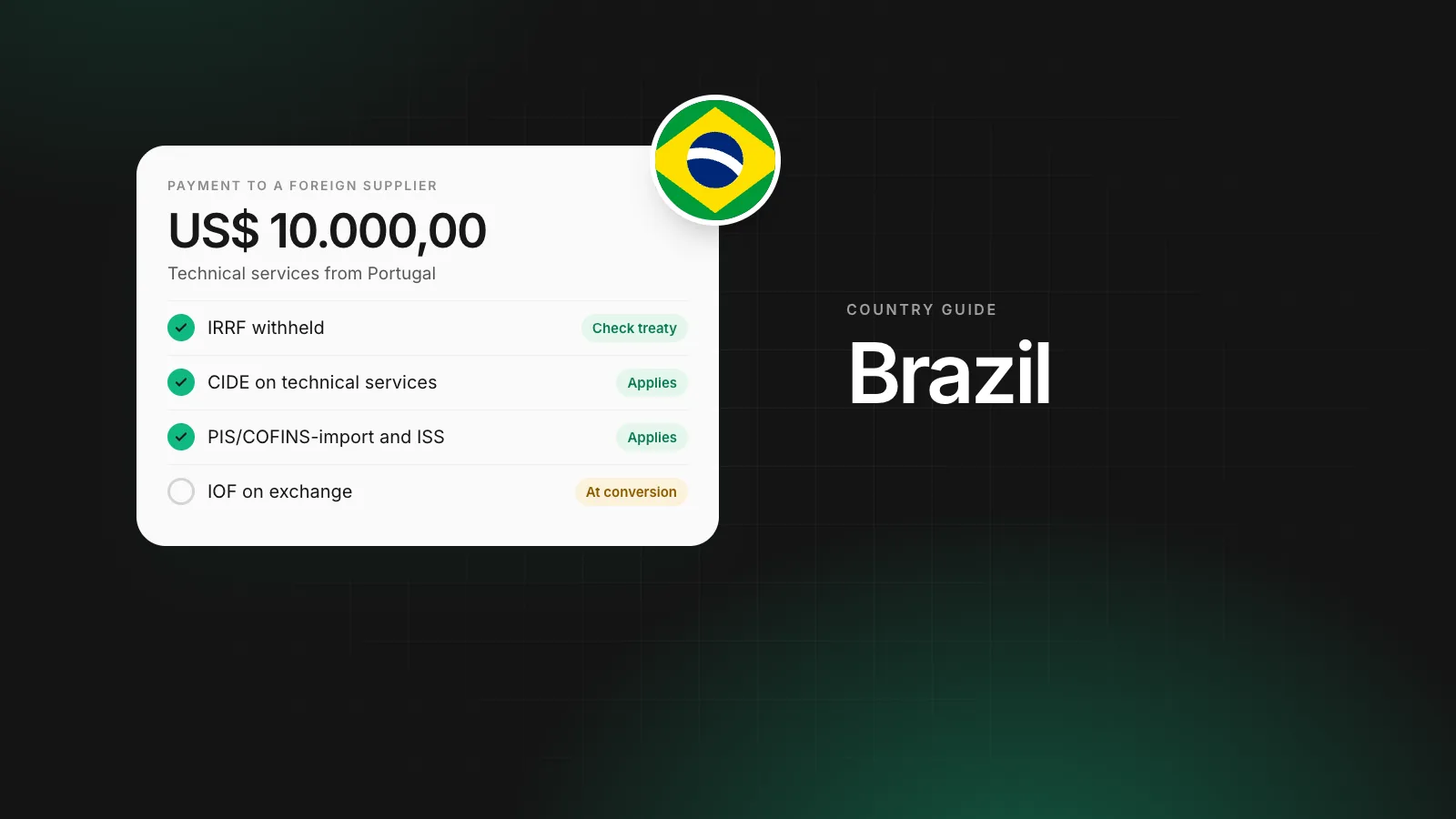
IOF on foreign exchange is charged on conversions. Rates are set by decree and changed several times in 2025. Inbound export receipts generally carry lower rates than many outbound payments. Confirm the current rate with your exchange provider before you plan conversions.
Documents
Keep the contract with the foreign client, each invoice, the NFS-e for the export of services where your municipality requires it, and proof of payment. They support the tax relief and answer questions from your bank or the Receita.
Paying into Brazil: the local rail
| What | Detail |
|---|---|
| Local rail | Pix |
| Run by | Banco Central do Brasil |
| Settlement | Seconds, 24/7 |
| Published fee | Free for individuals; a company's bank may charge per Pix received or sent |
Source: Banco Central do Brasil: Pix. Checked when this guide was last updated; the scheme's own page has the current figures.
Where Rivet fits
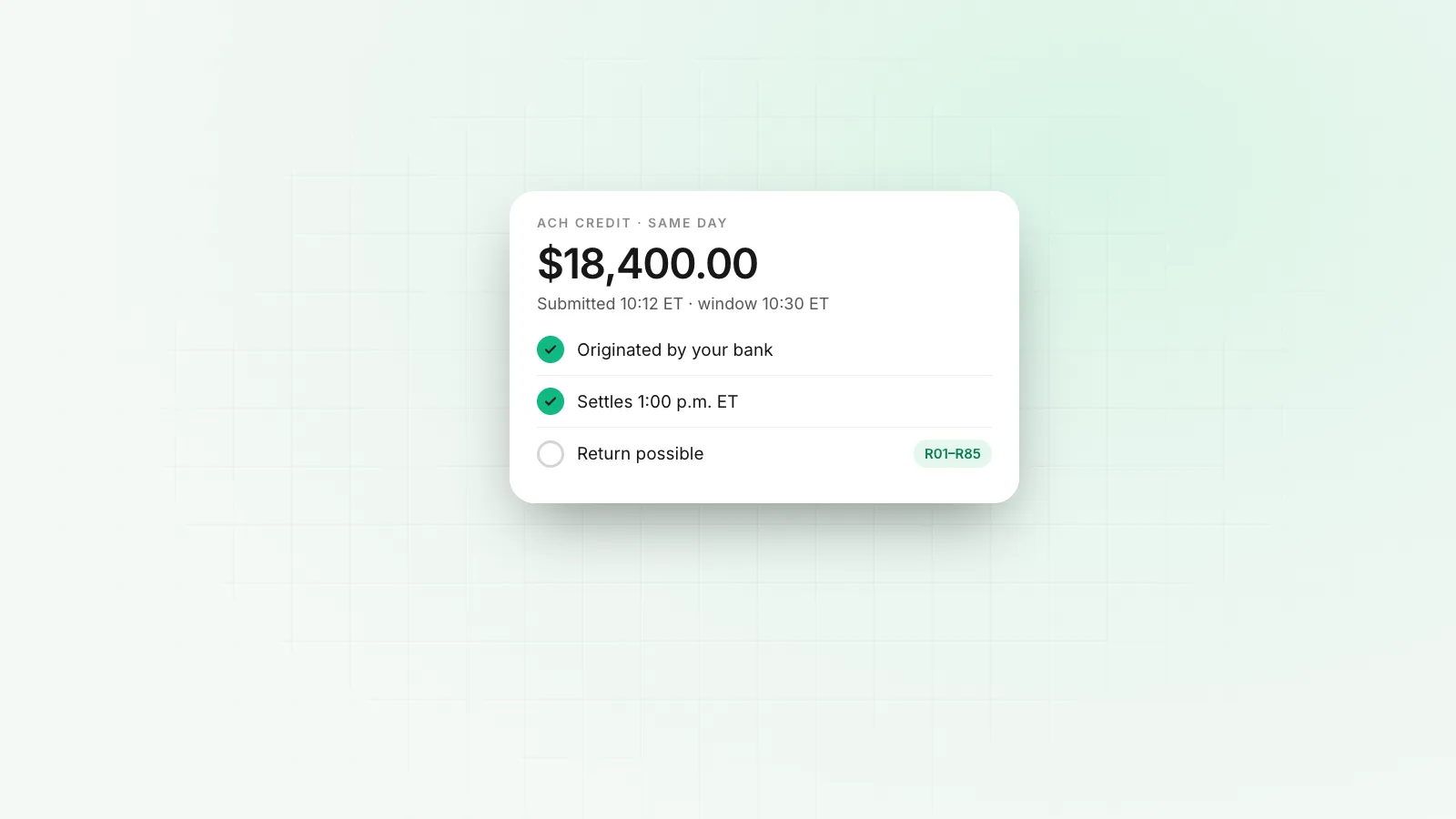
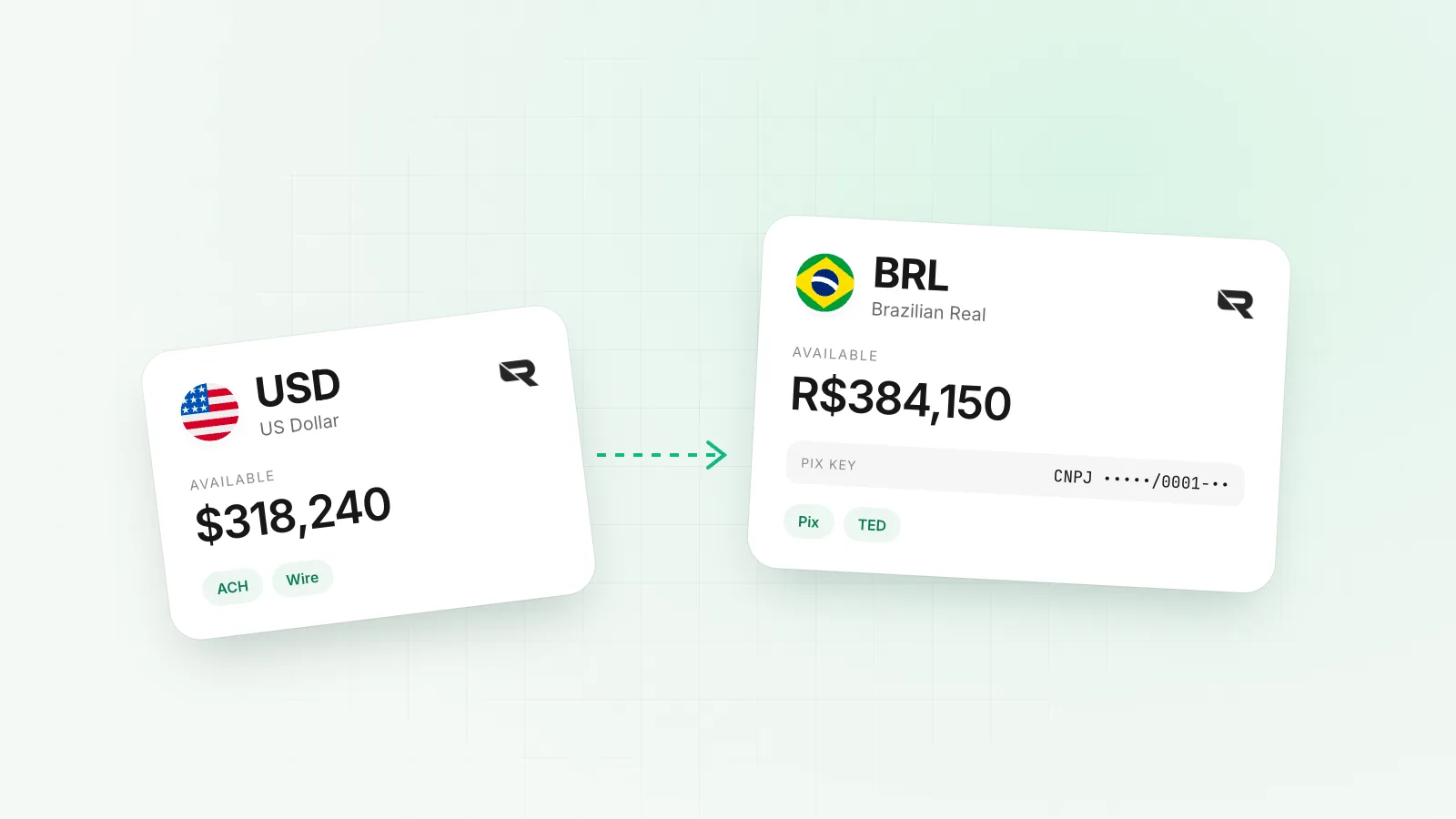
A Rivet business account accepts registered companies after verification, including Brazilian companies. For exporters keeping proceeds abroad, it gives US account details in the company's own name on every plan, so a Miami client pays by ACH, with euro and sterling details from the Growth plan. Dollars can be held, used for foreign costs, or paid out to Brazil when you choose. Rivet is not a bank; regulated partner institutions hold the funds. Confirm reporting and tax treatment with your accountant.
Questions people ask
Can a Brazilian company keep export receipts outside Brazil?
Yes. Brazilian law allows exporters to maintain export proceeds abroad. Holdings abroad above thresholds must be reported to the Central Bank, and the income is still taxed in Brazil.
Are exported services exempt from PIS, COFINS and ISS?
Revenue from services exported to foreign residents can be exempt when the result of the service occurs abroad and the payment enters as foreign currency or is kept abroad as allowed. Check the conditions with your accountant.
What IOF applies to export receipts?
IOF on foreign exchange applies to the conversion. Rates are set by decree and changed in 2025; inbound export receipts generally carry lower rates than outbound payments. Your exchange provider can confirm the current rate.
What documents are needed?
The contract with the foreign client, the invoice (and NFS-e for the export of services where required), and proof of the payment.
Sources
Rashidatou writes Rivet's guides to how money moves between countries: the payment rails, what each one costs, and the account details a company needs to get paid in another currency. Every figure in Rashidatou's articles is traced to the scheme rulebook, the regulator or the provider's published price list, and those sources are listed at the end.
More from Rashidatou K. →This article is general information, not legal, tax or financial advice. Rules and fees change; check the sources above and the provider’s current terms before you act on them.
- brazil
- exports of services
- câmbio
- iof
- usd
- pj