Bahraini startups billing clients across the GCC and beyond
Bahrain positions itself as a launchpad for startups serving the Gulf, with Saudi Arabia across the causeway. Clients in Riyadh pay in riyals, clients in Dubai in dirhams, clients in London in pounds. The dinar's dollar peg keeps most of this predictable.
- Published
- Reading time
- 2 min read
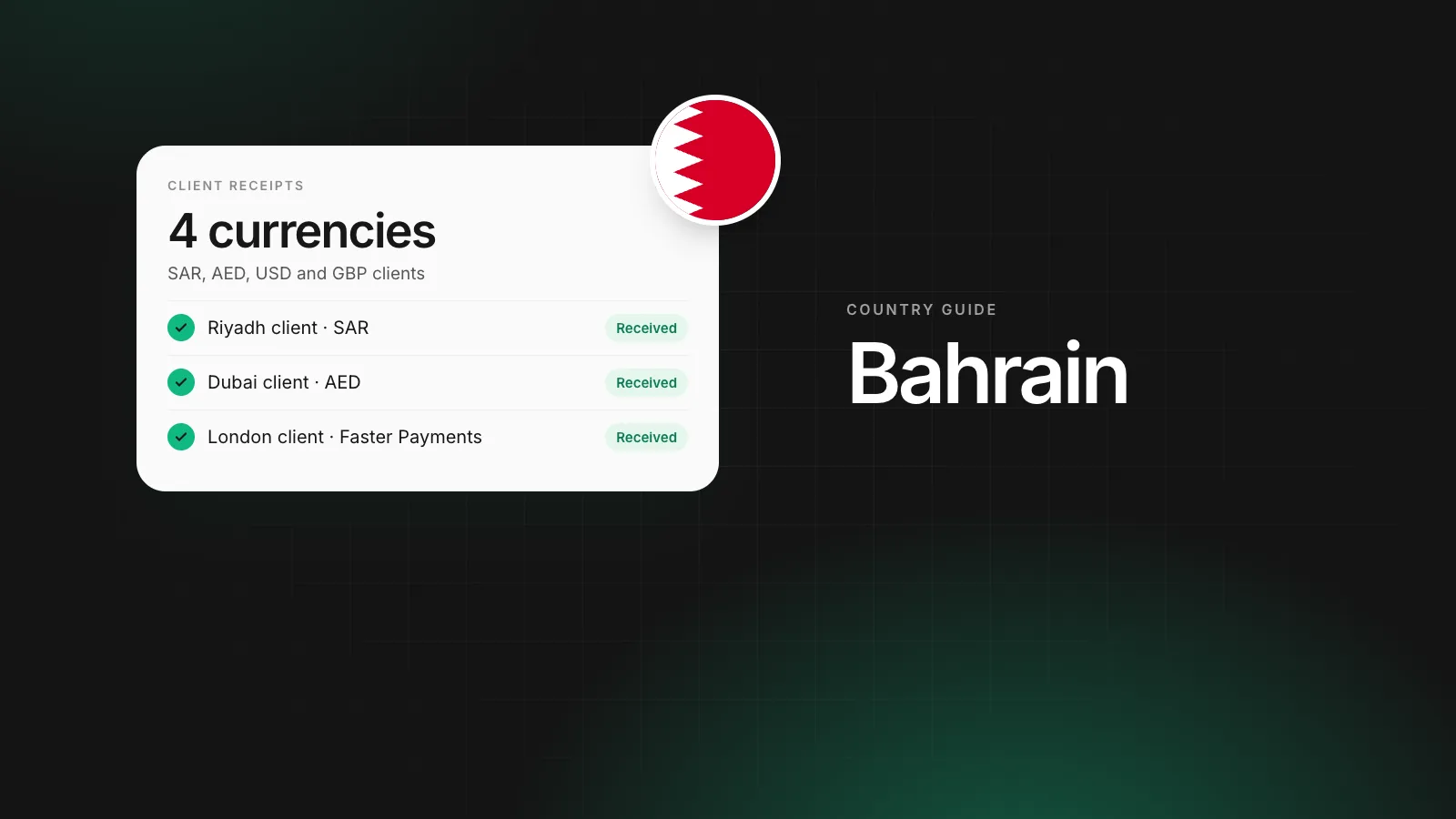
A Manama B2B software startup sells to a bank in Riyadh, a retailer in Dubai and a payments company in London. The Riyadh and Dubai invoices are in their local currencies, both pegged to the dollar like the Bahraini dinar. The London invoice is in pounds, which float. The startup's founders worry about the pound and barely think about the riyal.
Pegs make the Gulf simple
Bahrain, Saudi Arabia, the UAE, Qatar and Oman all peg their currencies to the US dollar. Kuwait pegs to a basket. For a Bahraini company, revenue in riyals or dirhams converts to dinars at almost fixed rates. The costs that remain are transfer fees and conversion spreads, not rate swings.
Outside the Gulf
Pounds and euros float against the dollar and so against the dinar. A Bahraini startup with London and European clients carries that movement. Two habits help:
- Hold pounds and euros as they arrive, and pay costs in those currencies from them, such as UK contractors, European cloud regions and conference travel.
- Convert the surplus on a schedule, rather than on each receipt.
Getting paid
- Saudi and UAE clients pay by international transfer. GCC interbank links have made these faster.
- UK clients pay sterling details by Faster Payments.
- EU clients pay a euro IBAN by SEPA.
- US clients pay US details by ACH.
Paying into Bahrain: the local rail
| What | Detail |
|---|---|
| Local rail | Fawri+ instant transfers (Fawri for larger same-day transfers) |
| Run by | BENEFIT, under the Central Bank of Bahrain |
| Settlement | Fawri+ in seconds, 24/7; Fawri within the business day |
Source: BENEFIT: Fawri and Fawri+. Checked when this guide was last updated; the scheme's own page has the current figures.
Where Rivet fits
A Rivet business account accepts registered companies after verification, including Bahraini companies, subject to local rules. Approved companies get US account details on every plan and sterling and euro details from the Growth plan, in their own name, and on Scale balances in 30 currencies. Payments are matched to invoices, and conversions show their rate before you confirm. Rivet is not a bank; regulated partner institutions hold the funds.
Questions people ask
Is the dinar pegged?
Yes, the Central Bank of Bahrain maintains a peg of 0.376 dinars to the US dollar.
Do GCC currencies carry exchange risk?
Very little against the dollar, since the riyal, dirham, Qatari riyal, dinar and Omani rial are pegged. The Kuwaiti dinar is pegged to a basket.
How do Saudi clients pay Bahraini companies?
Usually by international transfer in riyals or dollars. GCC payment links have made transfers faster.
Should a startup invoice European clients in euros?
Usually yes, and collect them on euro details so clients pay by SEPA.
Sources
Rashidatou writes Rivet's guides to how money moves between countries: the payment rails, what each one costs, and the account details a company needs to get paid in another currency. Every figure in Rashidatou's articles is traced to the scheme rulebook, the regulator or the provider's published price list, and those sources are listed at the end.
More from Rashidatou K. →This article is general information, not legal, tax or financial advice. Rules and fees change; check the sources above and the provider’s current terms before you act on them.
- bahrain
- startups
- fintech
- gcc
- usd
- bhd