ACH return codes explained: R01, R02, R03 and the rest
When an ACH payment fails, it comes back with a return code. R01 means insufficient funds, R02 a closed account, R03 an account that cannot be found. Unauthorised debit returns can arrive up to 60 days later. Each code tells you whether to retry, fix the details or stop.
- Published
- Reading time
- 2 min read
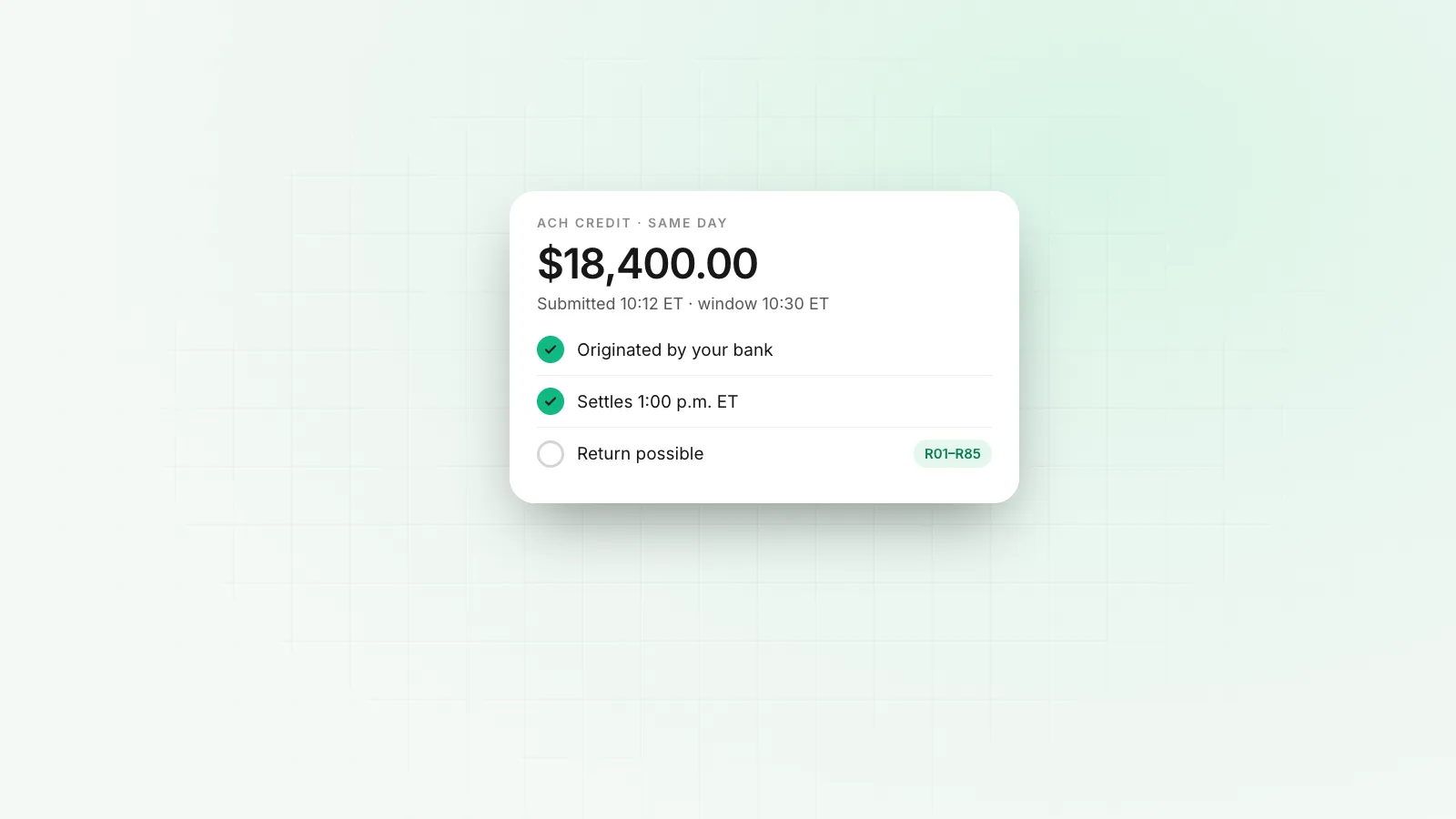
An ACH return is the network's way of saying a payment did not go through. The return comes with a code that tells you why. Reading the code correctly decides whether you try again tomorrow, ask the payee for new details or stop collecting from that account.
What are the most common ACH return codes?
| Code | Meaning | Return window | What to do |
|---|---|---|---|
| R01 | Insufficient funds | 2 banking days | Retry later, up to 2 more times |
| R02 | Account closed | 2 banking days | Get new account details |
| R03 | No account, unable to locate | 2 banking days | Check the account number and name |
| R04 | Invalid account number structure | 2 banking days | Fix the number |
| R05 | Unauthorised debit to consumer account using a corporate SEC code | 60 calendar days | Get proper consumer authorisation |
| R07 | Authorisation revoked by customer | 60 calendar days | Stop debiting; get new authorisation |
| R08 | Payment stopped | 2 banking days | Contact the customer |
| R09 | Uncollected funds | 2 banking days | Retry later |
| R10 | Customer advises not authorised (consumer) | 60 calendar days | Stop and investigate |
| R16 | Account frozen | 2 banking days | Contact the customer |
| R20 | Non-transaction account | 2 banking days | Use a different account |
| R29 | Corporate customer advises not authorised | 2 banking days | Stop and confirm authorisation |
There are more than 80 codes in total. These cover most returns a business will see.
How long can a payment be returned?
Most returns must be sent by the receiving bank within two banking days of the settlement date. The exception is unauthorised debits to consumer accounts (R05, R07, R10, R11 and similar), which can be returned up to 60 calendar days after settlement. That is why a business collecting from consumers by ACH debit can see money disappear weeks after it seemed settled.
Can you retry a returned payment?
Only some. Nacha rules let you reinitiate an entry returned as R01 or R09 up to two more times, within 180 days of the original settlement. For other codes, you can reinitiate only after you have fixed the reason, such as new account details or a new authorisation. Retrying an unauthorised return without fixing it breaks the rules.
What return rates does Nacha watch?
| Return type | Threshold |
|---|---|
| Unauthorised returns (R05, R07, R10, R11, R29, R51) | 0.5% |
| Administrative returns (R02, R03, R04) | 3.0% |
| All debit returns | 15.0% |
An originator over these levels gets inquiries from its bank and Nacha, and may lose the ability to send ACH debits. For businesses collecting subscriptions, a rising R10 rate is often the first sign of a fraud problem or unclear billing descriptors.
How do you reduce returns?
- Validate account numbers before the first debit, using account validation or a prenote.
- Get clear written or recorded authorisation and keep it.
- Use a recognisable company name on the entry, so customers know the debit.
- Send notices before debits change amount or date.
- Stop retrying after the rules say to.
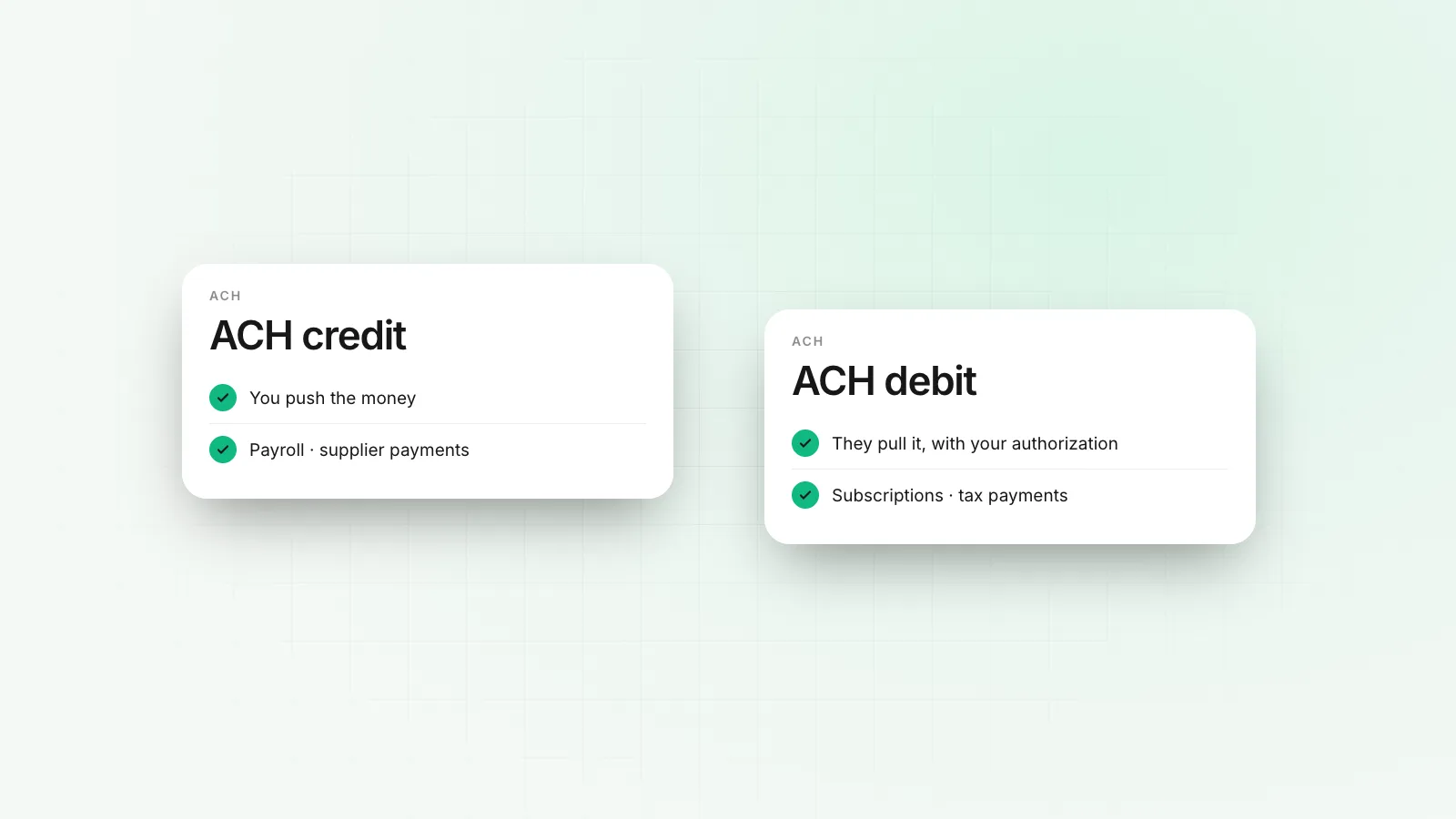
For outbound payments, most returns come from closed or mistyped accounts. Confirm the details with the payee and keep a record. Our guide to why an ACH payment is pending covers the timing side, and ACH debit vs ACH credit explains which one you are sending.
Returns on a Rivet account
Rivet's payouts screen shows each recipient's name and account details before a batch is approved, which is where most administrative returns can be caught before they happen.
Questions people ask
What does ACH return code R01 mean?
Insufficient funds. The account did not have enough available balance for the debit. You can retry an R01 up to two times within 180 days of the original settlement date.
What does R03 mean?
No account, or unable to locate account. The account number does not match an account at the receiving bank, or does not match the name. Check the details with the payee before sending again.
What is the difference between R10 and R29?
Both mean the account holder says the debit was not authorised. R10 is used for consumer accounts and can be returned up to 60 days later. R29 is used for corporate accounts and must be returned within two banking days.
Can an ACH credit be returned?
Yes. Credits get returned for closed accounts, invalid account numbers or frozen accounts. The money comes back to the sender, usually within a few business days.
Sources
Rashidatou writes Rivet's guides to how money moves between countries: the payment rails, what each one costs, and the account details a company needs to get paid in another currency. Every figure in Rashidatou's articles is traced to the scheme rulebook, the regulator or the provider's published price list, and those sources are listed at the end.
More from Rashidatou K. →This article is general information, not legal, tax or financial advice. Rules and fees change; check the sources above and the provider’s current terms before you act on them.
- ach return codes
- r01
- r03
- ach returned
- nacha
- us payments