Lloyds, NatWest, Barclays, HSBC or Santander: UK business accounts compared
Every big UK bank offers a free first year or two. The account you end up paying for in year two, and what each charges for cash, is where they differ.
- Published
- Updated
- Reading time
- 3 min read
Search "business account" in the UK and the first five names are the same five banks. Each advertises free banking. What changes between them is how long it lasts, what a month costs after it ends, and the price of paying in cash.
Figures below come from each bank's own pages, read on 8 November 2026. Lloyds' tariff pages were not loading that day, so check its current monthly fee with the bank.
The five, side by side
| Free period | Monthly fee after | Cash paid in | Who can apply | |
|---|---|---|---|---|
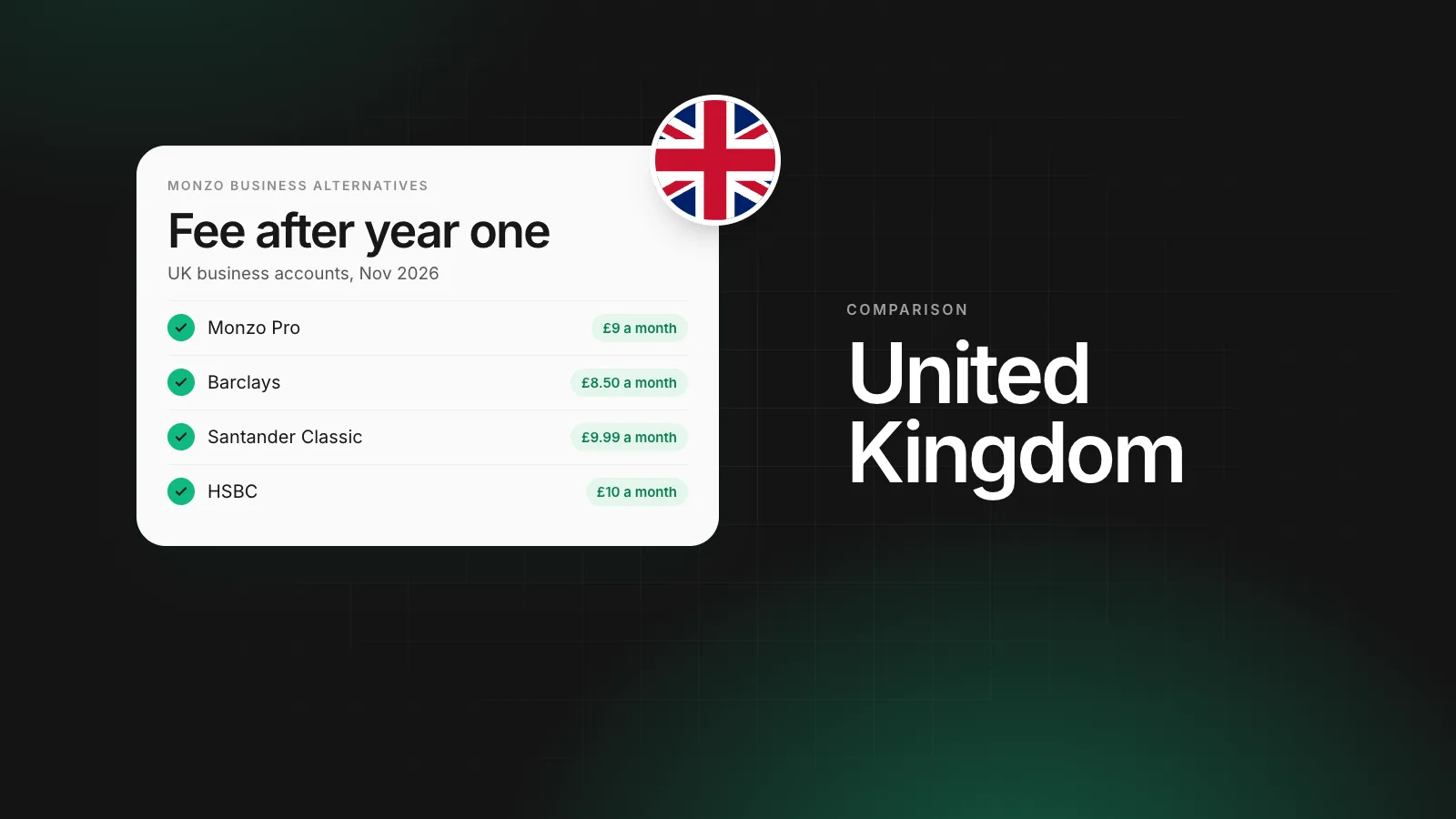
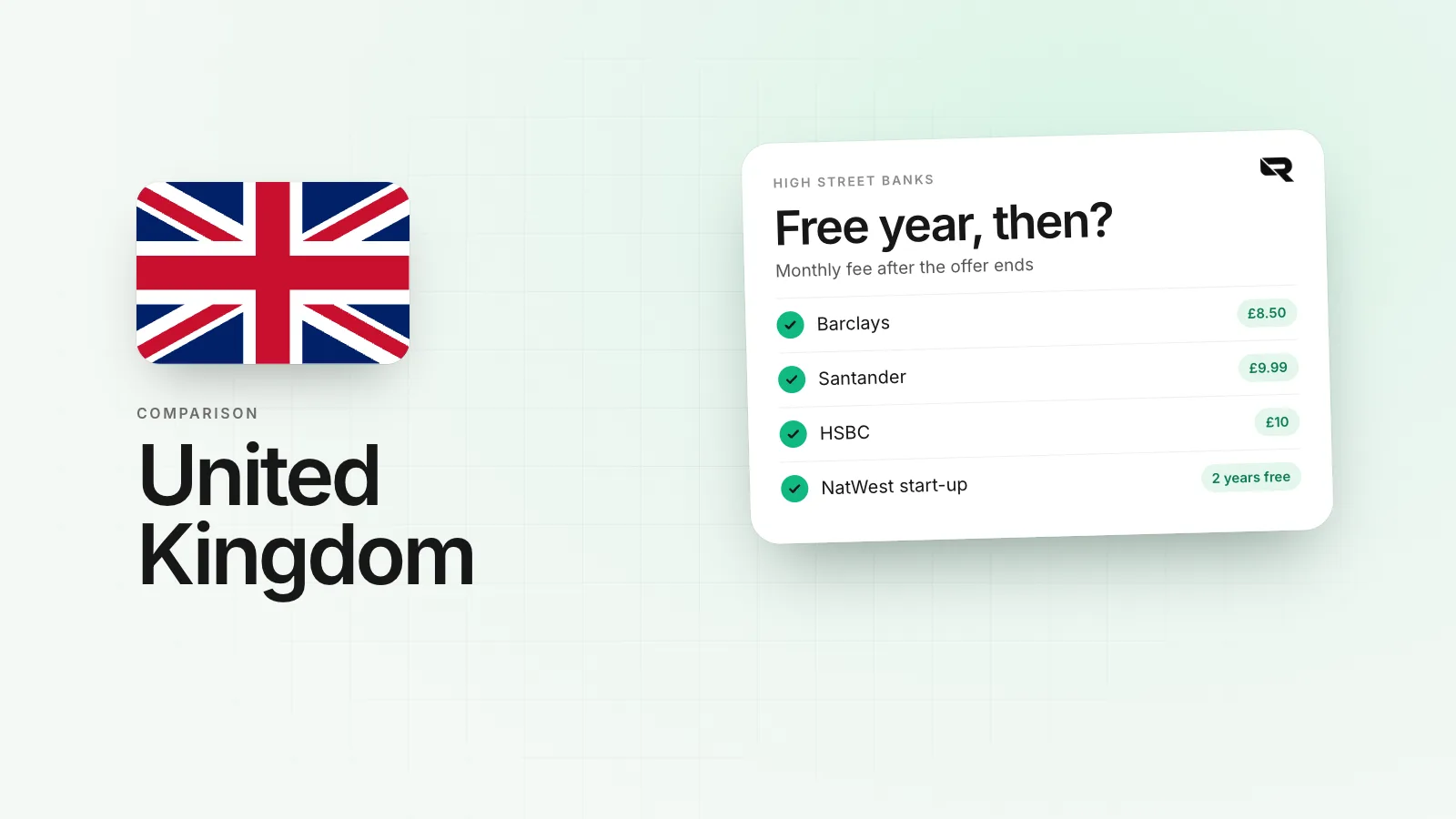
| Barclays Business Current Account | 12 months | £8.50 | 60p per deposit | Over 18; at least one UK resident on the application |
| Santander Business Current Account Classic | 12 months (start-ups and switchers) | £9.99 | Santander tariff | UK businesses with up to two directors, owners or partners |
| HSBC Business Banking Account | 12 months (start-ups and switchers, primary account) | £10 | £1.50 per counter credit; 1.5% of value at branch or Post Office | Established businesses, UK tax resident |
| NatWest Start-up Account | 2 years of free everyday banking | Standard Tariff | NatWest tariff | Under £1m turnover, trading under a year |
| Lloyds Business Current Account | 12 months for first-time Lloyds business customers | Lloyds tariff | Lloyds tariff | See Lloyds' criteria |
Year two is the real price
A free year is worth £102 to £120 at these fees. What matters more is the account you keep paying for. Barclays at £8.50 is the cheapest headline monthly fee of the five. HSBC at £10 includes free standard digital transactions and debit card payments, and a relationship manager on the Business Banking Account.
Santander's Classic is built for simple companies: up to two directors, owners or partners. A company with three founders needs a different Santander account or a different bank.
Cash is where the bills differ
If you bank takings, cash charges will cost you more than the monthly fee. Barclays charges 60p per deposit at the Post Office, Barclays Collect or a self-service device. HSBC charges £1.50 per counter credit and 1.5% of the value for branch or Post Office cash after the free year, and its cash pricing changes on 14 December 2026: branch cash in and out rises to 2% of value, while counter cash transactions and UK cash machine withdrawals become free.
Switching gets you more than starting
NatWest's switch offer is the most generous: two years of free everyday banking for businesses with turnover up to £2m that switch fully through the Current Account Switch Service. It excludes unarranged overdraft charges, Bankline, international payments and extra services, and it is not open to customers moving from Royal Bank of Scotland or Ulster Bank, which are in the same group. HSBC's 12 free months also cover switchers on their primary account if turnover is £6.5m or less and the business has fewer than 50 employees. Our guide on how to switch business bank account covers the switch service.
Opening online
All five take most limited company applications online. Barclays lists what it asks for: residential addresses for the past three years, the trading address, the Companies House number and date of incorporation, tax details and turnover, plus names, mobile numbers and emails for directors or partners. The others ask for much the same. Applications slow down when an owner lives outside the UK, when a company owns the company, or when the business description is vague. Our KYB documents checklist lists what to prepare.
The international part
High street accounts are sterling accounts. A client in the US pays by international wire, the bank charges for the incoming payment, and the money converts to pounds at the bank's rate. NatWest's switch offer excludes international payments explicitly, and the other banks price them outside the free everyday banking too.
If dollars or euros arrive every month, a separate account with USD and EUR details in your company's name lets clients pay you on their own local rails. Rivet gives UK limited companies USD details on the free Starter plan and EUR and GBP details on Growth, with FX from 0.50% shown before you confirm and payouts to 120+ countries. It sits alongside a high street account, which you will still want for cash, lending and HMRC. Rivet is not a bank; regulated partner institutions hold client funds. See best UK business account for international payments and Accounts.
Paying into the United Kingdom: the local rail
| What | Detail |
|---|---|
| Local rail | Faster Payments |
| Run by | Pay.UK |
| Settlement | Seconds, 24/7; the scheme limit is £1,000,000, and each bank sets its own |
Bacs still carries most payroll and Direct Debits, on a three-day cycle.
Source: Pay.UK: Faster Payment System. Checked when this guide was last updated; the scheme's own page has the current figures.
Questions people ask
Which UK bank is best for a business account?
For a start-up, NatWest's two years of free everyday banking is the longest offer of the five. For low ongoing cost, Barclays at £8.50 a month after year one is the cheapest headline fee. For a business that needs a relationship manager, HSBC's Business Banking Account includes one.
Can I open a UK business bank account online?
Yes, all five take applications online for most limited companies. Expect identity checks for every director and significant shareholder, and a slower route if your company structure is unusual or an owner lives abroad.
Do I get free banking if I switch?
NatWest gives two years of free everyday banking to businesses with turnover up to £2m that switch fully through the Current Account Switch Service. HSBC's 12 months free applies to start-ups and switchers on their primary account.
Are high street business accounts good for international payments?
They send and receive SWIFT payments, usually with a fee per payment and an exchange rate margin, and most do not give you account details in other currencies on the standard account. Companies with regular dollar or euro income often add a multi-currency account.
Sources
William covers what happens once a company starts moving money: getting the business verified, paying contractors and suppliers abroad, and keeping card spend under control. William writes for the founder or finance lead who has to make it work this week, and links every rule cited to the text it comes from.
More from William Sunjo M. →This article is general information, not legal, tax or financial advice. Rules and fees change; check the sources above and the provider’s current terms before you act on them.
- lloyds business account
- natwest business account
- barclays business account
- hsbc business account
- santander business account
- open business account online