Thai exporters and the Bank of Thailand's repatriation rule
Thailand's foreign exchange rules require exporters to bring large export proceeds home, but they no longer have to convert them into baht. The Bank of Thailand has relaxed the rules repeatedly to give exporters more flexibility in holding foreign currency.
- Published
- Reading time
- 1 min read
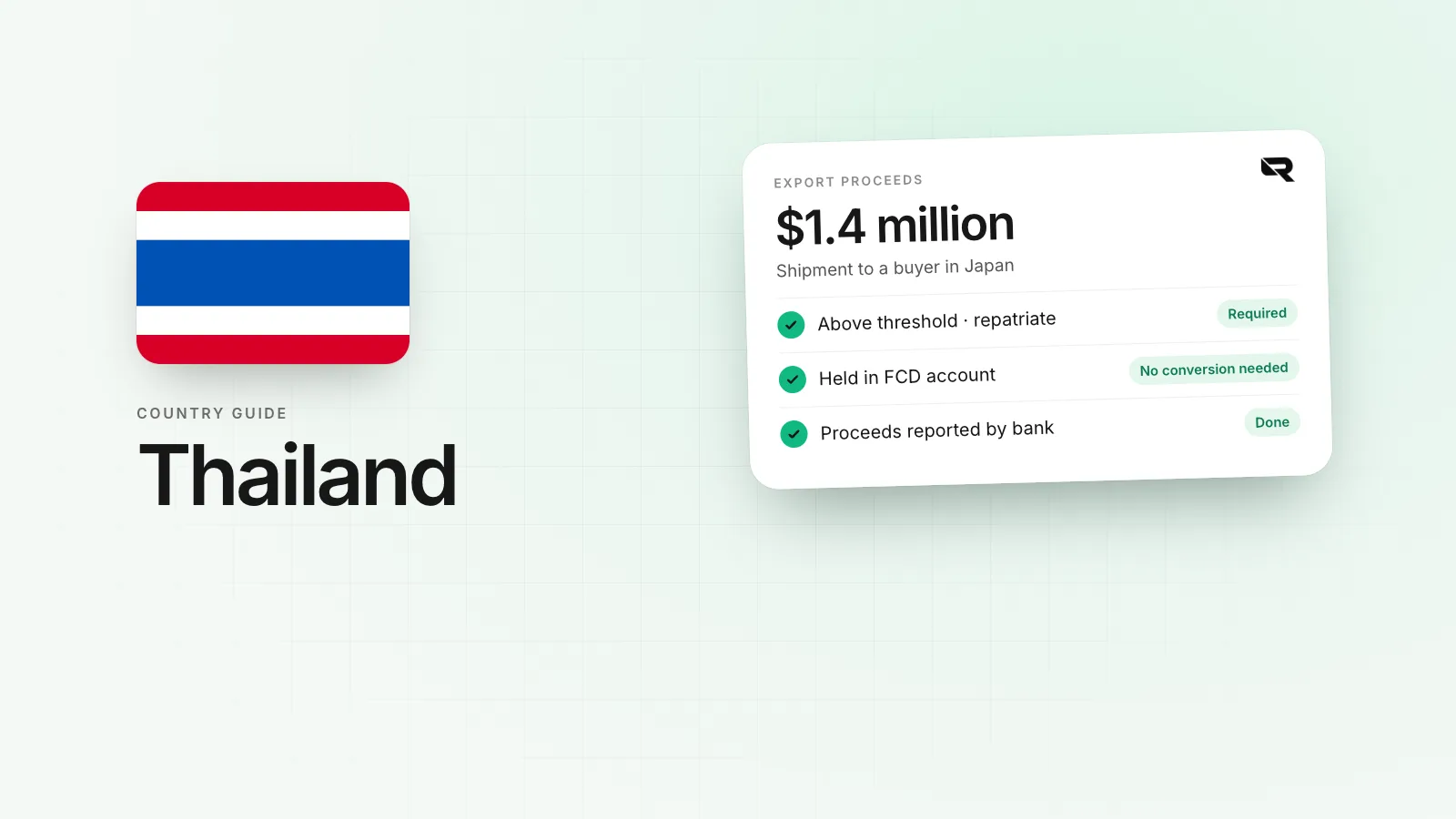
A Chonburi auto parts maker ships $1.4 million of components to a buyer in Japan. Because the shipment is above the Bank of Thailand's threshold, the proceeds must come back to Thailand within the set period. Once they do, the company keeps them in a foreign currency deposit account and converts to baht only when it needs to.
The rule
Thailand's foreign exchange rules, administered by the Bank of Thailand (BOT), require exporters to repatriate export proceeds at or above a threshold, set at USD 1 million per transaction, within a set period. Proceeds below the threshold are not subject to the requirement in the same way.
No forced conversion
Older rules required exporters to sell proceeds for baht or deposit them in specific accounts. The BOT has relaxed this: repatriated proceeds can be held in foreign currency deposit (FCD) accounts at Thai banks, and converted when the exporter chooses.
Using foreign currency
Exporters can use foreign currency in FCD accounts for permitted payments, such as imports and services abroad. The BOT has also allowed some netting of receipts and payments. Check current rules before arranging flows.
Why it matters
Exporters with dollar or yen revenue and baht costs carry exchange rate risk. Holding foreign currency and converting a planned amount ahead of payroll and supplier payments gives control over the rate.
Paying into Thailand: the local rail
| What | Detail |
|---|---|
| Local rail | PromptPay |
| Run by | National ITMX, under the Bank of Thailand |
| Settlement | Seconds, 24/7 |
Source: Bank of Thailand: PromptPay. Checked when this guide was last updated; the scheme's own page has the current figures.
Where Rivet fits
Rivet opens business accounts for registered companies after verification. Thai exporters must repatriate proceeds above the threshold under BOT rules, so check with your bank before receiving funds abroad. Where available, partners abroad who bank with Rivet can pay Thai bank accounts through Rivet's payouts. Rivet is not a bank; regulated partner institutions hold the funds.
Questions people ask
Do Thai exporters have to bring proceeds back?
Proceeds at or above the threshold, USD 1 million per transaction, must be repatriated within the period in the rules. Below that, the requirement does not apply in the same way. Check the current BOT notification.
Do they have to convert into baht?
No. The BOT removed the conversion requirement. Exporters can hold repatriated proceeds in FCD accounts in Thailand.
Can exporters use proceeds to pay abroad?
Within the rules, exporters can use foreign currency for permitted payments, and the BOT has allowed netting in some cases.
What documents do banks need?
Export documents and invoices, and the bank reports the proceeds as required.
Sources
William covers what happens once a company starts moving money: getting the business verified, paying contractors and suppliers abroad, and keeping card spend under control. William writes for the founder or finance lead who has to make it work this week, and links every rule cited to the text it comes from.
More from William Sunjo M. →This article is general information, not legal, tax or financial advice. Rules and fees change; check the sources above and the provider’s current terms before you act on them.
- thailand
- exporters
- bank of thailand
- repatriation
- fcd account
- thb