Paying contractors in Latin America from a Spanish company
Shared language and overlapping hours make Latin America the first place many Spanish companies hire contractors. Paying them well means getting the paperwork right on the Spanish side and the currency right on theirs.
- Published
- Reading time
- 2 min read
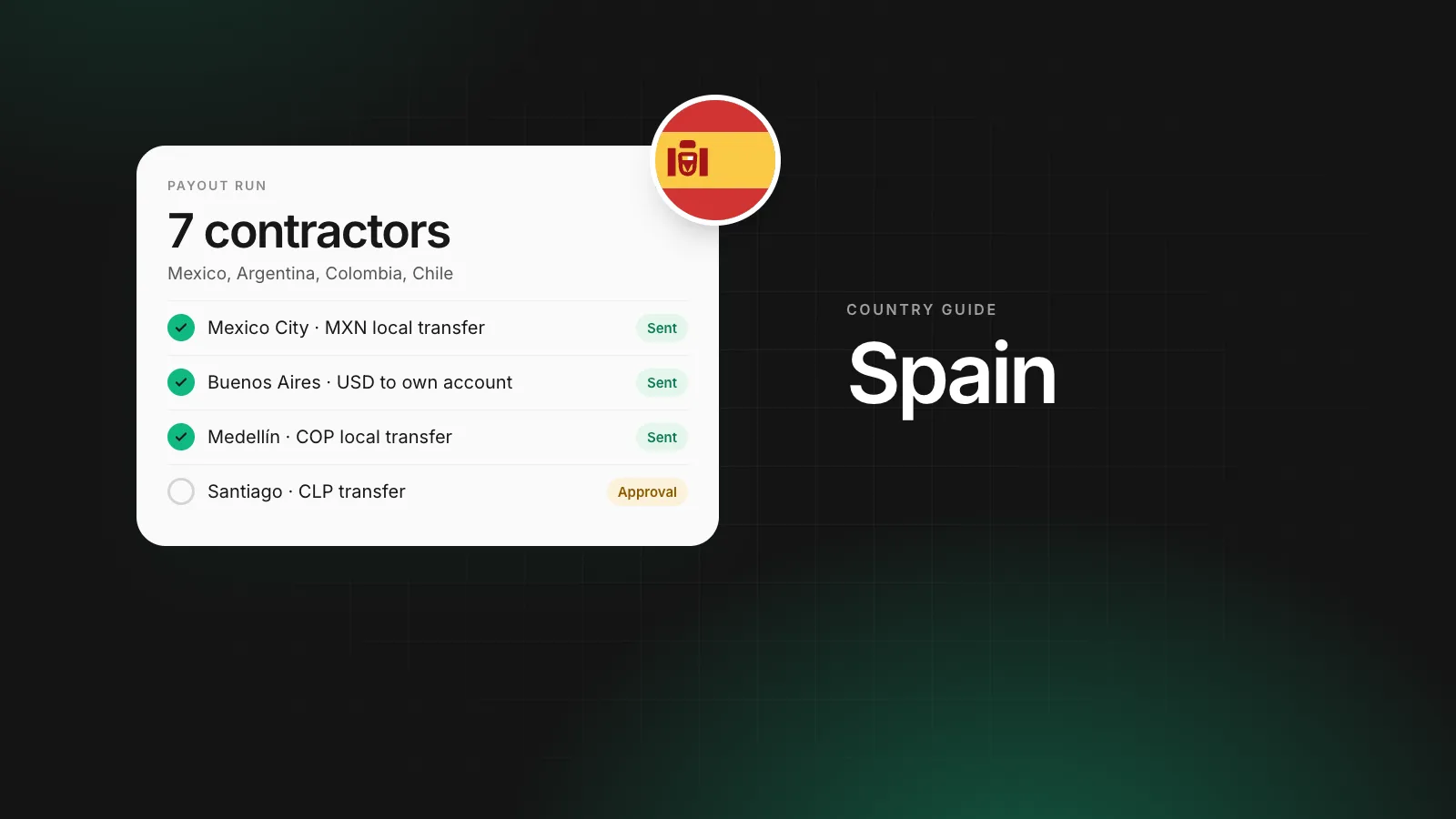
A Madrid fintech has seven contractors on its product team: three in Mexico City, two in Buenos Aires, one in Medellín and one in Santiago. Their working day overlaps Madrid's mornings, they speak the team's language, and they cost less than Spanish hires. Paying them involves three decisions the Spanish company has to make once and get right.
Tax on the Spanish side
Spain's non-resident income tax (IRNR) can in principle reach payments for services used in Spain. In practice, Spain's tax treaties usually decide the matter: a contractor resident in a treaty country, working from there, is taxed at home on business income.
Spain has treaties with most of the region, including Mexico, Argentina, Colombia, Chile, Brazil, Uruguay and Peru. To rely on one:
- Ask each contractor for a certificate of tax residence issued by their tax authority.
- Renew it every year.
- Keep it with the contract and invoices.
The details vary by treaty, so confirm the position with your asesor fiscal.
Status
Contract terms should read like a business relationship: deliverables, the contractor's own tools and hours, freedom to work for others. Several Latin American countries apply their own labour rules to long-term, exclusive arrangements, and the risk sits with the company that controls the work.
Currency: ask, then write it down
Paying everyone in euros by SWIFT is simple for the Spanish company and expensive for the contractors. Their bank converts at its own rate and may charge to receive.
What contractors usually prefer:
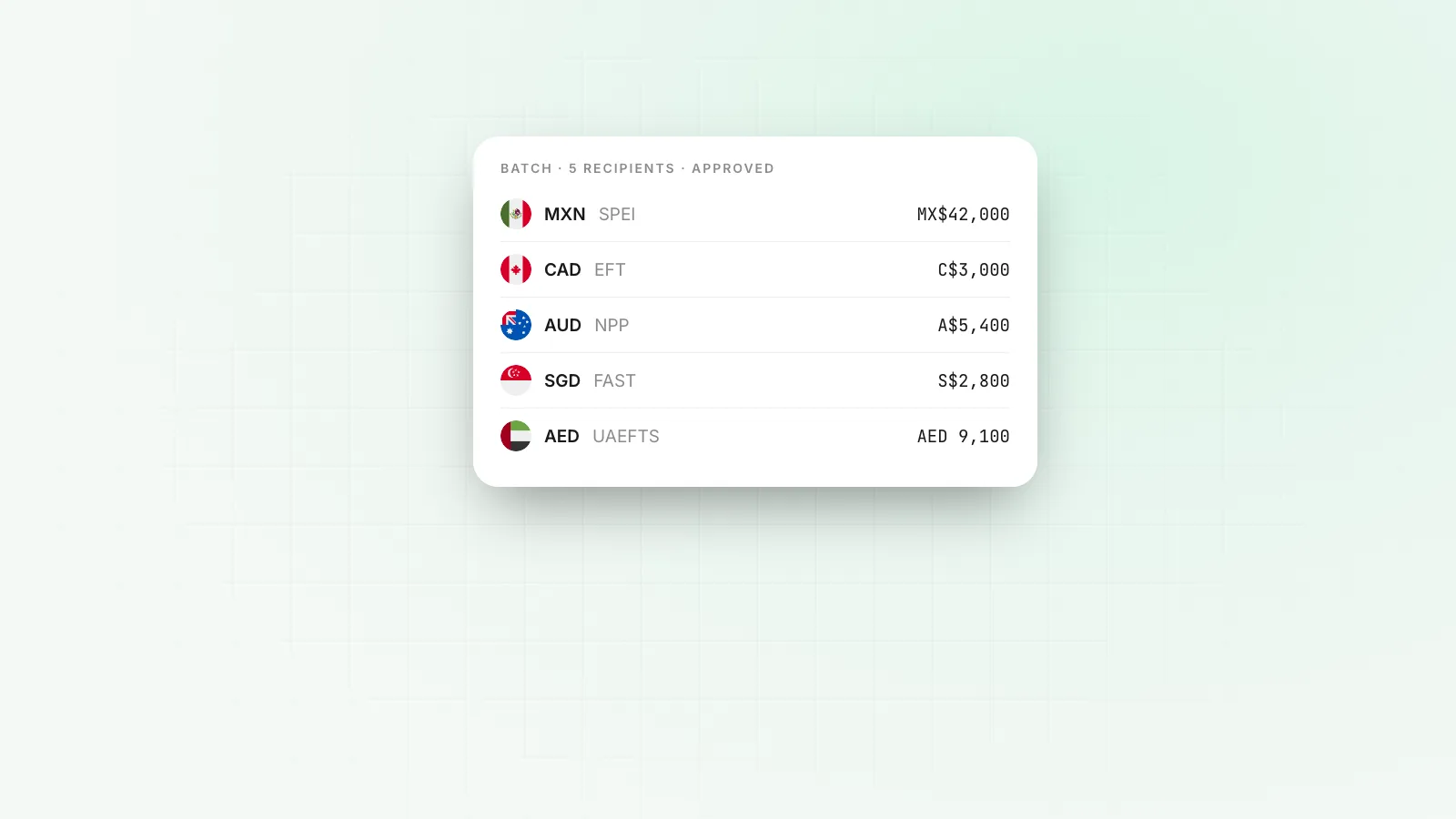
- Mexico: pesos to a bank account on SPEI, the instant domestic system.
- Colombia: pesos to a local bank account.
- Chile: pesos to a local account.
- Argentina: often dollars, to an account they control. Decades of inflation make many professionals keep earnings in dollars, and the rules on foreign exchange there keep changing.
Agree the currency in the contract, and the exchange rule if you price in euros and pay in pesos: which rate, on which day.
Proving the payment
Keep proof of payment for each invoice, with the amount, currency and rate used. A month of seven payments in four currencies is easier to reconcile when the payment confirmation already shows the rate.
Paying into Spain: the local rail
| What | Detail |
|---|---|
| Local rail | SEPA Instant Credit Transfer (Bizum for mobile transfers) |
| Run by | European Payments Council scheme, run by each bank |
| Settlement | Under ten seconds, 24/7 |
| Published fee | By the EU Instant Payments Regulation, no more than the bank charges for a standard SEPA transfer |
Source: European Payments Council: SEPA Instant Credit Transfer. Checked when this guide was last updated; the scheme's own page has the current figures.
Where Rivet fits
A Rivet business account pays contractors in 120+ countries, on local rails where they exist, from balances in euros, dollars and other currencies. Bulk payouts send a month's invoices together; from the Growth plan a second person can be required to approve them. Each payment shows the rate before you confirm and keeps it on the statement. Rivet is not a bank; regulated partner institutions hold the funds.
Our MXN business payments guide covers the Mexican side in more depth.
Questions people ask
Does a Spanish company withhold tax when paying a Latin American contractor?
For services performed abroad by a contractor resident in a treaty country, Spanish tax is generally not due. Ask each contractor for a certificate of tax residence from their tax authority, renew it each year, and check the specific treaty with your adviser.
Should I pay Latin American contractors in euros?
Usually not. Euros by SWIFT are converted by their bank, often with a receiving fee. Local currency on a local rail, or dollars where the contractor prefers, means they receive what was invoiced.
Why do Argentine contractors ask for dollars?
A long history of inflation and currency controls means many Argentine professionals keep savings in dollars. Paying in dollars to an account they hold is a common request.
What paperwork does the Spanish company need?
A service agreement, an invoice for each payment with the contractor's details, proof of payment, and the residence certificate. Keep the exchange rate used for non-euro payments.
Sources
Rashidatou writes Rivet's guides to how money moves between countries: the payment rails, what each one costs, and the account details a company needs to get paid in another currency. Every figure in Rashidatou's articles is traced to the scheme rulebook, the regulator or the provider's published price list, and those sources are listed at the end.
More from Rashidatou K. →This article is general information, not legal, tax or financial advice. Rules and fees change; check the sources above and the provider’s current terms before you act on them.
- spain
- latin america
- contractors
- mexico
- argentina
- colombia