South African exchange control for exporters: the 180-day and 30-day rules and CFC accounts
South Africa still runs exchange control, administered by the SARB through authorised dealers. An exporter must bring proceeds home within 180 days, and convert them to rand within 30 days of receipt, unless they sit in a Customer Foreign Currency account.
- Published
- Reading time
- 2 min read
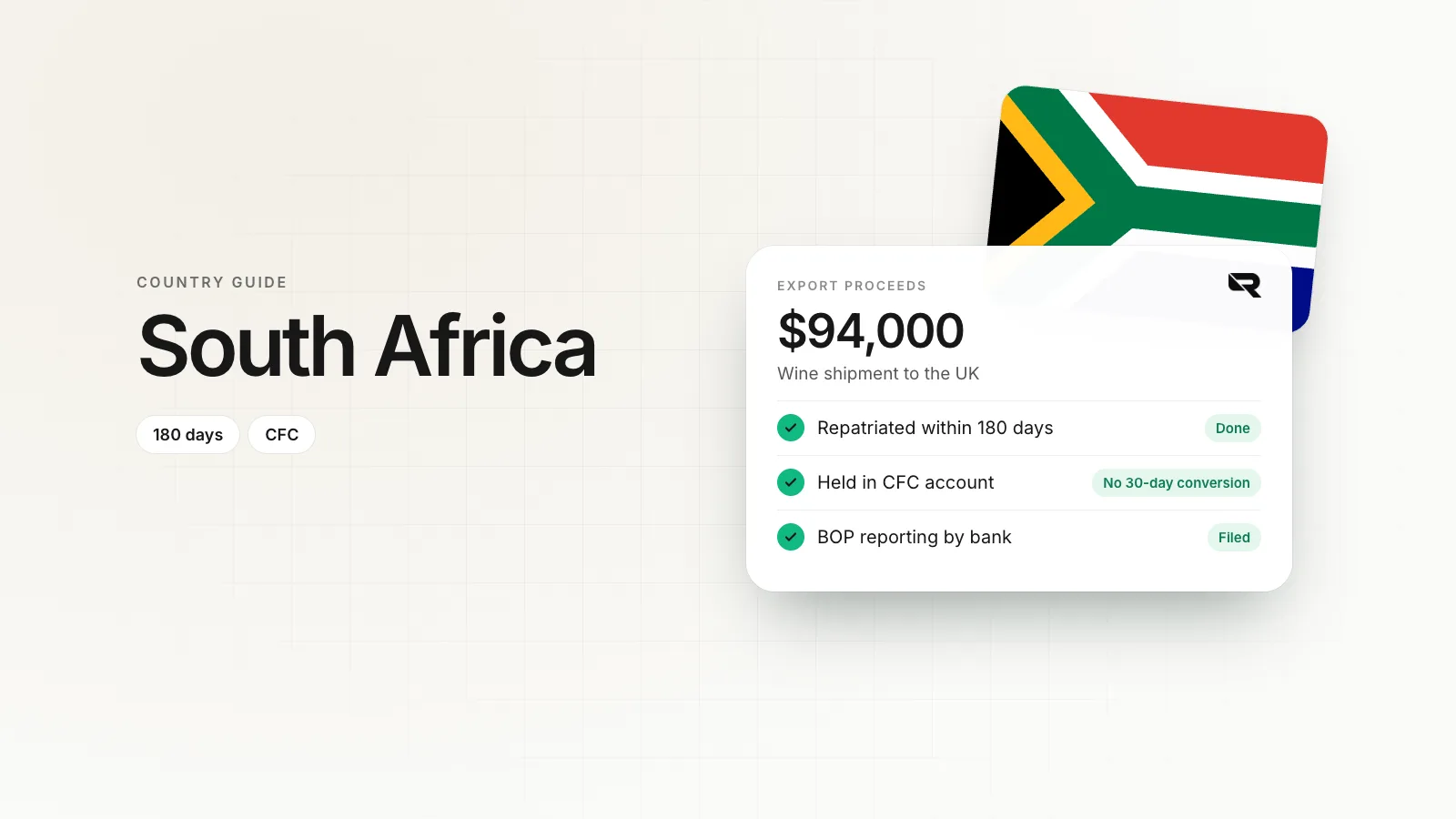
A Stellenbosch wine estate ships $94,000 of wine to a UK importer. The payment must reach South Africa within 180 days of shipment. When it arrives, the estate's bank credits it to a Customer Foreign Currency account, so it does not have to be converted to rand within 30 days. The estate uses the dollars to pay for French oak barrels.
Exchange control
South Africa operates exchange control under the Exchange Control Regulations, administered by the South African Reserve Bank's Financial Surveillance Department through authorised dealers (banks). The rules are set out in the Currency and Exchanges Manual for Authorised Dealers.
180 days
Exporters must repatriate export proceeds within 180 days from the date of shipment or of accrual, unless the authorised dealer approves an extension in line with the manual.
30 days, or a CFC account
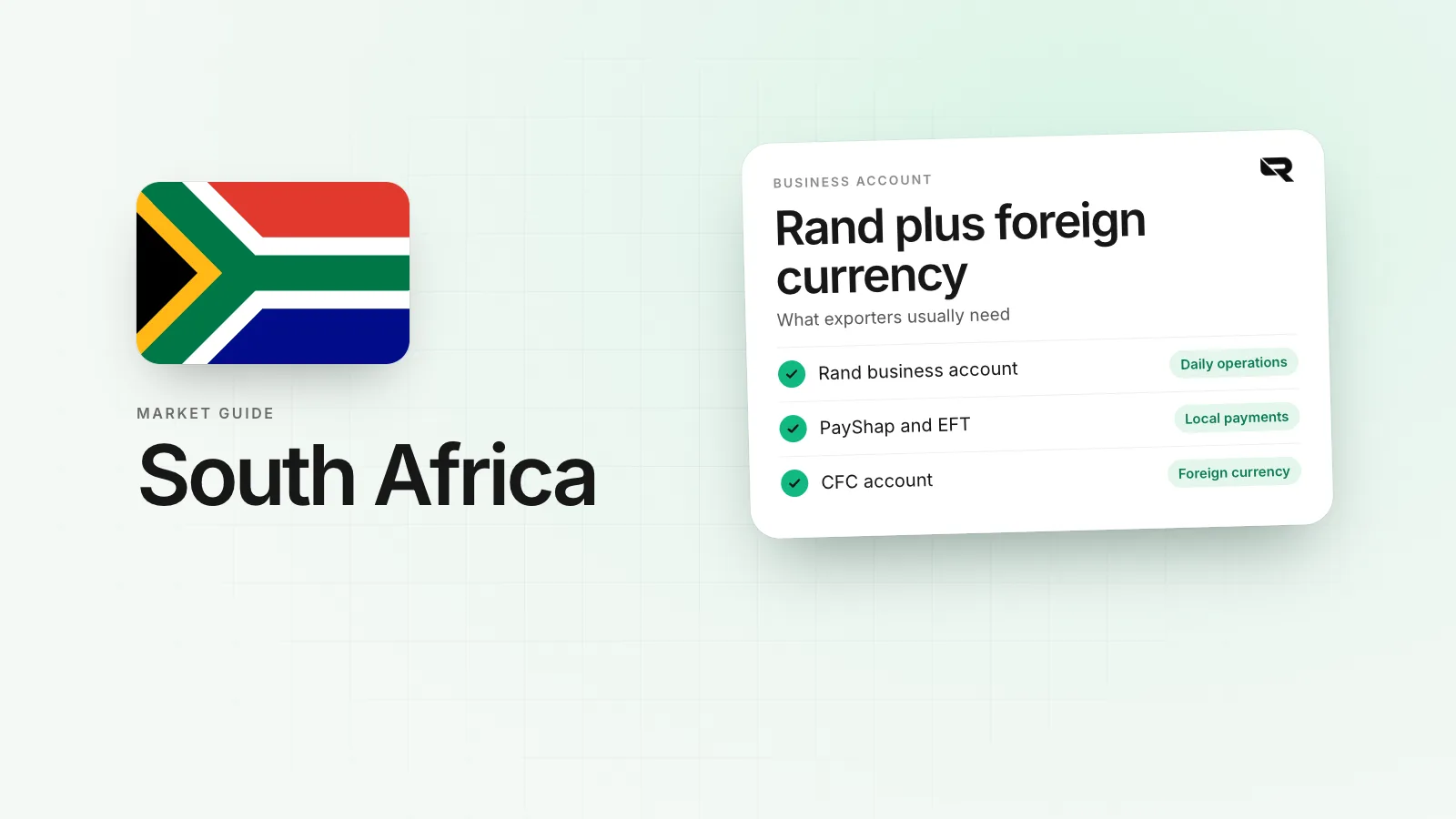
Foreign currency received must be converted to rand within 30 days of receipt unless it is placed in a Customer Foreign Currency (CFC) account. CFC accounts let exporters hold foreign currency onshore and use it for permitted payments, such as imports of goods and services.
Reporting
Authorised dealers report transactions for balance of payments purposes. Exporters provide the documents banks need to classify receipts correctly.
Planning conversions
The rand is volatile. Holding proceeds in a CFC account and converting a planned amount ahead of payroll and grower payments gives control over the rate.
Paying into South Africa: the local rail
| What | Detail |
|---|---|
| Local rail | Real-time clearing (RTC) and PayShap for instant transfers; EFT for batch payments |
| Run by | BankservAfrica |
| Settlement | RTC and PayShap in seconds; EFT within one to two business days |
Source: BankservAfrica. Checked when this guide was last updated; the scheme's own page has the current figures.
Where Rivet fits
Rivet opens business accounts for registered companies after verification. South African exporters must repatriate proceeds under exchange control, so check with your authorised dealer before receiving funds abroad. Where available, partners abroad who bank with Rivet can pay South African bank accounts through Rivet's payouts. Rivet is not a bank; regulated partner institutions hold the funds.
Questions people ask
What is the 180-day rule?
South African residents must bring export proceeds into South Africa within 180 days from the date of shipment or of accrual, unless an authorised dealer approves otherwise.
What is the 30-day rule?
Foreign currency received must be converted to rand within 30 days, unless it is credited to a CFC account.
What is a CFC account?
A Customer Foreign Currency account at a South African authorised dealer, where residents can hold foreign currency and use it for permitted transactions.
Can a South African company hold proceeds abroad?
Generally not beyond what exchange control allows. Some approvals exist, such as for companies with foreign operations. Check with your authorised dealer.
Sources
William covers what happens once a company starts moving money: getting the business verified, paying contractors and suppliers abroad, and keeping card spend under control. William writes for the founder or finance lead who has to make it work this week, and links every rule cited to the text it comes from.
More from William Sunjo M. →This article is general information, not legal, tax or financial advice. Rules and fees change; check the sources above and the provider’s current terms before you act on them.
- south africa
- exchange control
- sarb
- cfc account
- exporters
- zar