RO e-Factura and foreign clients: what Romanian companies report and what they do not
Romania made e-invoicing through RO e-Factura mandatory for domestic B2B sales in 2024 and B2C in 2025. Invoices to foreign clients follow other reporting routes. Romanian exporters run both, and the payment side often needs the most work.
- Published
- Reading time
- 2 min read
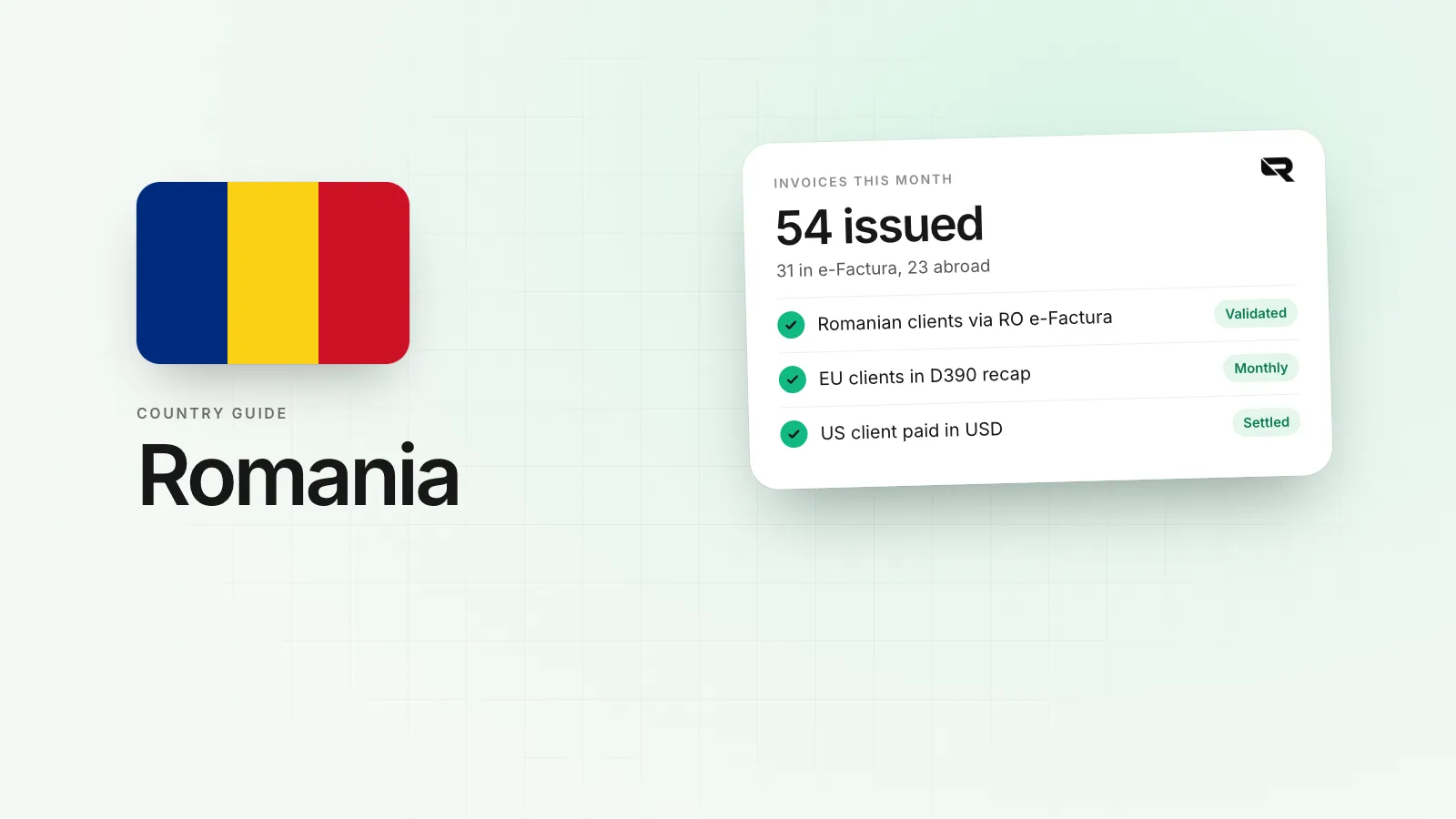
A Cluj-Napoca engineering services company issues about 50 invoices a month. The ones to Romanian clients are uploaded to ANAF's SPV system as XML through RO e-Factura, within five working days. The ones to clients in Germany, Italy and the US go out as PDFs, and their data reaches ANAF another way.
RO e-Factura
Romania moved quickly on e-invoicing. B2B invoices between Romanian-established companies have been mandatory in RO e-Factura since January 2024, with penalties from mid-2024. B2C invoices followed in 2025.
Each invoice is created in the national XML format (RO_CIUS, based on the European standard) and uploaded to the SPV (Spațiul Privat Virtual). ANAF validates it and makes it available to the buyer. The deadline is five working days from issue.
Foreign clients
The mandate centres on domestic transactions. For invoices to clients established abroad, companies typically send the invoice directly to the client in the format the client accepts, while the transaction is declared through returns:
- D390, the recapitulative statement, lists intra-EU supplies to VAT-registered businesses by VAT number.
- The VAT return reflects all sales, domestic and foreign.
ANAF has changed the scope of e-Factura several times since 2022, including for some cross-border cases. Confirm the current rules with your accountant before you change how you invoice foreign clients.
VAT wording and currency
For most services to EU businesses, the invoice shows no Romanian VAT, includes both VAT numbers and states that the reverse charge (taxare inversă) applies. For non-EU businesses, it states the service is not taxable in Romania.
Invoices can be in euros or dollars. VAT amounts, where shown, also appear in lei at the rate the law specifies, usually the BNR rate.
Getting paid
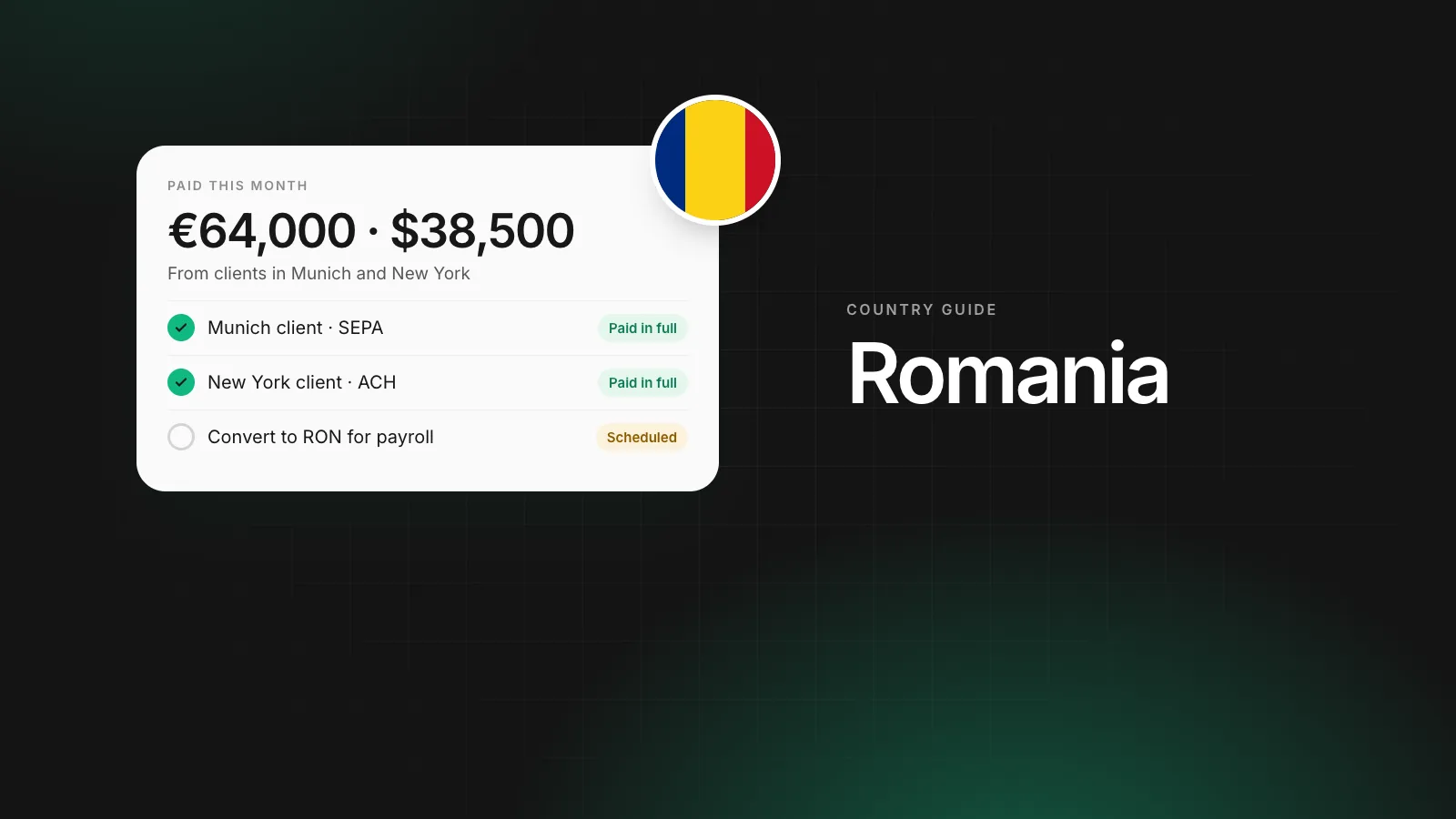
German and Italian clients pay a euro IBAN by SEPA. American clients asked to pay a Romanian IBAN send an international wire, which can arrive short and, into a lei account, is converted at the bank's rate. US account details in the company's own name let American clients pay by ACH, in full.
Paying into Romania: the local rail
| What | Detail |
|---|---|
| Local rail | Plăți Instant |
| Run by | TRANSFOND |
| Settlement | Seconds, 24/7, up to RON 50,000 per transfer |
Source: TRANSFOND: instant payments. Checked when this guide was last updated; the scheme's own page has the current figures.
Where Rivet fits
Rivet does not upload invoices to the SPV; your invoicing software does that. A Rivet business account handles foreign collections: US account details on every plan, euro details with an IBAN and sterling details from the Growth plan, payments matched to invoices, and conversions at a rate shown before you confirm. Rivet is not a bank; regulated partner institutions hold the funds.
Questions people ask
Do Romanian companies send invoices to foreign clients through RO e-Factura?
The mandate is built around transactions with Romanian-established parties. Invoices to foreign clients are usually sent directly in the agreed format, while the transaction is reported through returns such as D390 for intra-EU supplies. Check current ANAF guidance, as the scope has changed several times.
What is the deadline for uploading e-invoices?
Five working days from the invoice date, through the SPV system.
What does D390 cover?
Intra-EU supplies and acquisitions of goods and services with VAT-registered businesses in other member states, listed by VAT number.
Can a Romanian SRL invoice in euros?
Yes. VAT amounts must also be shown in lei, converted at the BNR rate or the rate the law specifies for the tax point.
Sources
William covers what happens once a company starts moving money: getting the business verified, paying contractors and suppliers abroad, and keeping card spend under control. William writes for the founder or finance lead who has to make it work this week, and links every rule cited to the text it comes from.
More from William Sunjo M. →This article is general information, not legal, tax or financial advice. Rules and fees change; check the sources above and the provider’s current terms before you act on them.
- romania
- e-factura
- anaf
- srl
- d390
- reverse charge