Paying a team in Brazil from a Portuguese company: Pix, reais and IOF
Portuguese tech companies hire in Brazil for the language, the time overlap and the talent pool. Sending euros by SWIFT leaves the Brazilian bank to convert them, apply IOF and charge for receiving. Paying in reais changes most of that.
- Published
- Reading time
- 2 min read
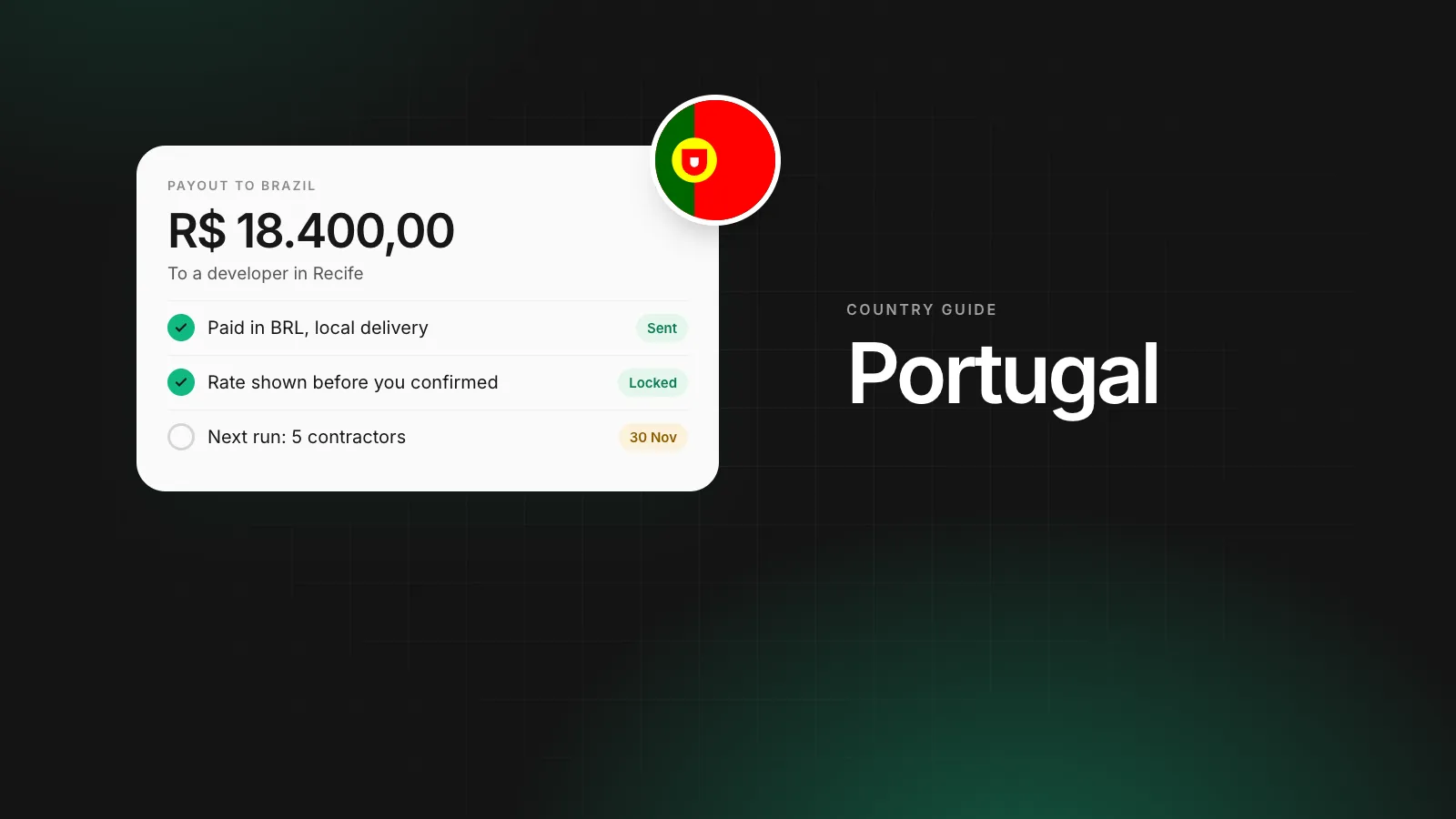
A Lisbon product company has five developers in Brazil: two in Recife, two in Florianópolis, one in São Paulo. Each invoices about R$18,000 a month. The company used to pay them in euros by SWIFT. The developers' banks converted the euros on arrival, applied IOF, charged a receiving fee, and the amounts varied month to month in ways nobody could explain.
What happens to a euro wire in Brazil
Foreign currency cannot sit in an ordinary Brazilian account. When a euro transfer arrives, a Brazilian bank or exchange institution converts it into reais. Three things come off along the way:
- the bank's exchange margin,
- IOF, Brazil's tax on financial operations, charged on the exchange,
- a receiving fee, at some banks.
IOF rates on foreign exchange are set by decree and changed several times in 2025. The contractor's bank can confirm what applies today. The point for the Portuguese company is that the contractor bears all three, so a €3,200 invoice arrives as a figure the contractor cannot predict.
Paying in reais instead
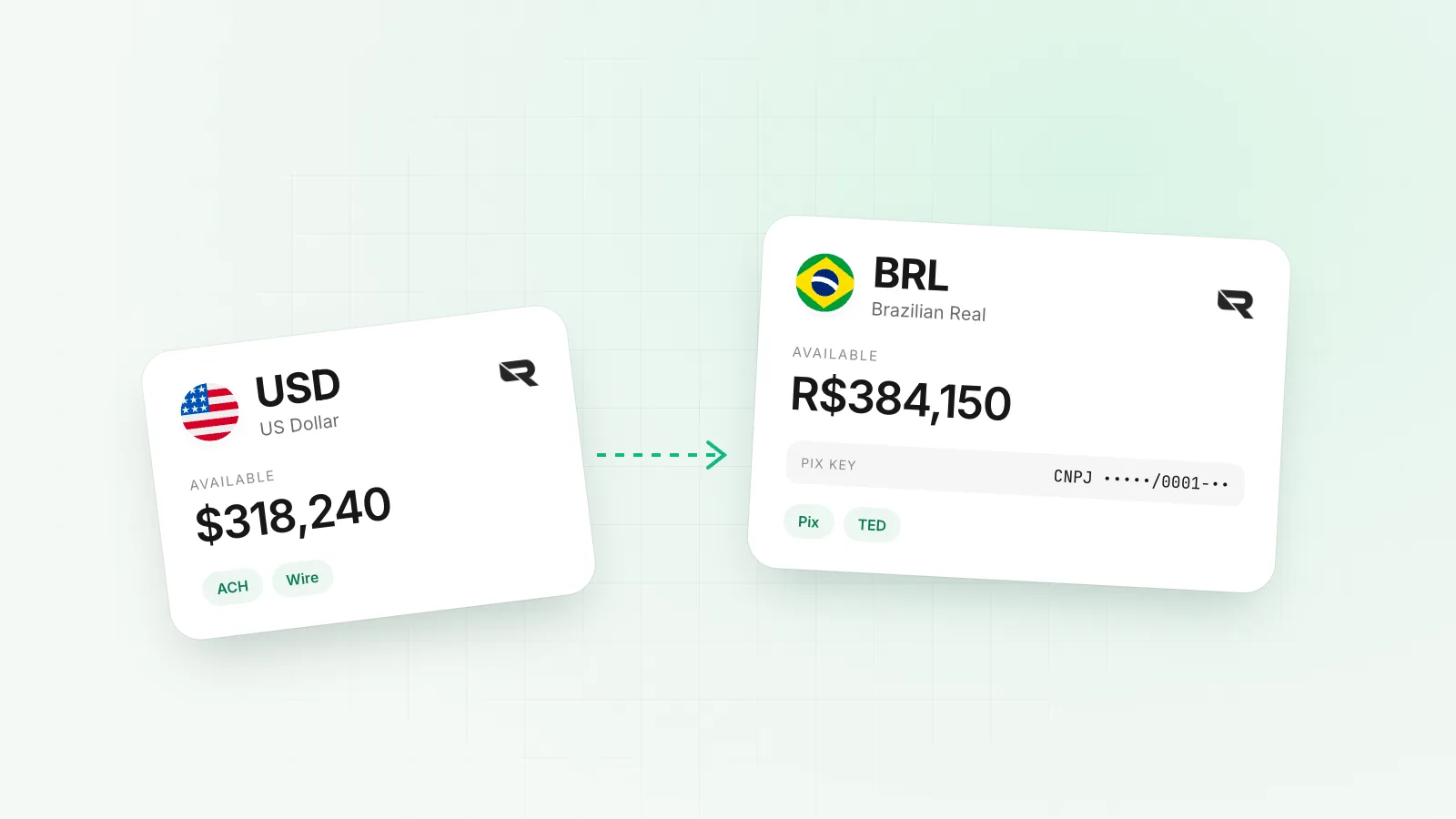
Paying in reais, delivered locally to the contractor's account, moves the conversion to your side, where you see the rate before you pay. The contractor receives the agreed amount in reais, much as they would receive money from a Brazilian client by Pix.
Pix is Brazil's instant payment system, run by the central bank. Most Brazilians use it daily. Payments settle in seconds using a key such as a tax number (CPF or CNPJ), email or phone number.
Paperwork on both sides
On the Portuguese side, keep the contract, each invoice and proof of payment. Brazil and Portugal have a double taxation treaty. A Brazilian contractor working from Brazil is generally taxed there.
On the Brazilian side, many contractors invoice through their own small company, such as an MEI or ME, and issue a nota fiscal for exported services. Some invoice as individuals. Ask each one and record it.
Fix the exchange rule
If you agree prices in euros and pay in reais, write down which rate applies and on which day. If you agree prices in reais, the contractor knows exactly what arrives, and you carry the currency movement. Either works; ambiguity is what causes disputes.
Paying into Portugal: the local rail
| What | Detail |
|---|---|
| Local rail | SEPA Instant Credit Transfer (MB WAY for mobile transfers) |
| Run by | European Payments Council scheme, run by each bank |
| Settlement | Under ten seconds, 24/7 |
| Published fee | By the EU Instant Payments Regulation, no more than the bank charges for a standard SEPA transfer |
Source: European Payments Council: SEPA Instant Credit Transfer. Checked when this guide was last updated; the scheme's own page has the current figures.
Where Rivet fits
A Rivet business account pays contractors in 120+ countries, including Brazil, on local rails where they exist, from euro, dollar and other balances. Bulk payouts send all five invoices at once, the rate shows before you confirm, and from the Growth plan a second person can approve each run. Rivet is not a bank; regulated partner institutions hold the funds.
For Brazil in more depth, see our BRL business payments guide.
Questions people ask
What is Pix?
Brazil's instant payment system, run by the central bank. Payments settle in seconds, around the clock, using a key such as a tax number, email or phone number.
Who pays IOF when a Portuguese company pays a Brazilian contractor?
IOF on foreign exchange is charged on the conversion into reais in Brazil, so it normally lands on the Brazilian side. Rates are set by decree and have changed in recent years; the contractor's bank can confirm the current rate.
Should I pay Brazilian contractors in euros or reais?
Reais delivered locally usually leave the contractor with more and fewer steps. Euros by SWIFT make the contractor's bank handle the conversion and charges.
Do Brazilian contractors need a company?
Many invoice through a small company such as an MEI or ME, which lets them issue a nota fiscal for the service. Some work as individuals. Ask, and record which in the contract.
Sources
Rashidatou writes Rivet's guides to how money moves between countries: the payment rails, what each one costs, and the account details a company needs to get paid in another currency. Every figure in Rashidatou's articles is traced to the scheme rulebook, the regulator or the provider's published price list, and those sources are listed at the end.
More from Rashidatou K. →This article is general information, not legal, tax or financial advice. Rules and fees change; check the sources above and the provider’s current terms before you act on them.
- portugal
- brazil
- pix
- brl
- iof
- contractors