The BIR's electronic invoicing system: what Philippine exporters must do
Under the Ease of Paying Taxes Act and the TRAIN law before it, the Philippines is moving to electronic invoicing. Exporters were among the first groups required to issue e-invoices and transmit sales data to the BIR's Electronic Invoicing System. Deadlines have been extended more than once.
- Published
- Reading time
- 2 min read
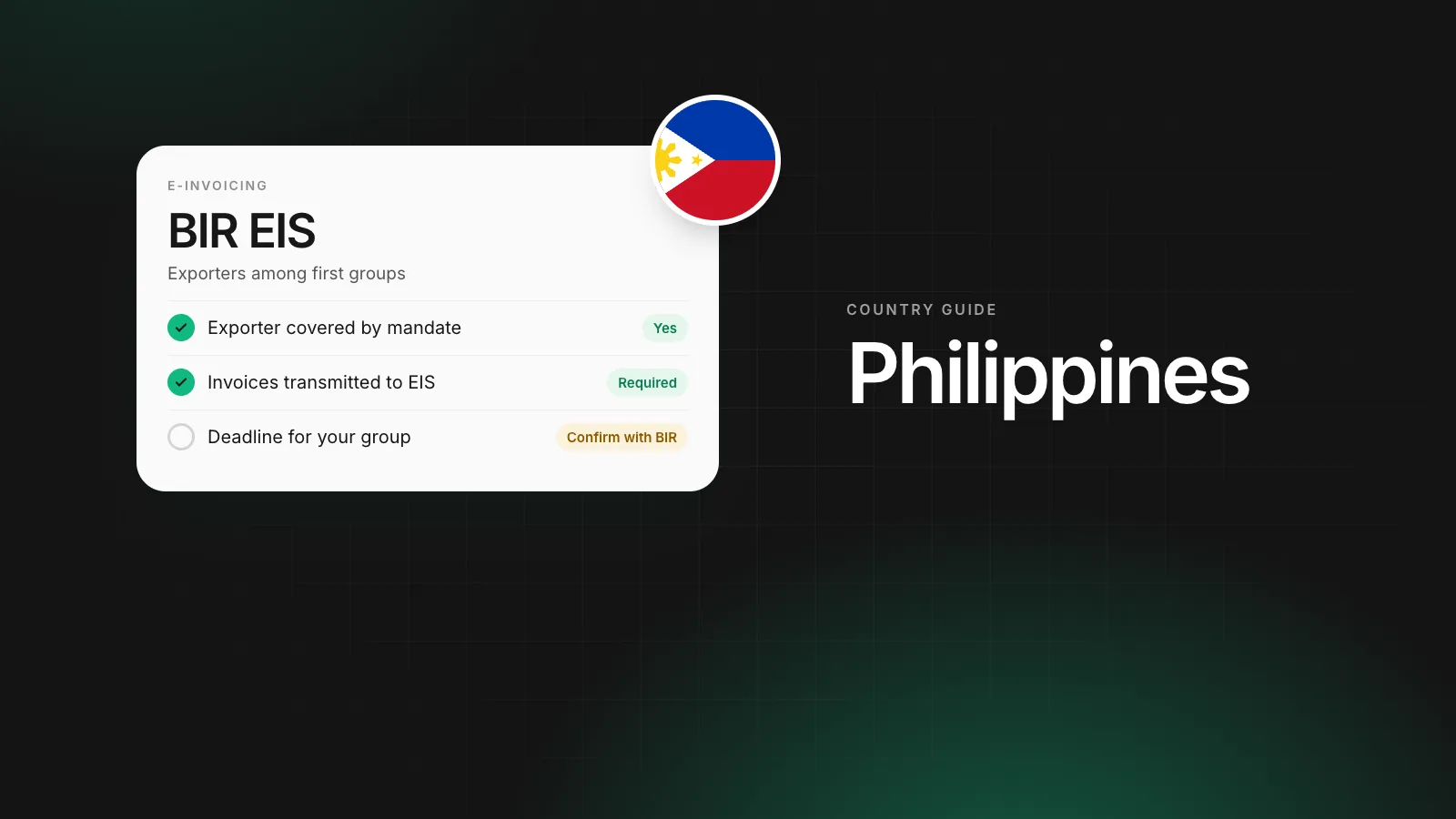
A Makati software exporter issues invoices to clients in the US and Japan. It has been told it belongs to one of the first groups under the BIR's e-invoicing requirement: exporters. Its invoicing system needs to issue electronic invoices and send sales data to the BIR's Electronic Invoicing System. The deadline has moved before, so the finance team checks the latest revenue regulation each quarter.
Why exporters are first
The TRAIN law in 2018 required the BIR to move certain taxpayers to electronic invoicing, and the Ease of Paying Taxes Act in 2024 reinforced the shift. The first groups named were:
- exporters of goods and services,
- e-commerce businesses,
- taxpayers under the Large Taxpayers Service.
These taxpayers issue electronic invoices and transmit sales data to the EIS.
Deadlines
Implementation has been extended more than once. Check the latest revenue regulation for your group, and start testing with the BIR's EIS certification environment before the deadline.
What to prepare
- Confirm your invoicing system can issue e-invoices in the BIR's format.
- Register with the EIS and complete certification.
- Test transmission of sales data.
- Train staff on corrections and cancellations.
Export VAT
Export sales of goods and qualifying services to foreign clients are zero-rated when the Tax Code's conditions are met, including proof that the service is consumed abroad and paid in acceptable foreign currency. E-invoicing does not change those rules.
Paying into the Philippines: the local rail
| What | Detail |
|---|---|
| Local rail | InstaPay for instant transfers; PESONet for batch payments |
| Run by | Bangko Sentral ng Pilipinas, operated through BancNet and the PCHC |
| Settlement | InstaPay in seconds, 24/7, up to ₱50,000 per transfer; PESONet the same business day |
Source: Bangko Sentral ng Pilipinas: InstaPay and PESONet. Checked when this guide was last updated; the scheme's own page has the current figures.
Where Rivet fits
Rivet does not transmit to the BIR's EIS. A Rivet business account accepts registered companies after verification, including Philippine exporters, with US account details on every plan and euro and sterling details from the Growth plan, so foreign clients pay locally. Rivet is not a bank; regulated partner institutions hold the funds.
Questions people ask
Who must use the BIR's EIS?
Taxpayers covered by the e-invoicing requirement, initially exporters, e-commerce businesses and large taxpayers, with others to follow as the BIR extends the system.
What is the deadline?
The BIR has set and extended deadlines through revenue regulations. Check the latest regulation for the date that applies to you.
Do I need a certified system?
Your invoicing system must be able to issue e-invoices and transmit data to the EIS according to the BIR's technical requirements.
Are export sales zero-rated?
Export sales of goods and qualifying services to foreign clients are zero-rated for VAT when the conditions in the Tax Code are met.
Sources
William covers what happens once a company starts moving money: getting the business verified, paying contractors and suppliers abroad, and keeping card spend under control. William writes for the founder or finance lead who has to make it work this week, and links every rule cited to the text it comes from.
More from William Sunjo M. →This article is general information, not legal, tax or financial advice. Rules and fees change; check the sources above and the provider’s current terms before you act on them.
- philippines
- bir
- eis
- e-invoicing
- exporters
- vat