How to pay yourself from a US LLC when you live abroad
Your US LLC has earned money. You live in another country and want to pay yourself. The transfer is the easy part. The records around it decide how clean your US filings and your home-country taxes stay.
- Published
- Reading time
- 2 min read

Thousands of founders outside the US run their business through a Delaware or Wyoming LLC. Clients pay the LLC in dollars, the LLC pays its costs, and at some point the founder wants their profit in their own hands. How you move that money matters less than how you record it.
This article explains the general rules. It is not tax advice, and your home country's rules matter as much as the US ones.
Draws, not salary
Most foreign founders have a single-member LLC that the IRS treats as a disregarded entity. For income tax, the LLC and the owner are the same taxpayer, so the LLC cannot really employ you. You take an owner's draw: a transfer of profit from the business account to your personal account.
An LLC can elect to be taxed as a corporation, and then it can pay salaries and dividends. That brings US payroll rules and corporate tax, so it is a decision for a tax adviser, not a default.
The US filing that catches people out
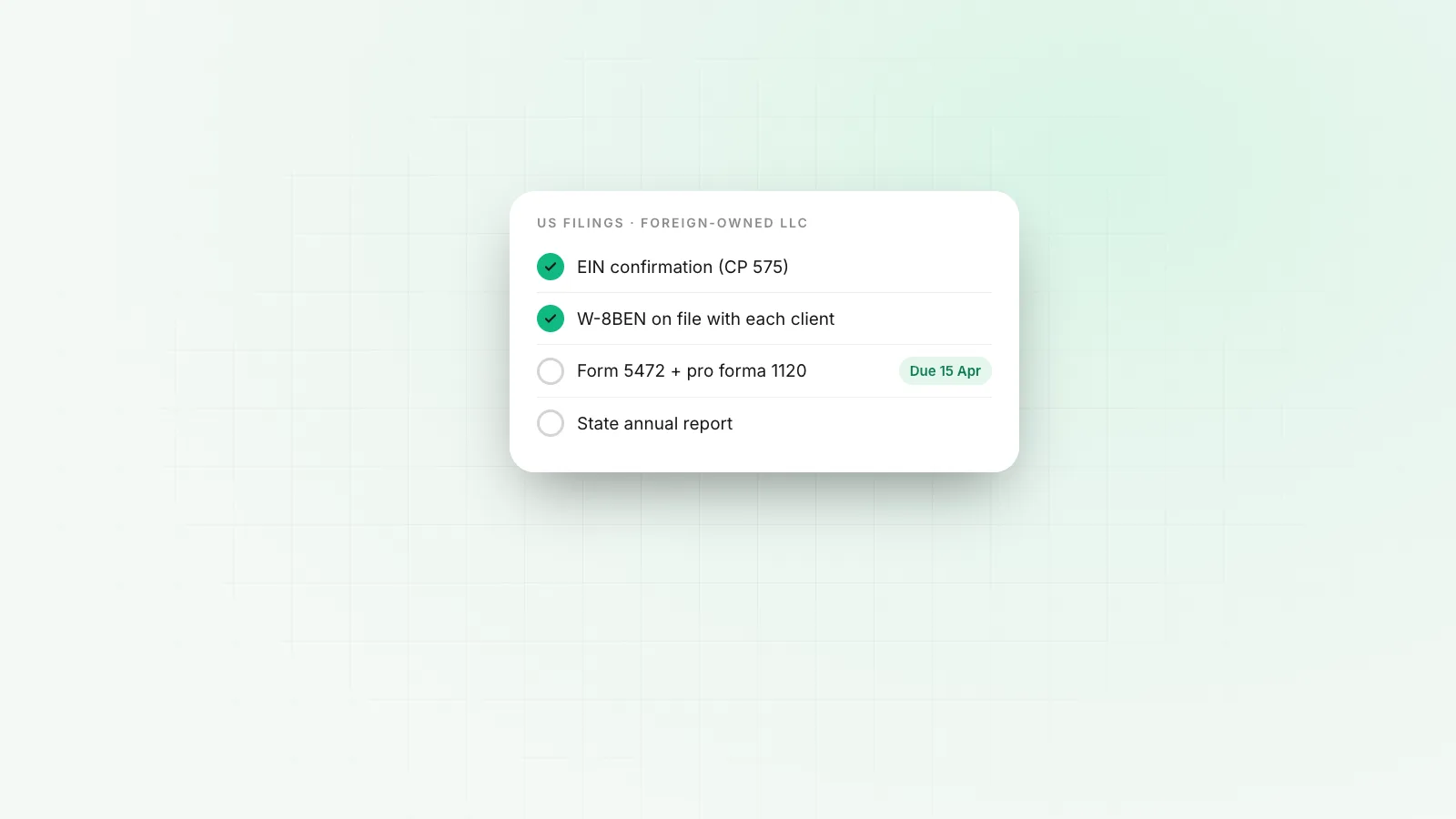
A foreign-owned single-member LLC must file Form 5472 with a pro forma Form 1120 each year, even if it had no US tax to pay. Money moving between the LLC and you counts as a reportable transaction: the capital you put in, the draws you take out, and loans either way.
The penalty for not filing is $25,000 per form. Our Form 5472 guide walks through it line by line.
Is the profit taxed in the US?
It depends on whether the LLC has effectively connected income, meaning income from a trade or business in the US. A software consultancy run entirely from Lisbon, with no US staff, office or agent, often has none. A business with a US warehouse or employees probably does. The answer sets whether you file a US income tax return as well as Form 5472.
Your home country
Almost every country taxes its residents on worldwide income, and many look through a disregarded LLC to the owner. That means the LLC's profit may be taxed at home whether or not you draw it. Some countries treat the LLC as a company instead, and tax only what you draw. Ask a local adviser, and keep records that work for both systems.
The records to keep for each draw
| Record | Why |
|---|---|
| Date and USD amount | Form 5472 and your books |
| Exchange rate on the day | Your home-country return |
| From account and to account | Shows a clean transfer between entities |
| Memo, e.g. "Owner's draw, Q3 profit" | Explains the payment to banks and auditors |
How to move the money
- Pay all business costs and set aside any tax first.
- Transfer from the LLC's account to a personal account in your own name. The business vs personal account guide explains why the split matters.
- Convert to your home currency at a rate you can see. See mid-market rate and FX markup.
- Keep the business card for business costs only.
On Rivet
Rivet holds the LLC's USD balance and can send a draw to a personal account in the owner's name in more than 120 countries, with the rate shown before you send. See Bank accounts.
Questions people ask
Can a non-resident owner pay themselves a salary from a US LLC?
A single-member LLC taxed as a disregarded entity cannot pay its owner a wage in the usual sense. The owner takes draws. An LLC that elects to be taxed as a corporation can pay salaries, which brings payroll and withholding rules. Ask a tax adviser before electing.
Do I have to report owner's draws on Form 5472?
Yes. For a foreign-owned disregarded entity, money moving between the LLC and its foreign owner counts as a reportable transaction, including contributions and distributions. The penalty for not filing Form 5472 is $25,000 per form.
Does a non-resident pay US tax on LLC profits?
Only if the income is effectively connected with a US trade or business, which usually means people or property working in the US. Many foreign-owned LLCs run entirely from abroad have no US income tax, though they still have the filing duties. Your home country decides how the profit is taxed there.
Can I use my LLC card for personal spending?
Avoid it. Mixing personal and business spending weakens the liability protection an LLC gives you and makes the books and Form 5472 harder to prepare. Take a draw to your personal account and spend from there.
Sources
William covers what happens once a company starts moving money: getting the business verified, paying contractors and suppliers abroad, and keeping card spend under control. William writes for the founder or finance lead who has to make it work this week, and links every rule cited to the text it comes from.
More from William Sunjo M. →This article is general information, not legal, tax or financial advice. Rules and fees change; check the sources above and the provider’s current terms before you act on them.
- pay yourself llc
- owner's draw
- non-resident llc
- single member llc foreign owner
- form 5472