Moroccan offshoring companies serving French clients: euros, dirhams and margins
Morocco's offshoring sector, built on French-speaking talent and proximity to Europe, serves mainly French clients. They pay in euros under long contracts. Staff are paid in dirhams. The dirham's basket peg keeps rate risk modest; conversion costs and late payments are the issues.
- Published
- Reading time
- 1 min read
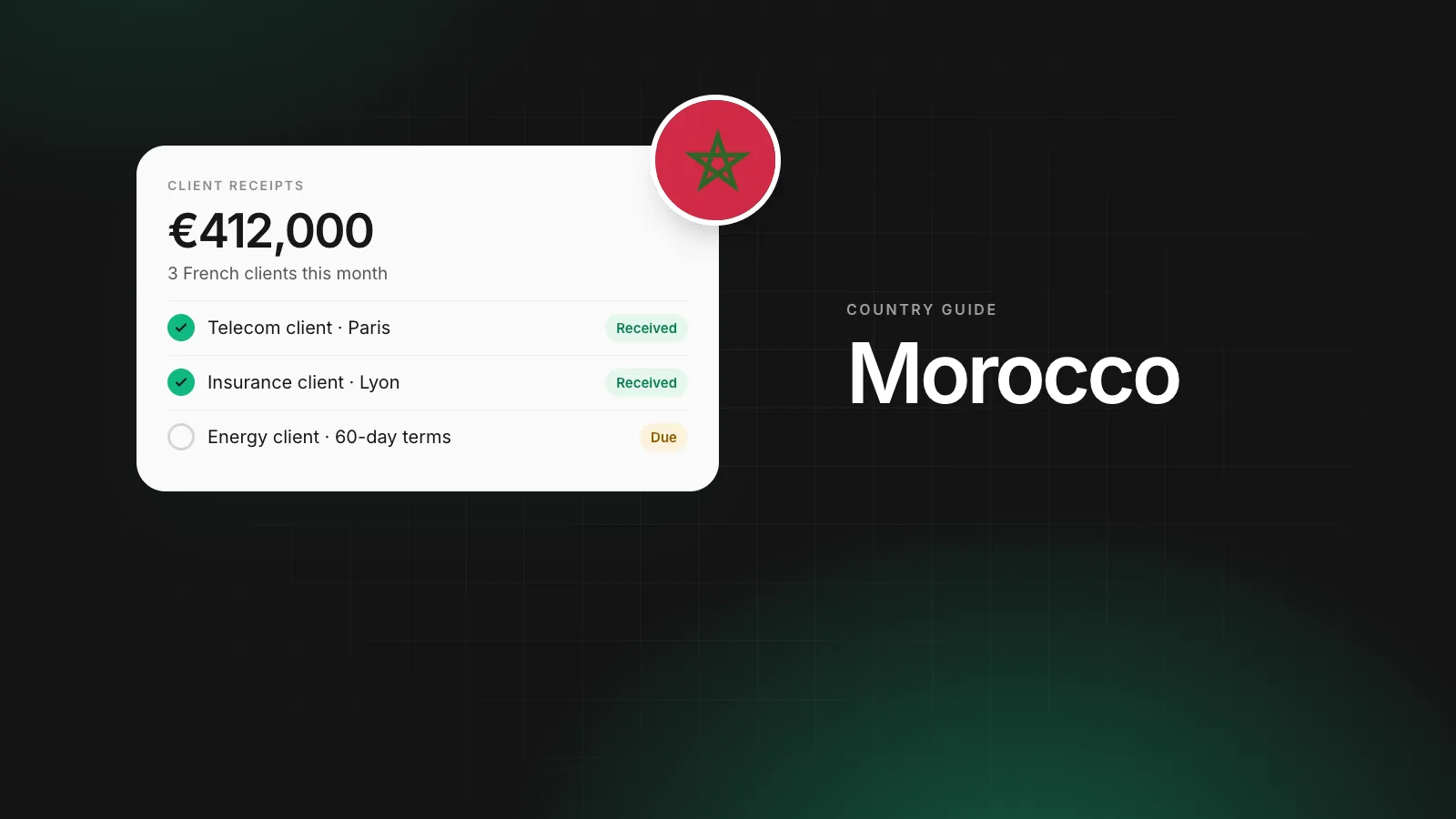
A Casablanca customer service company employs 1,200 French-speaking agents for a Paris telecom operator, a Lyon insurer and an energy supplier. It invoices €412,000 a month. The telecom pays on 45 days, the insurer on 30, the energy supplier on 60. Payroll in dirhams comes every month regardless.
A francophone sector
Morocco's offshoring sector grew on French-speaking talent, time zone proximity and government support through designated zones. Most clients are in France, with others in Belgium and Switzerland. Contracts are in euros.
The dirham peg
The dirham is pegged to a basket weighted towards the euro and allowed to move within a band. Euro revenue therefore carries limited exchange rate risk against dirham costs. The costs that matter are conversion margins and the timing of client payments.
Collections
Large French clients pay on terms, often 45 to 60 days. Collections improve when:
- invoices go out on time with the client's purchase order number,
- finance teams follow up before the due date,
- contracts include late payment interest and the fixed recovery indemnity used in French commercial practice.
Repatriation
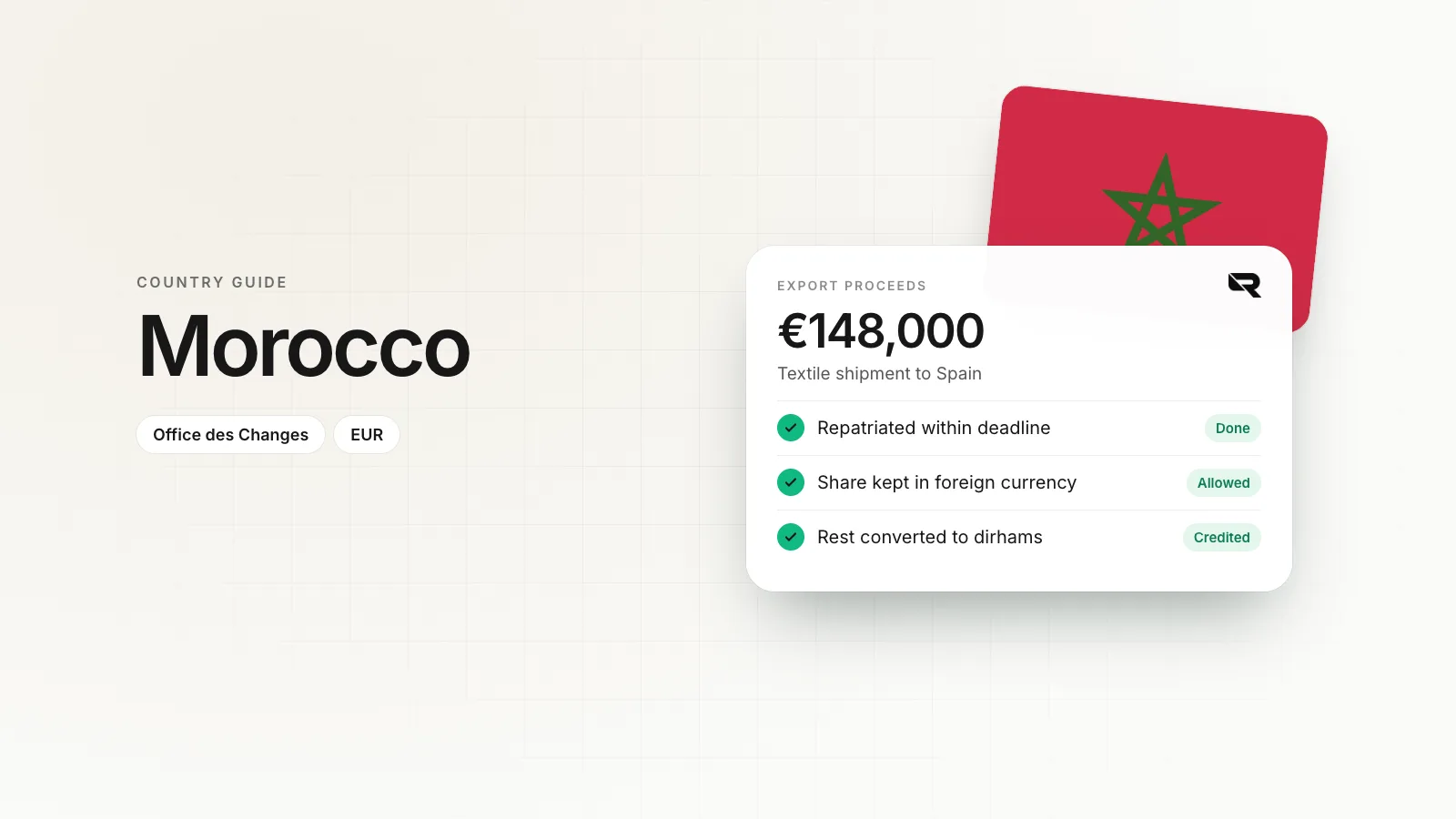
Moroccan offshoring companies repatriate proceeds under Office des Changes rules and can keep a share in foreign currency accounts in Morocco.
Where Rivet fits
Rivet opens business accounts for registered companies after verification. Morocco-registered companies must follow Office des Changes rules on proceeds and accounts abroad. Groups whose French or other European entity contracts with clients can use a Rivet business account with euro details from the Growth plan and payouts in 120+ countries. Rivet is not a bank; regulated partner institutions hold the funds.
Questions people ask
Why do Moroccan offshoring companies invoice in euros?
Their clients are mostly in France and other euro countries, and contracts are in euros.
Does the dirham move against the euro?
The dirham is pegged to a basket of euros and dollars and moves within a band, so movements against the euro are limited.
What incentives exist for offshoring?
Companies in designated offshoring zones and parks have benefited from tax, training and other incentives. Check current programmes.
How can offshoring firms reduce late payments?
Invoice on time with the client's purchase order, follow up before due dates, and agree late payment terms in contracts.
Sources
Rashidatou writes Rivet's guides to how money moves between countries: the payment rails, what each one costs, and the account details a company needs to get paid in another currency. Every figure in Rashidatou's articles is traced to the scheme rulebook, the regulator or the provider's published price list, and those sources are listed at the end.
More from Rashidatou K. →This article is general information, not legal, tax or financial advice. Rules and fees change; check the sources above and the provider’s current terms before you act on them.
- morocco
- offshoring
- call centres
- france
- eur
- mad