Moroccan exporters and the Office des Changes: repatriation and foreign currency accounts
Morocco's foreign exchange regime, run by the Office des Changes, requires exporters to bring proceeds home and lets them keep a share in foreign currency. The rules have been liberalised in steps, and the instruction générale sets out the current detail.
- Published
- Reading time
- 1 min read
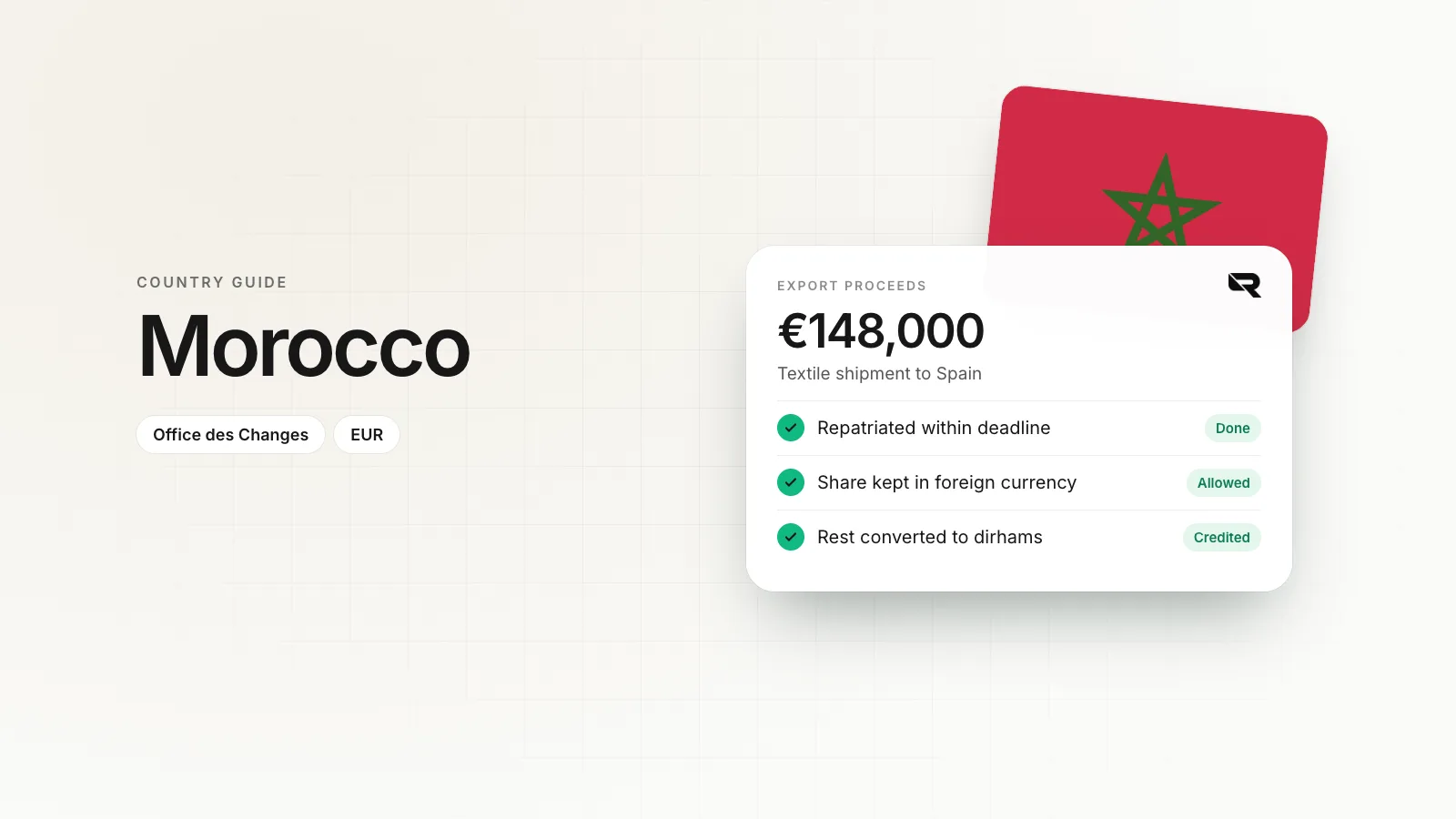
A Tangier textile manufacturer ships jeans to a Spanish brand. The euros come into its Moroccan bank within the deadline set by the Office des Changes. Part of the proceeds stays in a foreign currency account to pay for Turkish fabric; the rest is converted to dirhams for wages and local costs.
The regime
Morocco's foreign exchange regime is administered by the Office des Changes, with Bank Al-Maghrib managing the dirham. The rules for residents are set out in the instruction générale des opérations de change, which the Office updates periodically, generally towards more liberal rules.
Repatriation
Exporters must repatriate export proceeds within the period in the instruction, counted from shipment for goods or completion for services. Banks track this.
Keeping foreign currency
Exporters can keep a share of proceeds in foreign currency accounts or convertible dirham accounts in Morocco and use them for permitted payments, such as imports of inputs, travel and services. The rest is converted to dirhams.
Accounts abroad
Moroccan residents, including companies, generally need authorisation from the Office des Changes to hold accounts abroad. Some liberalisation has applied to companies with foreign operations. Check before arranging anything.
The dirham
The dirham moves within a band around a basket of euros and dollars. Euro revenue therefore carries limited exchange risk, but conversion still costs a margin.
Where Rivet fits
Rivet opens business accounts for registered companies after verification. Morocco-registered companies must repatriate proceeds under Office des Changes rules and generally need authorisation for accounts abroad, so check first. Where available, partners abroad who bank with Rivet can pay Moroccan bank accounts through Rivet's payouts. Rivet is not a bank; regulated partner institutions hold the funds.
Questions people ask
How long do Moroccan exporters have to repatriate proceeds?
The deadline is set in the Office des Changes' general instruction, counted from shipment for goods or completion for services. Check the current version.
Can exporters keep foreign currency?
Yes, a share of proceeds can be held in foreign currency accounts or convertible dirham accounts in Morocco, under the instruction's limits.
Can Moroccan companies hold accounts abroad?
Generally only with authorisation from the Office des Changes.
Are services exporters covered?
Yes. Offshoring and other service exporters follow repatriation rules for their proceeds.
Sources
William covers what happens once a company starts moving money: getting the business verified, paying contractors and suppliers abroad, and keeping card spend under control. William writes for the founder or finance lead who has to make it work this week, and links every rule cited to the text it comes from.
More from William Sunjo M. →This article is general information, not legal, tax or financial advice. Rules and fees change; check the sources above and the provider’s current terms before you act on them.
- morocco
- office des changes
- exporters
- repatriation
- eur
- mad