Malaysia's e-invoicing through MyInvois: phases, exemptions and foreign transactions
Malaysia's Inland Revenue Board brought e-invoicing in by turnover, starting with the largest companies in August 2024. Later phases and the exemption for small businesses were revised in 2025. Exporters issue e-invoices for foreign buyers too, and self-bill for some purchases from abroad.
- Published
- Reading time
- 2 min read
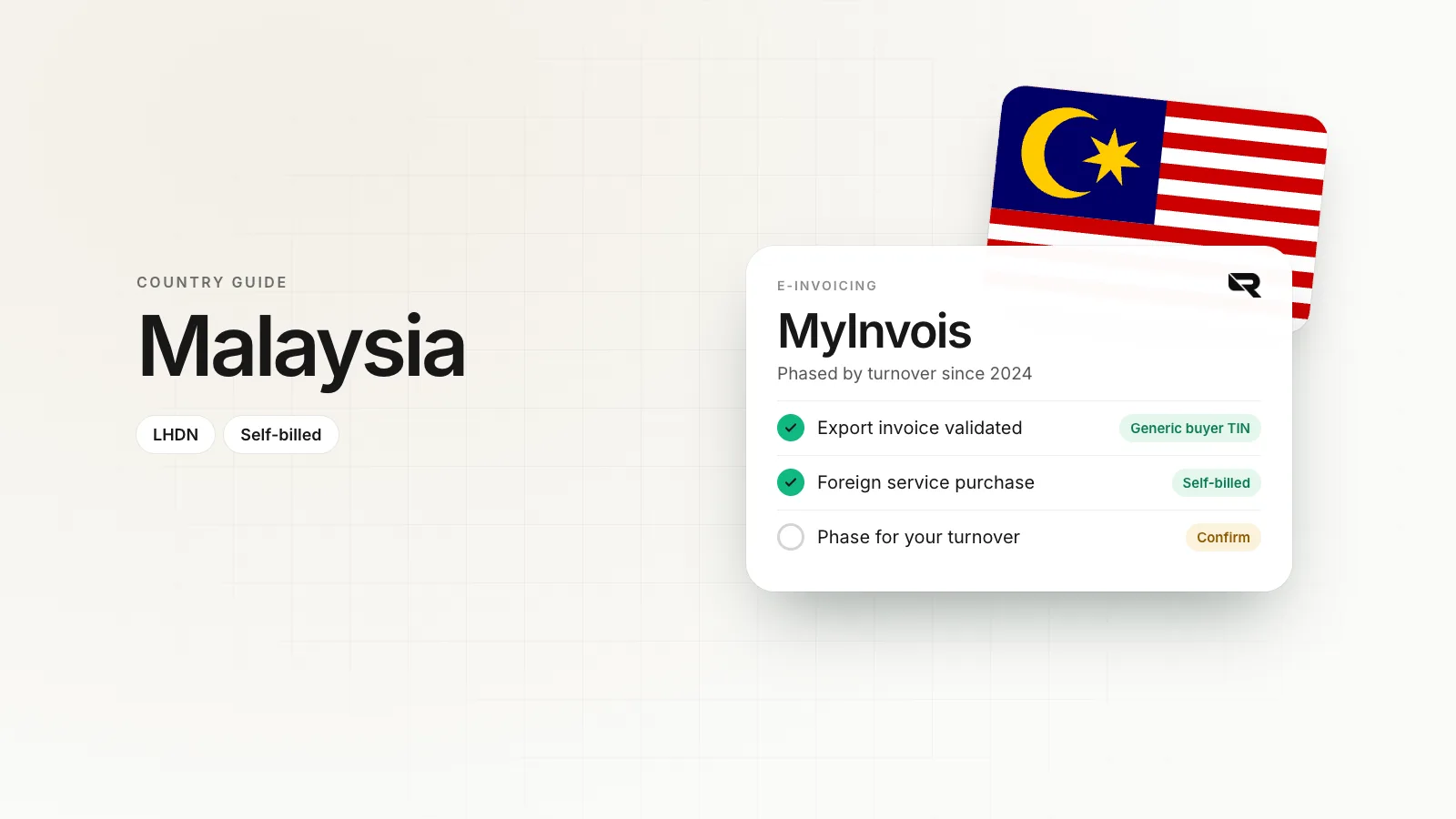
A Penang electronics components maker sells to buyers in Singapore, Japan and the US, and buys engineering software from Germany. Every sale is now an e-invoice validated through LHDN's MyInvois system, foreign buyers included, with a generic TIN in the buyer field. The German software purchase gets a self-billed e-invoice, issued by the Malaysian company itself.
The phases
Malaysia's Inland Revenue Board (LHDN) introduced e-invoicing by annual turnover:
- 1 August 2024: above RM100 million,
- 1 January 2025: RM25 million to RM100 million,
- 1 July 2025: remaining taxpayers above the exemption threshold,
- later phases for the smallest taxpayers, revised in 2025.
LHDN also raised the exemption threshold for small businesses in 2025. Check the current guidelines for your phase and whether you are exempt.
How MyInvois works
Taxpayers submit invoices to MyInvois, through the portal or by API from their systems. LHDN validates each one and returns a unique identifier and QR code. The validated e-invoice is shared with the buyer.
Exports
For foreign buyers without a Malaysian tax identification number, the e-invoice uses the generic TIN that LHDN specifies. The rest of the invoice carries the buyer's foreign details.
Purchases from abroad
When a Malaysian business buys from a foreign supplier, the supplier does not issue a Malaysian e-invoice. For certain cases, including imports of services, the Malaysian buyer issues a self-billed e-invoice. Foreign software subscriptions and consulting are common examples.
The payment side
E-invoicing changes how invoices are validated, not how buyers pay. Foreign buyers pay Malaysian accounts by international transfer.
Paying into Malaysia: the local rail
| What | Detail |
|---|---|
| Local rail | DuitNow transfers over RPP |
| Run by | Payments Network Malaysia (PayNet) |
| Settlement | Seconds, 24/7 |
Source: PayNet: DuitNow. Checked when this guide was last updated; the scheme's own page has the current figures.
Where Rivet fits
Rivet does not submit e-invoices to MyInvois. A Rivet business account accepts registered companies after verification, including Malaysian companies, subject to Bank Negara Malaysia rules on export proceeds and foreign accounts. Rivet is not a bank; regulated partner institutions hold the funds.
Questions people ask
When did Malaysia's e-invoicing start?
1 August 2024 for taxpayers with annual turnover above RM100 million, followed by phases for smaller turnover bands.
Are small businesses exempt?
Businesses below a turnover threshold are exempt. LHDN raised the threshold in 2025. Check the current figure in the e-invoice guidelines.
How do I e-invoice a foreign buyer?
Issue the e-invoice through MyInvois using the generic TIN for foreign buyers specified in LHDN's guidelines.
What is self-billing?
When a Malaysian business buys from a foreign supplier that does not issue Malaysian e-invoices, the buyer issues a self-billed e-invoice in some cases, such as imports of services.
Sources
William covers what happens once a company starts moving money: getting the business verified, paying contractors and suppliers abroad, and keeping card spend under control. William writes for the founder or finance lead who has to make it work this week, and links every rule cited to the text it comes from.
More from William Sunjo M. →This article is general information, not legal, tax or financial advice. Rules and fees change; check the sources above and the provider’s current terms before you act on them.
- malaysia
- myinvois
- e-invoicing
- lhdn
- exports
- self-billing