Israel's invoice allocation numbers in 2026: the thresholds and what they mean for foreign clients
Under the Israel Invoice Model, a tax invoice between Israeli businesses above a threshold needs an allocation number from the Tax Authority, or the buyer cannot deduct its input VAT. The threshold has dropped year by year. Exporters mainly face it on their domestic side.
- Published
- Reading time
- 2 min read
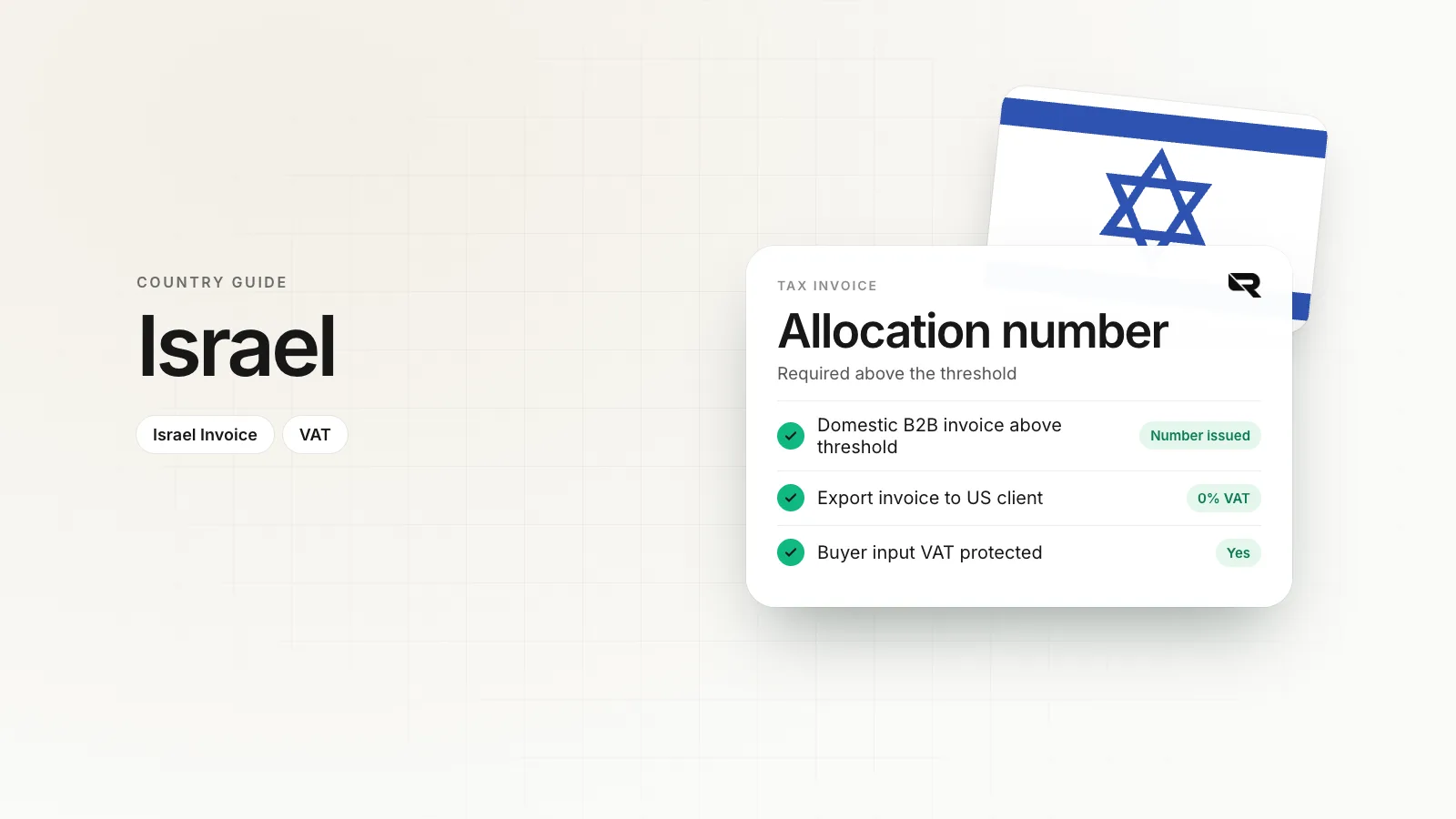
A Tel Aviv cybersecurity firm invoices an Israeli bank NIS 180,000 and a US enterprise client $50,000 in the same week. The Israeli invoice goes out with an allocation number obtained from the Tax Authority through its invoicing software; without it, the bank cannot deduct the VAT. The US invoice is zero-rated and needs no number. The firm's finance team has learned to tell the two apart at a glance.
The Israel Invoice Model
Israel introduced allocation numbers to fight fictitious invoices. For a tax invoice between Israeli businesses above a threshold, the seller requests an allocation number from the Tax Authority, usually automatically through its invoicing system, and prints it on the invoice. The buyer can deduct the input VAT only if the number is there.
The threshold
The model began in 2024 with a threshold of NIS 25,000 before VAT. It has been lowered in steps since, with further reductions during 2026, so that more invoices need numbers. Check the Tax Authority's current threshold, and make sure your invoicing software requests numbers automatically.
Export invoices
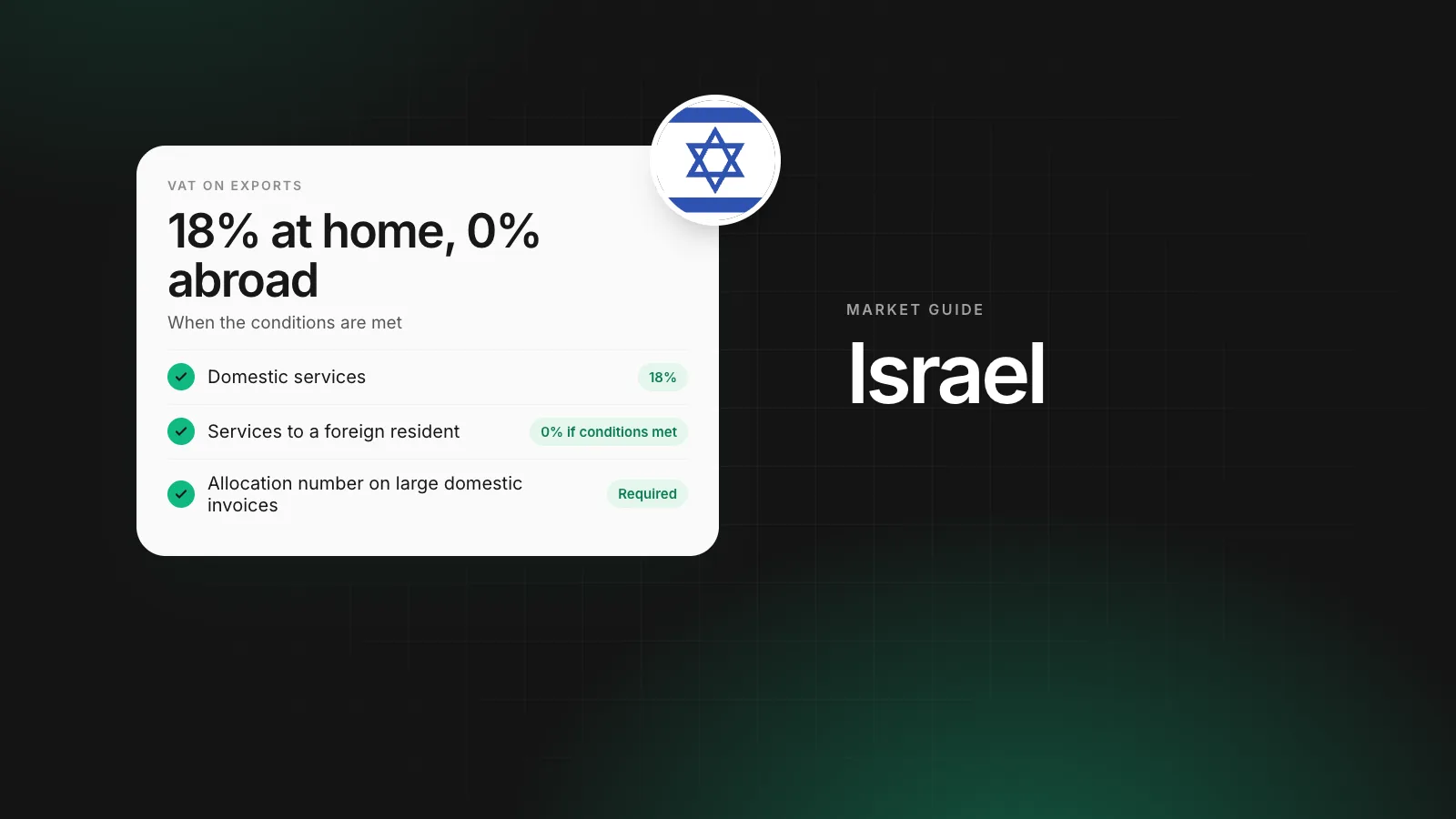
Exports of services to foreign clients are generally zero-rated for VAT when the conditions are met. Since the buyer is abroad and not claiming Israeli input VAT, export invoices generally fall outside the allocation requirement. Keep the contract and evidence that the client is foreign and the service is used abroad.
Two invoicing tracks
For companies with both Israeli and foreign clients:
- domestic B2B invoices above the threshold need allocation numbers,
- export invoices need the zero-rate treatment and supporting documents.
Getting paid by foreign clients
US clients paying Israeli accounts send international wires. US account details let them pay by ACH. European clients pay a euro IBAN by SEPA. The shekel floats, so holding dollars and converting on a schedule gives control over the rate.
Where Rivet fits
Rivet does not issue allocation numbers. A Rivet business account accepts registered companies after verification, including Israeli companies, with US account details on every plan and euro and sterling details from the Growth plan, and payouts in 120+ countries. Rivet is not a bank; regulated partner institutions hold the funds.
Questions people ask
What is an allocation number?
A number issued by the Israel Tax Authority for a specific tax invoice, requested by the seller's invoicing system, which lets the buyer deduct input VAT.
What is the threshold in 2026?
The threshold has been reduced in stages from NIS 25,000 in 2024. In 2026 it falls further during the year. Check the Tax Authority's current figure.
Do export invoices need allocation numbers?
Invoices for zero-rated exports to foreign clients generally do not, because the buyer is not an Israeli business claiming input VAT.
What happens without a number?
The Israeli buyer cannot deduct the VAT on that invoice, which in practice means it will ask you to reissue.
Sources
William covers what happens once a company starts moving money: getting the business verified, paying contractors and suppliers abroad, and keeping card spend under control. William writes for the founder or finance lead who has to make it work this week, and links every rule cited to the text it comes from.
More from William Sunjo M. →This article is general information, not legal, tax or financial advice. Rules and fees change; check the sources above and the provider’s current terms before you act on them.
- israel
- allocation number
- tax invoice
- vat
- israel invoice model
- ils