Icelandic seafood exporters: invoicing in euros, pounds and dollars against a small currency
Fish is one of Iceland's largest exports, sold mostly to Europe, the UK and the US. The króna is a small, volatile currency. An exporter that converts every payment on arrival lets one rate on one day decide a season's margin.
- Published
- Reading time
- 2 min read
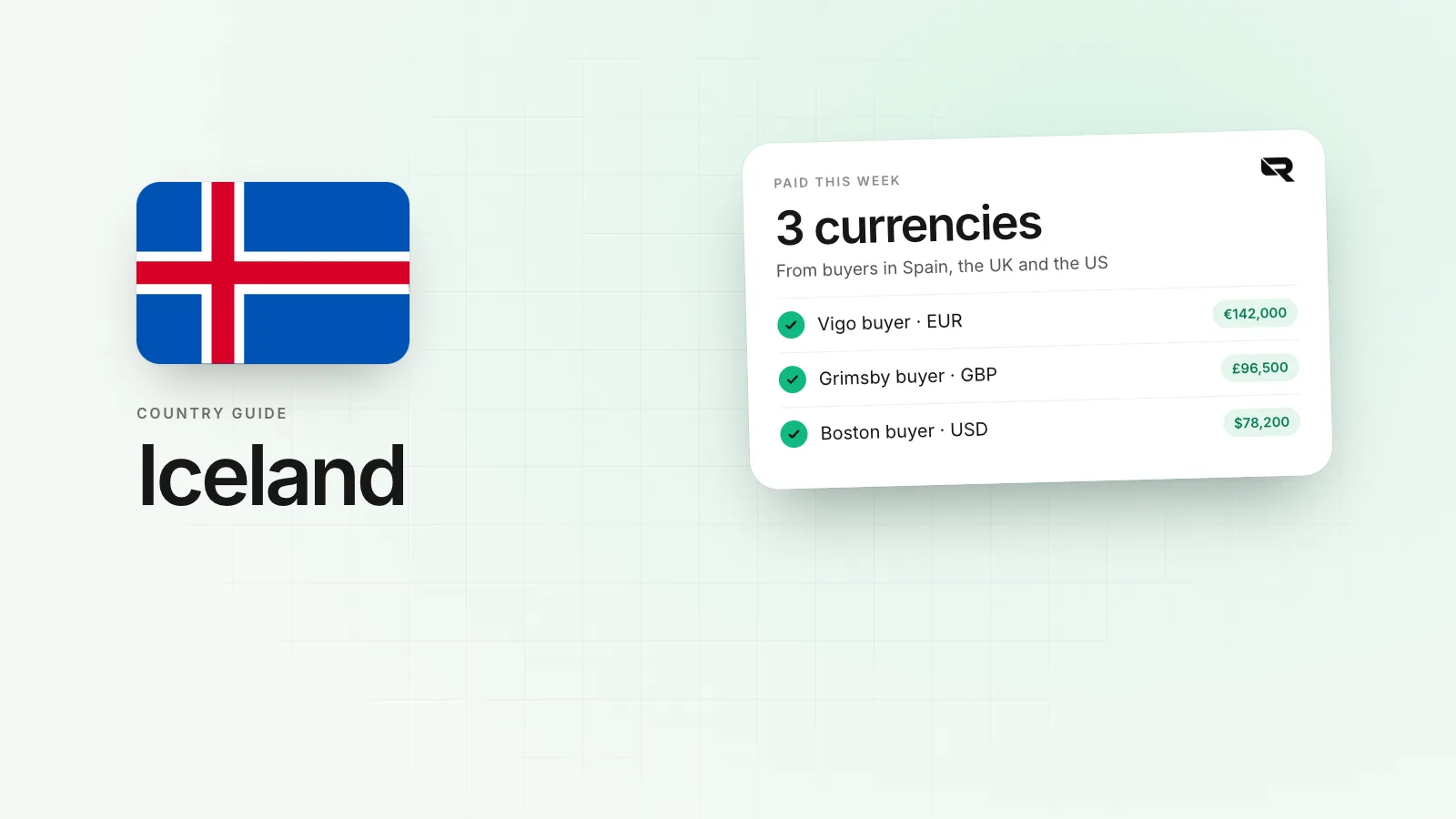
A Westfjords seafood processor ships cod to Spain, haddock to Grimsby and frozen fillets to Boston. Its buyers pay in euros, pounds and dollars. Its fishermen, staff, energy and port fees are paid in krónur. In a year when the króna strengthened by 7 percent against the euro over a few months, the processor's euro sales bought noticeably fewer krónur, and the season's margin narrowed.
Who pays in what
- EU buyers: Spain, France, the Netherlands and others usually contract in euros.
- UK buyers: fish and chip supply chains and processors in pounds.
- US buyers: in dollars.
The contract sets the currency, and the processor's books are in krónur.
The small currency problem
The króna floats and moves more than the euro or dollar. Converting each receipt into krónur the day it arrives means the margin on each shipment depends on that day's rate. Over a season, that can be the difference between a good and a mediocre year.
Iceland lifted most capital controls in 2017, so Icelandic companies can hold foreign currency and decide when to convert.
Hold, match, schedule
- Hold euros, pounds and dollars as they arrive.
- Match foreign costs: packaging, freight, equipment and fuel priced in foreign currency can be paid from the matching balance.
- Schedule conversions of the surplus ahead of payroll and fishermen's settlements, rather than converting everything at once.
Larger exporters add forwards for known króna needs. See FX forward contracts explained.
Payment terms
New buyers usually pay in advance or through documentary collection, where the buyer receives shipping documents only after paying. Long-standing buyers move to open account terms. Keep credit limits per buyer, and keep shipping documents and payment proof together.
Paying into Iceland: the local rail
| What | Detail |
|---|---|
| Local rail | Interbank transfers through Reiknistofa bankanna (RB) |
| Run by | Reiknistofa bankanna, settled at the Central Bank of Iceland |
| Settlement | Seconds between Icelandic banks |
Source: Central Bank of Iceland: payment systems. Checked when this guide was last updated; the scheme's own page has the current figures.
Where Rivet fits
A Rivet business account gives an Icelandic company US dollar details on every plan and, from the Growth plan, euro details with an IBAN and sterling details for Faster Payments, all in its own name. On Scale it holds 30 currencies. Balances can be held, used to pay suppliers in 120+ countries, or converted at a rate shown before you confirm. Rivet is not a bank; regulated partner institutions hold the funds.
Questions people ask
Which currencies do Icelandic seafood buyers pay in?
European buyers mostly in euros, UK buyers in pounds and US buyers in dollars. Contracts usually set the currency.
Why does the króna matter so much?
It is a small floating currency, and its moves against the euro and dollar can be large over a season. Converting all revenue on arrival makes margins depend on the rate each day.
Can Icelandic companies hold foreign currency?
Yes. Iceland lifted most capital controls in 2017, and companies hold foreign currency accounts.
What payment terms are common?
Advance payments for new buyers, documentary collection for larger shipments, and open account terms for long-standing buyers.
Sources
Rashidatou writes Rivet's guides to how money moves between countries: the payment rails, what each one costs, and the account details a company needs to get paid in another currency. Every figure in Rashidatou's articles is traced to the scheme rulebook, the regulator or the provider's published price list, and those sources are listed at the end.
More from Rashidatou K. →This article is general information, not legal, tax or financial advice. Rules and fees change; check the sources above and the provider’s current terms before you act on them.
- iceland
- seafood
- exports
- isk
- eur
- gbp