Opening a business account for a Hong Kong company: why it is hard and what helps
Incorporating a Hong Kong company takes days. Opening its bank account can take months, especially when the owners live elsewhere and the business trades with mainland China and the rest of Asia. Banks want to understand the business before they take it on.
- Published
- Reading time
- 2 min read
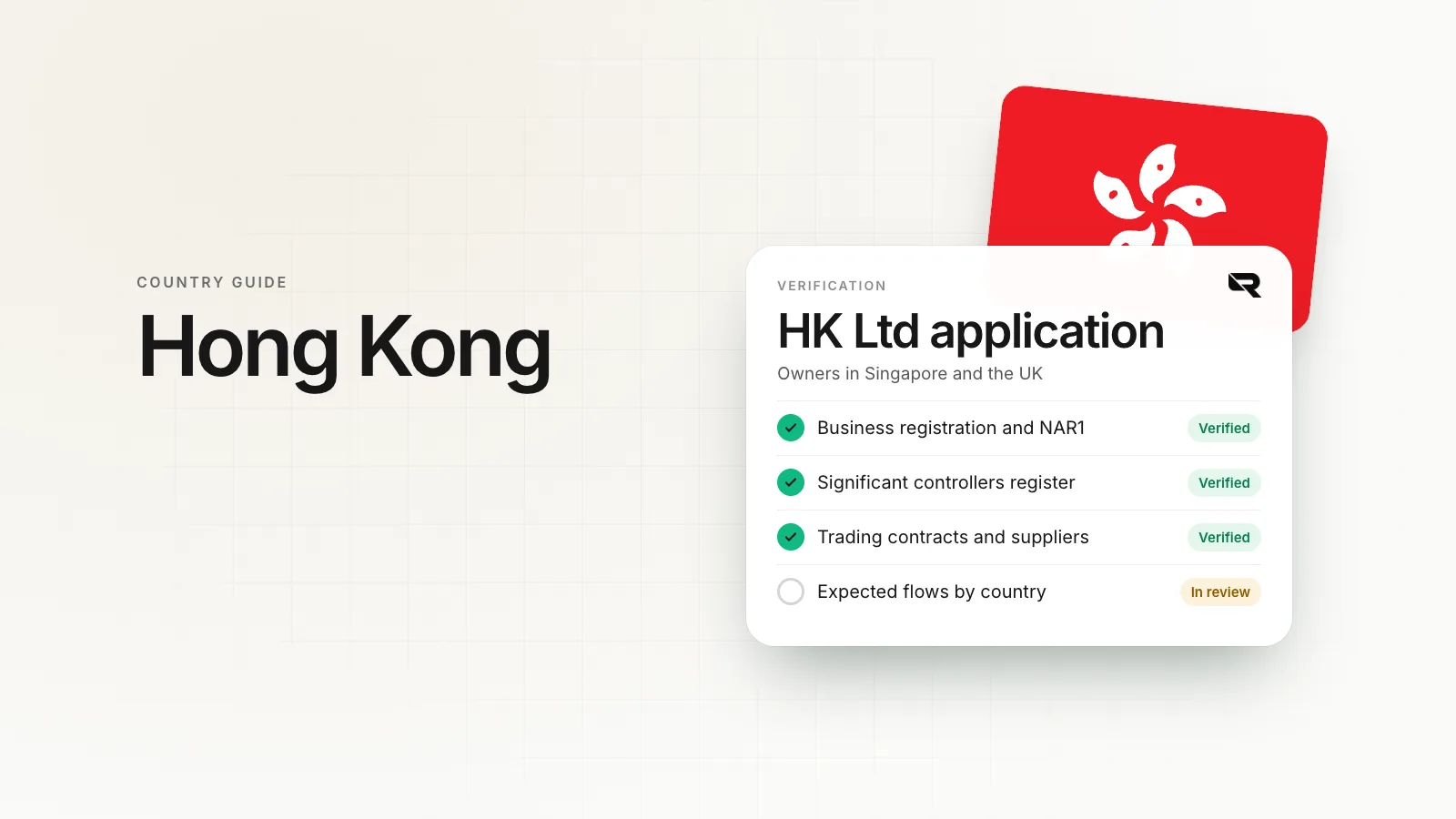
Two founders in Singapore and London incorporate a Hong Kong company to buy electronics from Shenzhen and sell to retailers in Europe. Incorporation takes three days. The first bank asks for a face-to-face meeting in Hong Kong. The second asks for supplier contracts, customer contracts, a business plan and proof of where the founders' capital came from, then declines.
Why reviews are strict
Hong Kong banks operate under strict anti-money-laundering expectations from the HKMA. A company with overseas owners, no local office and trade flows between mainland China and other countries is exactly the profile banks examine most closely. Some decline cases they cannot easily understand rather than spend months on them.
What reviewers look for
- A clear business model. What you buy, from whom, what you sell, to whom.
- Real counterparties. Contracts or invoices with named suppliers and customers.
- Consistent ownership. The Significant Controllers Register, the annual return (NAR1) and the application must match.
- Substance where possible. An office, local staff or a local director helps.
- Source of funds. Where the capital and first revenues come from.
The file to prepare
- Certificate of incorporation and business registration certificate.
- Articles of association and latest NAR1.
- Significant Controllers Register.
- Identity and proof of address for each director and controller.
- A business plan with expected volumes, countries and currencies.
- Supplier and customer contracts or invoices.
Alternatives
Many Hong Kong companies use licensed stored value facility operators, payment providers or multi-currency platforms, alongside or instead of a traditional bank, especially while waiting for one.
Paying into Hong Kong: the local rail
| What | Detail |
|---|---|
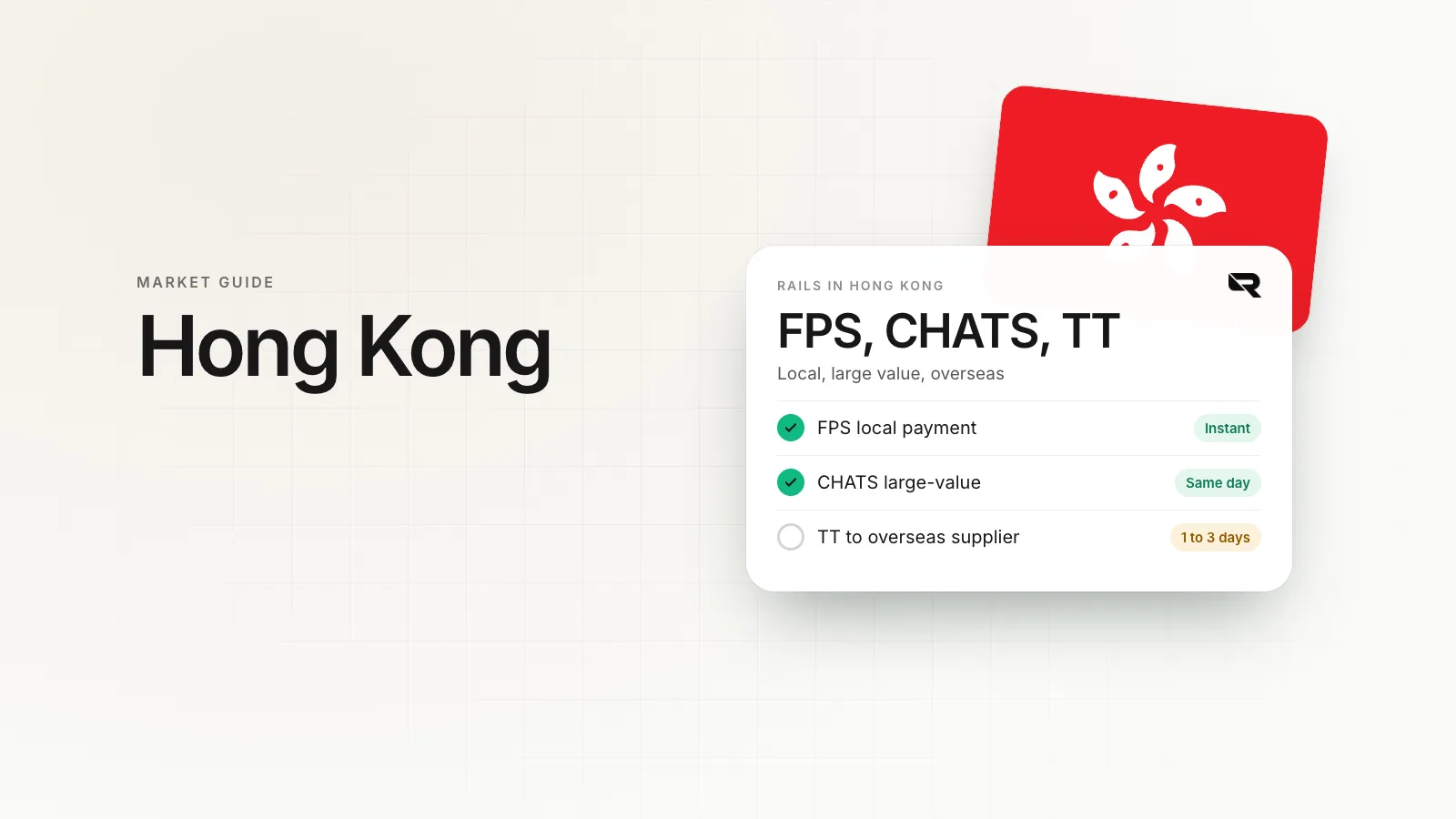
| Local rail | Faster Payment System (FPS) |
| Run by | Hong Kong Interbank Clearing Limited, under the HKMA |
| Settlement | Seconds, 24/7, in HKD or CNY |
Source: HKMA: Faster Payment System. Checked when this guide was last updated; the scheme's own page has the current figures.
Where Rivet fits
A Rivet business account accepts registered companies after verification, including Hong Kong companies with overseas owners, with the document list shown up front and a decision aimed within three business days. Approved companies get US account details on every plan, euro and sterling details from the Growth plan, and on the Scale plan Hong Kong dollar details and balances in 30 currencies. Rivet is not a bank; regulated partner institutions hold the funds.
Questions people ask
Why is it hard to open a bank account for a Hong Kong company?
Banks must meet strict anti-money-laundering rules, and companies with overseas owners and cross-border trade need more review. Many banks decline cases they cannot easily understand.
What documents are needed?
The certificate of incorporation, business registration certificate, articles, latest annual return (NAR1), Significant Controllers Register, identity and address for directors and owners, and evidence of the business.
Does a local office help?
Yes. A real office, local staff or local directors show substance and make reviews easier.
Are there alternatives to traditional banks?
Many Hong Kong companies use licensed payment and stored value providers, or multi-currency platforms, alongside or instead of a bank.
Sources
William covers what happens once a company starts moving money: getting the business verified, paying contractors and suppliers abroad, and keeping card spend under control. William writes for the founder or finance lead who has to make it work this week, and links every rule cited to the text it comes from.
More from William Sunjo M. →This article is general information, not legal, tax or financial advice. Rules and fees change; check the sources above and the provider’s current terms before you act on them.
- hong kong
- business account
- non-resident
- kyb
- hkma
- companies registry