France's e-invoicing reform since September 2026: what changes for companies that bill abroad
French companies have had to receive electronic invoices since 1 September 2026, and large and mid-sized ones must issue them. Sales to and purchases from foreign businesses are outside e-invoicing but inside e-reporting, which many exporters have not planned for.
- Published
- Reading time
- 3 min read
A Lyon engineering consultancy has two kinds of clients: French manufacturers and a growing list of German and American ones. Since 1 September 2026 the French invoices travel as structured data through an approved platform. The foreign ones do not, and that is where the consultancy's setup is incomplete.
What started in September 2026
The reform has two parts.
E-invoicing (facturation électronique). Invoices between companies established in France and subject to VAT are exchanged as structured electronic files through a plateforme agréée, a platform approved by the tax authority. A PDF sent by email no longer counts.
The timetable:
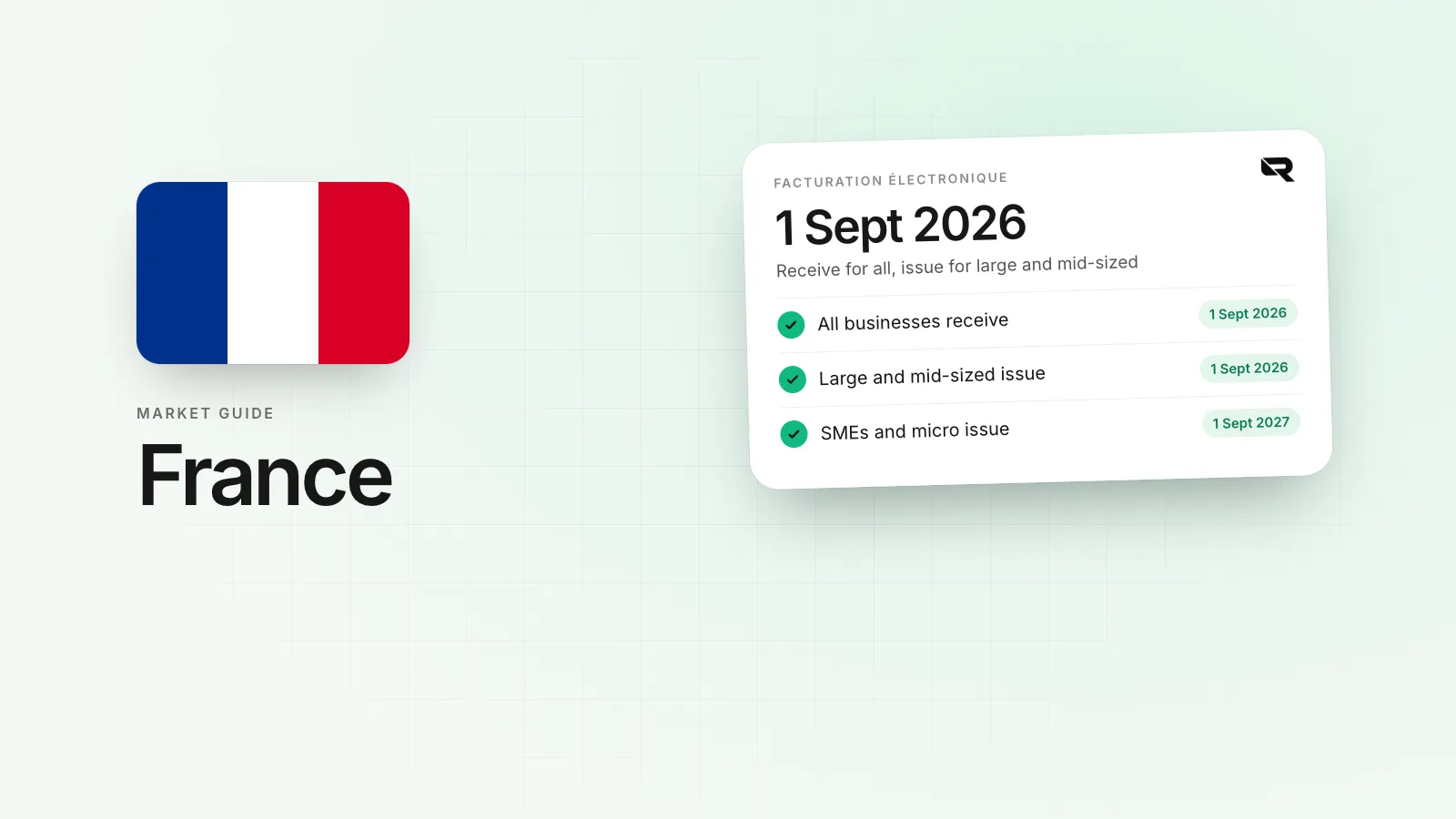
- 1 September 2026: every company must be able to receive e-invoices. Large and mid-sized companies must also issue them.
- 1 September 2027: small and micro companies must issue them too.
E-reporting. Transactions outside domestic B2B e-invoicing still have to be reported. That includes sales to consumers and sales to and purchases from foreign businesses. The platform sends the data to the tax authority on a regular schedule.
The part exporters miss
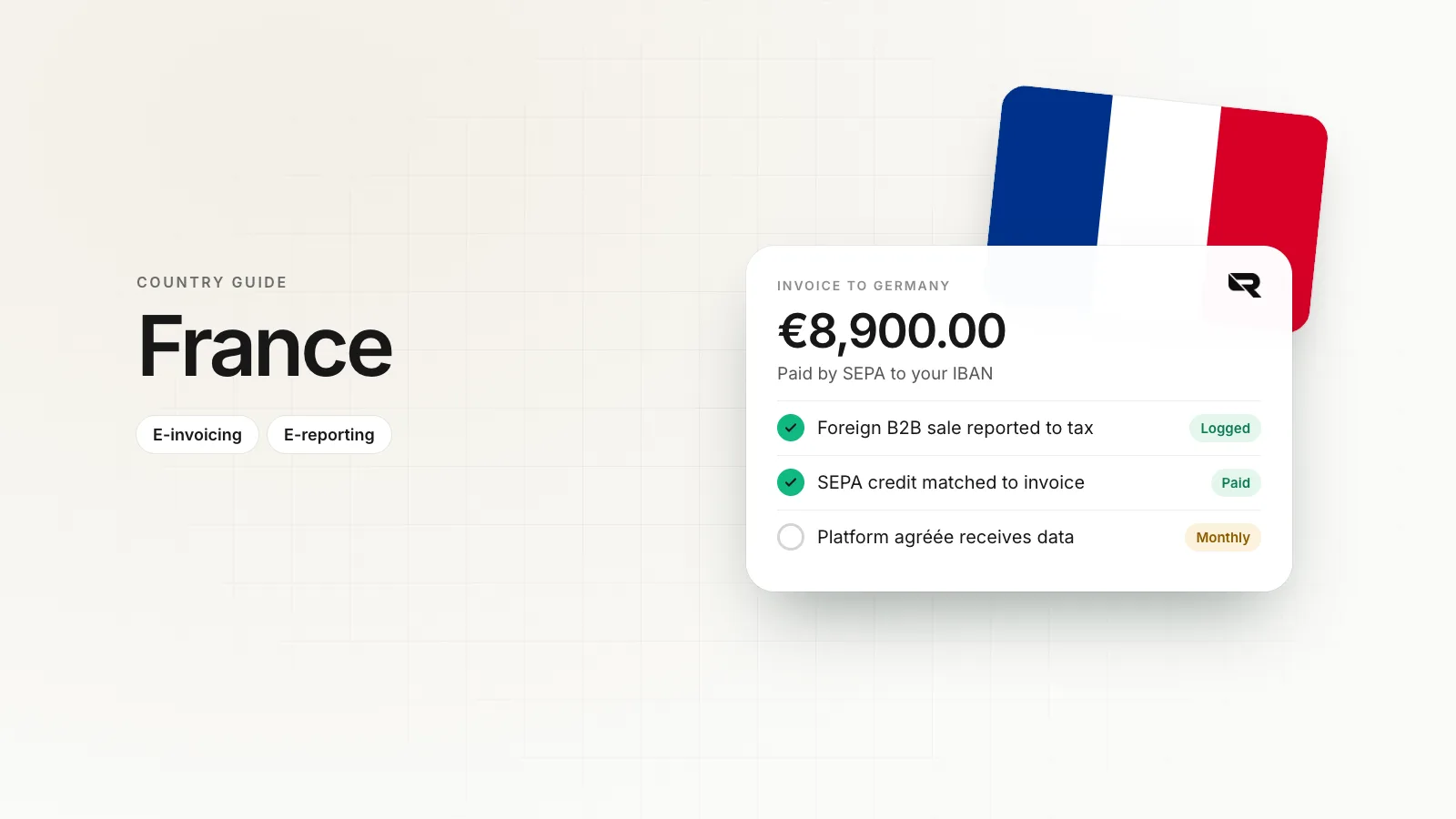
An invoice to a client in Munich is not an e-invoice under the French system. You can keep sending it as a PDF or in whatever format the client's system accepts. But its data, including the client, the amounts, VAT treatment and dates, goes into e-reporting.
The same applies in the other direction. Services bought from a foreign supplier, such as an American software subscription or a contractor in Portugal, are reported too.
If your invoicing tool only handles domestic e-invoices, check that it, or your platform, also produces the e-reporting flows for foreign transactions. Ask before your next VAT period, not after.
Payment terms still apply
E-invoicing changes how invoices travel. It does not change when clients pay. French law caps payment terms between businesses at 60 days from invoice, or 45 days end of month, and late payment carries a fixed €40 recovery indemnity. Foreign clients often pay on their own terms, so set them in the contract.
What speeds foreign payment more than anything is giving the client details they can pay locally. A German company pays a French IBAN by SEPA in seconds. An American client pays far faster by ACH than by international wire.
A short preparation list
- Confirm your plateforme agréée handles e-reporting for foreign B2B sales and purchases.
- Make sure your customer records hold foreign VAT numbers and addresses.
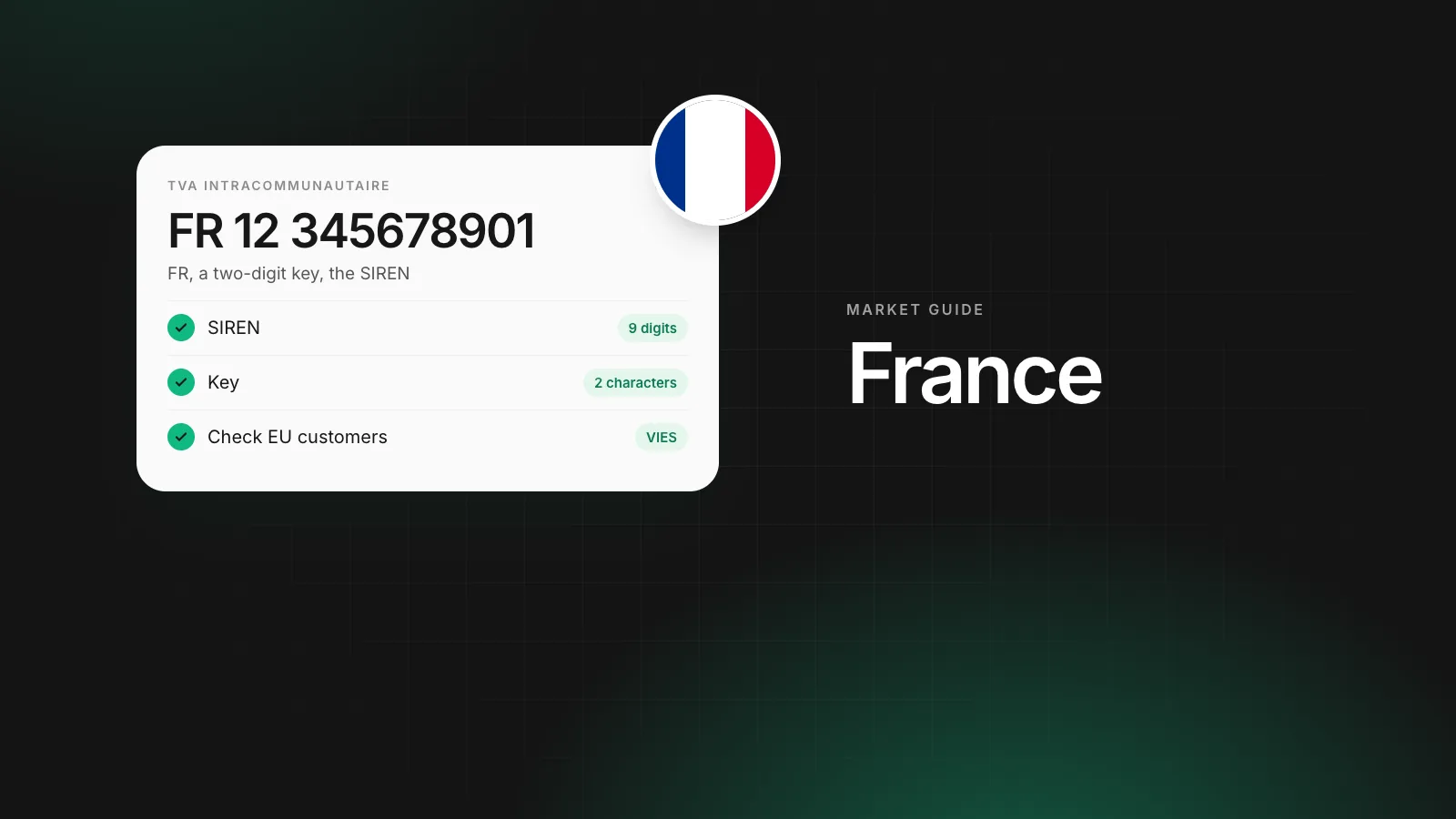
- Keep the SIREN of every French client on file; e-invoices need it.
- Check your invoices show the right VAT wording for exports and reverse charge.
- Put payment details on the invoice that each client can pay locally.
Paying into France: the local rail
| What | Detail |
|---|---|
| Local rail | SEPA Instant Credit Transfer |
| Run by | European Payments Council scheme, run by each bank |
| Settlement | Under ten seconds, 24/7 |
| Published fee | By the EU Instant Payments Regulation, no more than the bank charges for a standard SEPA transfer |
Source: European Payments Council: SEPA Instant Credit Transfer. Checked when this guide was last updated; the scheme's own page has the current figures.
Where Rivet fits
Rivet does not issue e-invoices or replace your plateforme agréée. It handles the payment side for foreign clients: a Rivet business account gives a French company US account details on every plan, so American clients pay by ACH, and from the Growth plan euro and sterling details as well. Incoming payments are matched against open invoices, balances can be held or converted at a rate shown first, and payouts go to 120+ countries. Rivet is not a bank; regulated partner institutions hold the funds.
For the wider EU picture, see e-invoicing mandates from 2026 to 2028.
Questions people ask
Do French companies have to send e-invoices to foreign clients?
No. The e-invoicing obligation covers domestic B2B sales between companies established in France. Sales to foreign businesses fall under e-reporting instead: the transaction data goes to the tax authority, and the invoice to the client can stay in the format you agree.
When do small French companies have to issue e-invoices?
From 1 September 2027 for small and micro companies. Every company, whatever its size, has had to be able to receive e-invoices since 1 September 2026.
What is a plateforme agréée?
A platform approved by the tax administration to send, receive and report invoice data. Companies choose one; the public portal acts as a directory rather than an invoicing service.
Does e-reporting include payment data?
For some services, yes: companies that opted to pay VAT on receipts report payment data for services. Check which applies to you with your accountant.
Sources
William covers what happens once a company starts moving money: getting the business verified, paying contractors and suppliers abroad, and keeping card spend under control. William writes for the founder or finance lead who has to make it work this week, and links every rule cited to the text it comes from.
More from William Sunjo M. →This article is general information, not legal, tax or financial advice. Rules and fees change; check the sources above and the provider’s current terms before you act on them.
- france
- e-invoicing
- facturation électronique
- e-reporting
- vat
- exports