Do sole traders need a business bank account in the UK?
No law says a UK sole trader must open a business bank account. Many banks' personal account terms forbid business use, though, and Making Tax Digital makes a separate account far more useful. A limited company is different: its money has to sit in its own name.
- Published
- Reading time
- 2 min read
No. A UK sole trader is not legally required to have a business bank account. Whether you should keep using a personal account is a separate question, and for most people who trade regularly a separate account saves time and avoids trouble with the bank.
What does the law require?
Nothing about bank accounts. A sole trader and their business are the same legal person, so money the business earns is the person's money. HMRC needs accurate records of income and expenses. It does not say where the money must sit.
What do banks require?
This is where it gets stricter. Many personal current account terms say the account is for personal use only, or forbid regular business transactions. Banks watch for patterns that look like trading, such as many small incoming payments from different customers or payments to suppliers. If they see them, they may ask you to move to a business account, or close the personal account.
An account closure in the middle of a busy month is the real risk here, more than any rule from HMRC. Our article on why business accounts get closed covers what triggers reviews.
Does Making Tax Digital change the answer?
It makes a separate account more useful. Since April 2026, sole traders with qualifying income over £50,000 keep digital records and send HMRC quarterly updates under Making Tax Digital for Income Tax. Most compatible software imports transactions from a bank feed. A feed that carries only business income and costs takes minutes to categorise. A mixed one takes hours, every quarter.
When does a sole trader effectively need a business account?
| Situation | Why |
|---|---|
| You trade under a business name | Clients want to pay the business name, and Confirmation of Payee checks the name on the account |
| You take many card or online payments | Some providers pay out only to business accounts or price them better |
| Your bank's terms forbid business use | Continuing risks a closure |
| You employ staff | Payroll from a personal account is harder to evidence |
| You want accounting software to do the work | A clean feed is the whole point |
The trading name point matters more since Confirmation of Payee. When a client pays "Hillside Design" and your personal account is in your own name, their bank shows a no match or close match warning, and some clients stop there. See Confirmation of Payee no match for how that check works.
What about a limited company?
A limited company is different, because it is a separate legal person. Its income belongs to the company. Paying it into a director's personal account mixes the money of two legal persons, which creates problems for the company's accounts, for tax and for limited liability. Every limited company should have an account in its own name from the start.
What should a sole trader look for in a business account?
- Monthly fee and per-transaction charges at your volume.
- A bank feed that works with your MTD software.
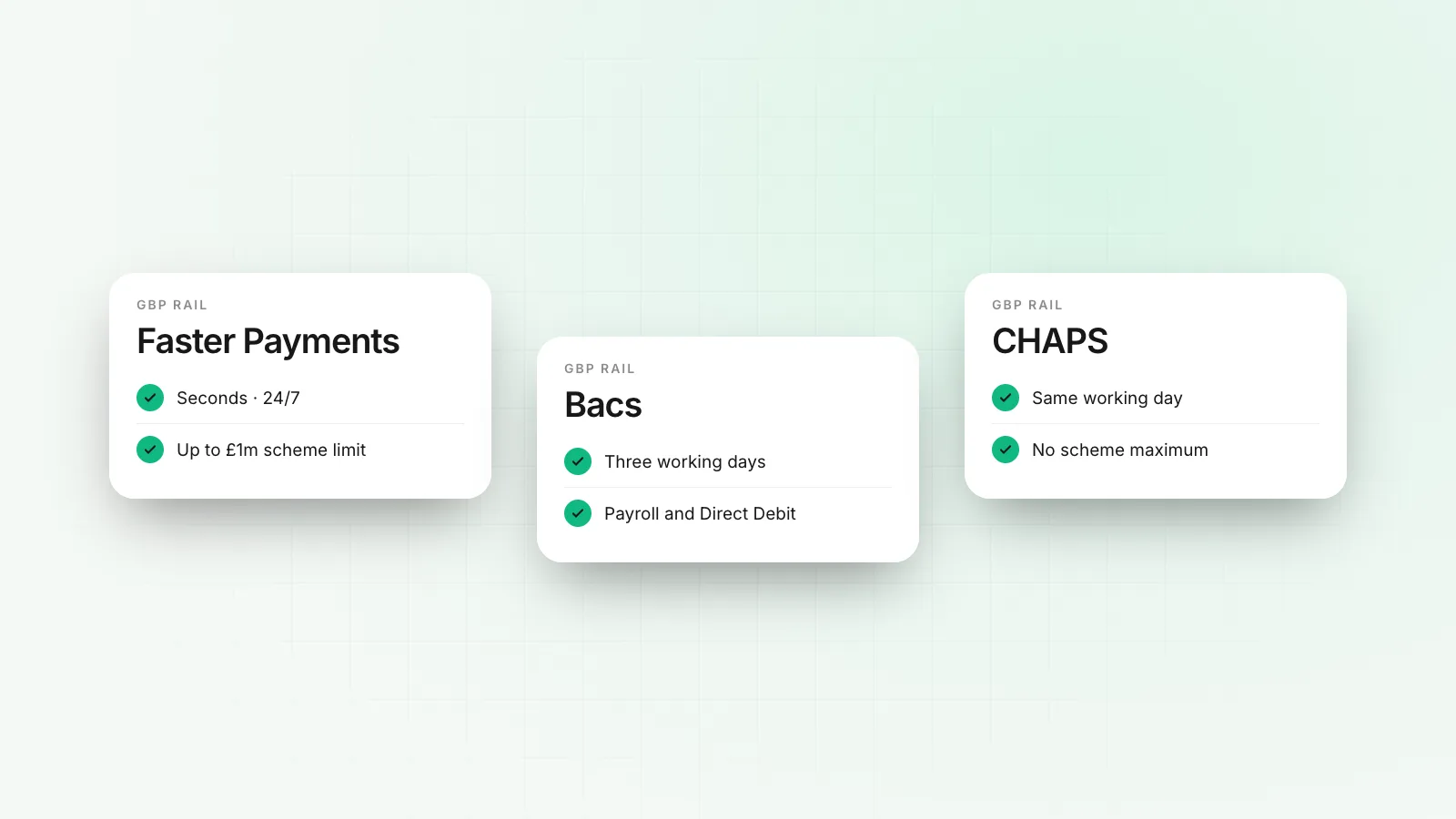
- Fast payments in and out, so Faster Payments for GBP.
- If clients pay from abroad, how foreign currency payments arrive and what the conversion costs.
Rivet opens accounts for registered companies, not sole traders. If you incorporate, a Rivet account holds the company's GBP next to USD and EUR, with account details in the company's own name.
Questions people ask
Can I use my personal bank account as a sole trader?
The law allows it. Check your bank's terms first: many personal accounts are for personal use only, and heavy business traffic can lead the bank to ask questions or close the account.
Does HMRC check sole traders' bank accounts?
HMRC can ask for bank statements during an enquiry. If business and personal spending are mixed, you will need to show which transactions are which, which takes longer and invites more questions.
Do I need a business account to accept card payments?
Most card payment providers will pay out to a personal account for a sole trader. Some require a business account, and some charge less when you have one.
Does a limited company need a business bank account?
In practice, yes. The company's money is not the director's, so it should be paid into an account in the company's name. Paying company income into a personal account mixes two legal persons' money and causes tax and liability problems.
Sources
Rashidatou writes Rivet's guides to how money moves between countries: the payment rails, what each one costs, and the account details a company needs to get paid in another currency. Every figure in Rashidatou's articles is traced to the scheme rulebook, the regulator or the provider's published price list, and those sources are listed at the end.
More from Rashidatou K. →This article is general information, not legal, tax or financial advice. Rules and fees change; check the sources above and the provider’s current terms before you act on them.
- sole trader
- business bank account
- personal account for business
- uk
- making tax digital