Czech e-shops selling to Slovakia, Poland and Hungary: OSS, local prices and three currencies
Slovakia, Poland and Hungary are natural next markets for a Czech e-shop: close, familiar and reachable by the same couriers. Each brings its own VAT rate, its own favourite payment method and, except Slovakia, its own currency.
- Published
- Reading time
- 2 min read
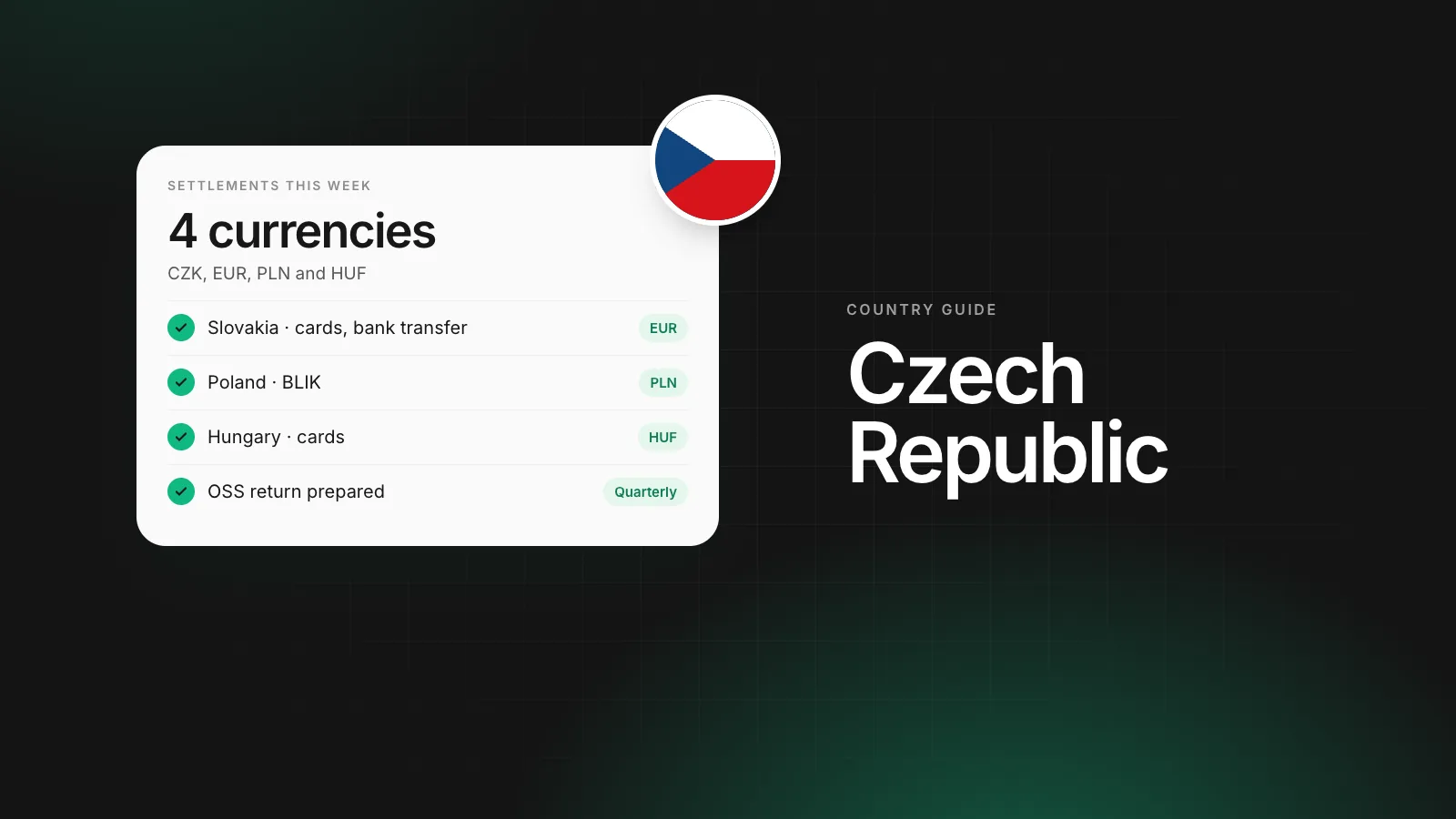
A Prague e-shop selling home fragrances grows past the Czech market and opens Slovak, Polish and Hungarian versions of its site. Orders come in. So do three new VAT rates, three new payment habits and two new currencies. At the end of the first quarter, the shop realises its payment provider has been converting zloty and forint payouts to korunas at a rate it never checked.
VAT: the €10,000 line
EU rules treat cross-border sales to consumers in one way across the bloc. Below €10,000 a year in total such sales, a Czech seller can charge Czech VAT. Above it, VAT is due at the rate of each customer's country, from the sale that crosses the threshold.
The One Stop Shop (OSS) avoids registering in each country. You register with the Czech tax office, charge each country's rate at checkout and file one quarterly OSS return. Rates differ: Hungary's standard rate of 27 percent is the EU's highest, and Poland and Slovakia have their own.
Payment methods by market
- Slovakia: cards, bank transfers, cash on delivery still common. Prices in euros.
- Poland: BLIK, the mobile code system, and fast bank transfers dominate. Cards and pay-later options follow.
- Hungary: cards, bank transfers, cash on delivery.
Your payment provider can enable most of these. Prices in the local currency raise conversion, especially in Poland and Hungary.
Settlement: where margins leak
When the provider pays out zloty and forints, it either converts them to korunas first or pays out in the local currency. Conversion at payout happens at the provider's rate, on every payout, whatever the market is doing.
Holding euros, zloty and forints lets settlements arrive as they are. You can pay local costs from them, such as Polish marketing agencies, Hungarian returns handling or Slovak fulfilment, and convert the surplus to korunas when you choose.
Practical order
- Register for OSS before you expect to cross €10,000.
- Localise price, currency and payment methods per country.
- Settle each currency into its own balance.
- Reconcile OSS figures against payouts each quarter.
Paying into Czechia: the local rail
| What | Detail |
|---|---|
| Local rail | Okamžité platby (instant payments) over CERTIS |
| Run by | Czech National Bank |
| Settlement | Seconds, 24/7, with a limit set by each bank |
Source: Czech National Bank: CERTIS. Checked when this guide was last updated; the scheme's own page has the current figures.
Where Rivet fits
Rivet is not a checkout or an OSS filing service. On the Scale plan, a Rivet business account holds balances in 30 currencies, including korunas, zloty and forints, beside the euro and sterling details from Growth and the US dollar details on every plan. Balances can be converted at a rate shown before you confirm or paid out to suppliers in 120+ countries. Rivet is not a bank; regulated partner institutions hold the funds.
Questions people ask
When does a Czech e-shop charge Slovak or Polish VAT?
When its total sales of goods and electronic services to consumers in other EU countries exceed €10,000 in a calendar year. From then on, the customer's country's VAT rate applies.
What is the OSS?
The One Stop Shop. A Czech seller registers with its own tax office and files one quarterly return covering VAT due in every EU country, instead of registering in each.
Which payment methods do Polish shoppers use?
BLIK, the mobile code payment system, and fast bank transfers dominate, alongside cards.
Should prices be in local currency?
Shoppers convert better when they see their own currency. If you price in zloty or forints, settle in those currencies where you can.
Sources
William covers what happens once a company starts moving money: getting the business verified, paying contractors and suppliers abroad, and keeping card spend under control. William writes for the founder or finance lead who has to make it work this week, and links every rule cited to the text it comes from.
More from William Sunjo M. →This article is general information, not legal, tax or financial advice. Rules and fees change; check the sources above and the provider’s current terms before you act on them.
- czech republic
- e-commerce
- oss
- slovakia
- poland
- hungary