Invoicing German and Austrian clients in euros from a Czech s.r.o.
Most Czech exporters sell to Germany and Austria, and their clients want euro invoices. The Czech Republic still uses the koruna, so every euro invoice needs a CNB conversion in the books and, unless you hold euros, a bank conversion on arrival.
- Published
- Reading time
- 2 min read
A Brno precision engineering company sells 70 percent of its output to Germany and Austria. All of it is invoiced in euros. Its staff, energy and Czech suppliers are paid in korunas. Every euro payment lands in a koruna account, converted at the bank's rate on arrival.
Euro invoices are normal
Czech law lets companies invoice in any currency. Most Czech exporters to the euro area invoice in euros because their customers require it. Where Czech VAT appears on the invoice, the VAT amount must also be shown in korunas.
For most services and intra-EU supplies of goods to German and Austrian businesses, no Czech VAT appears: the invoice shows both VAT numbers and refers to the reverse charge, and the sale goes in the souhrnné hlášení, the recapitulative statement of intra-EU supplies.
Books in korunas
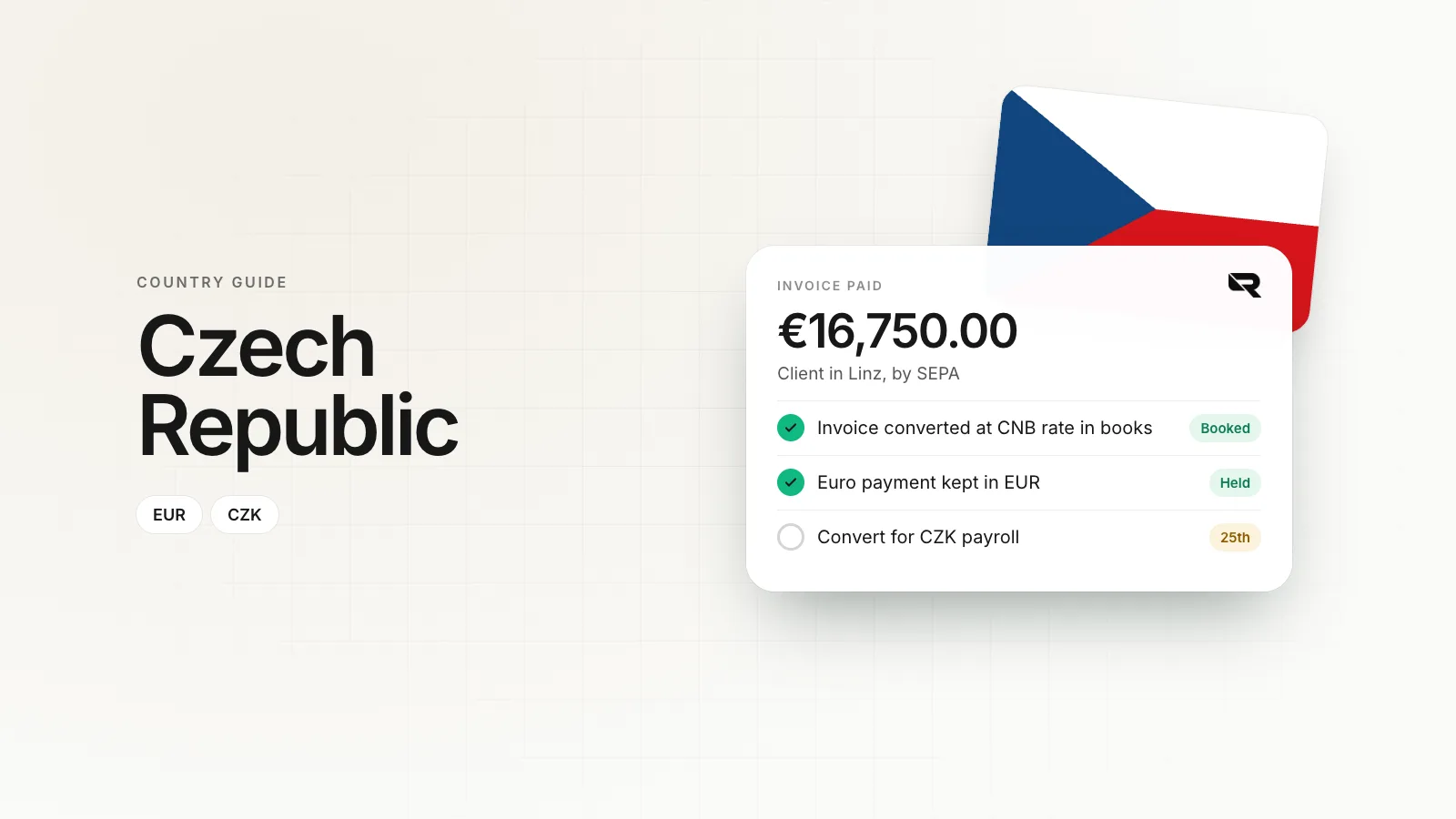
Accounting is kept in korunas. Each euro amount is converted at the Czech National Bank's rate for the day, or at a fixed rate the company sets in its accounting policy, used consistently. When a euro receivable is paid at a different rate from the one it was booked at, the difference is an exchange gain or loss.
The conversion you do not see
The bank's conversion on arrival is separate. It happens at the bank's own rate, which includes its margin, on whatever day the money arrives. For a company that also pays euro costs, such as German steel suppliers, Austrian subcontractors, trade fairs and euro-priced software, that conversion is often reversed weeks later.
Hold euros, convert deliberately
A euro balance changes this:
- Customer payments arrive and stay in euros.
- Euro costs are paid from them.
- Korunas are bought for payroll on a schedule, at a rate you see before confirming.
With fewer conversions, there are fewer exchange differences to book, and the margin is paid only on what actually needs to become korunas.
Paying into Czechia: the local rail
| What | Detail |
|---|---|
| Local rail | Okamžité platby (instant payments) over CERTIS |
| Run by | Czech National Bank |
| Settlement | Seconds, 24/7, with a limit set by each bank |
Source: Czech National Bank: CERTIS. Checked when this guide was last updated; the scheme's own page has the current figures.
Where Rivet fits
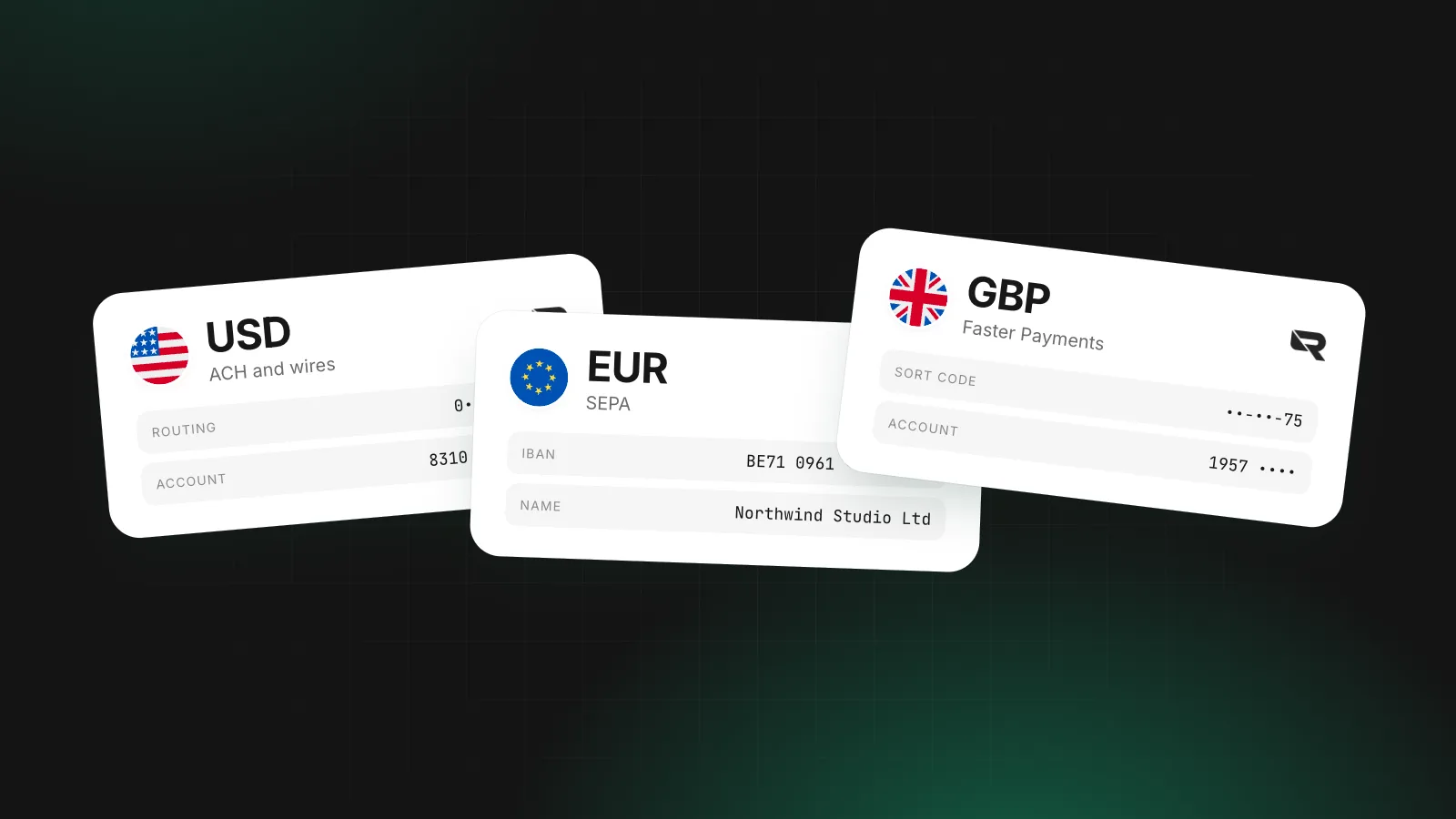
A Rivet business account on the Growth plan gives a Czech s.r.o. euro details with an IBAN, so German and Austrian customers pay by SEPA, plus sterling details, and US dollar details on every plan, all in the company's own name. On the Scale plan balances cover 30 currencies, korunas included. Each conversion shows its rate before you confirm and keeps it on the statement. Rivet is not a bank; regulated partner institutions hold the funds.
Questions people ask
Can a Czech company invoice in euros?
Yes. The invoice can be in euros; where Czech VAT appears, the VAT amount must also be shown in CZK.
Which rate converts euro invoices in Czech books?
The CNB rate for the day the transaction is booked, or a fixed rate set by the company's accounting policy, applied consistently.
What is the souhrnné hlášení?
The recapitulative statement of intra-EU supplies, filed electronically with the tax office, listing each EU business customer's VAT number and the value supplied.
Should I keep euros?
If you pay euro suppliers, subcontractors or rent, yes. Keeping euros avoids converting twice and leaves you to convert the surplus when it suits you.
Sources
Rashidatou writes Rivet's guides to how money moves between countries: the payment rails, what each one costs, and the account details a company needs to get paid in another currency. Every figure in Rashidatou's articles is traced to the scheme rulebook, the regulator or the provider's published price list, and those sources are listed at the end.
More from Rashidatou K. →This article is general information, not legal, tax or financial advice. Rules and fees change; check the sources above and the provider’s current terms before you act on them.
- czech republic
- s.r.o.
- eur invoicing
- cnb rate
- reverse charge
- czk