Canadian online sellers shipping to the US after the end of de minimis
For years a Canadian online store could ship parcels under $800 to American customers without duty or formal entry. The US suspended that de minimis exemption for all countries in August 2025. Canadian sellers now deal with duty, brokers and CUSMA paperwork on every order.
- Published
- Reading time
- 2 min read
A Montreal skincare brand sold to American customers for years with no duty and no customs paperwork on parcels under $800. On 29 August 2025 that ended. The first week, a quarter of its US parcels were held for duty payment by customers who had never paid duty on its products before, and the brand's support inbox filled up.
What changed
Section 321 of US customs law, the de minimis exemption, let shipments worth $800 or less enter duty-free with minimal paperwork. The US suspended it for shipments from all countries from 29 August 2025. Every commercial parcel now needs entry data, and duty applies according to the product's tariff classification and origin.
CUSMA origin still matters
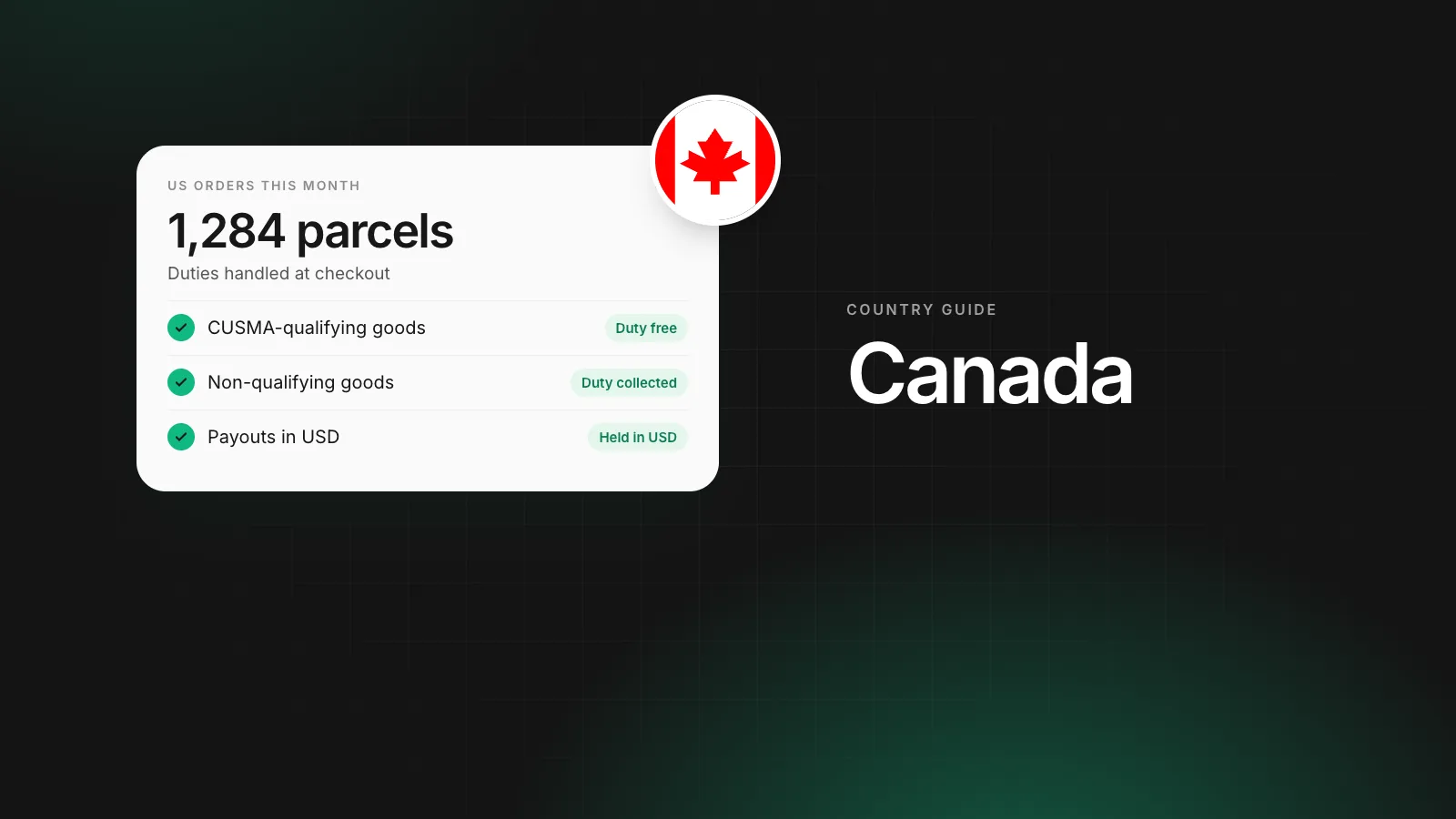
Goods that qualify as originating under the Canada-United States-Mexico Agreement (CUSMA) can still enter free of most US tariffs. Qualifying is not automatic. The goods must meet the product-specific rule of origin, and the importer needs a certification of origin, which you can provide on the invoice or a separate document.
Skincare made in Quebec from qualifying inputs may pass. Phone cases made in Asia and shipped from a Canadian warehouse do not.
Who pays the duty
Two approaches:
- Delivered duty paid (DDP): you charge duty and fees at checkout and your carrier or broker pays them on entry. Customers get no surprise at the door.
- Delivered at place (DAP): the customer pays duty and brokerage on delivery. Cheaper for you, and more refused parcels.
Most Canadian brands selling direct to US consumers moved to DDP within months.
Pricing and settlement
American customers expect US dollar prices. Your payment processor settles US dollar sales either in US dollars or converted to Canadian dollars. Converting every payout leaves the margin to the processor's rate on the day.
Settling in US dollars into a US dollar balance lets you pay US costs from it, such as US fulfilment, ads, duties paid through your broker and US contractors, and convert only the surplus.
Paying into Canada: the local rail
| What | Detail |
|---|---|
| Local rail | Interac e-Transfer for instant transfers; EFT for batch payments |
| Run by | Interac Corp.; Payments Canada |
| Settlement | Interac e-Transfer in seconds, with limits set by each bank; EFT within one business day |
Source: Payments Canada: systems. Checked when this guide was last updated; the scheme's own page has the current figures.
Where Rivet fits
Rivet is not a customs broker or checkout. A Rivet business account gives a Canadian company US account details in its own name on every plan, so US dollar payouts land as dollars, and on the Scale plan Canadian dollar details and balances in 30 currencies. Balances can be spent with Visa company cards, paid to suppliers in 120+ countries, or converted at a rate shown before you confirm. Rivet is not a bank; regulated partner institutions hold the funds.
Questions people ask
What was de minimis?
Section 321 let shipments valued at $800 or less enter the US free of duty and with minimal paperwork. It was suspended for all countries from 29 August 2025.
Do CUSMA goods still enter duty free?
Goods that meet CUSMA rules of origin, with a valid certification of origin, can still enter the US free of most tariffs. Goods made elsewhere and shipped from Canada do not qualify.
Who pays the duty?
The importer of record. If you ship delivered duty paid, that is effectively you, through your carrier or broker. If not, the customer pays on delivery.
Should a Canadian store price in US dollars for American customers?
Yes, most do. Settling in US dollars into a US dollar balance avoids a conversion on every payout.
Sources
William covers what happens once a company starts moving money: getting the business verified, paying contractors and suppliers abroad, and keeping card spend under control. William writes for the founder or finance lead who has to make it work this week, and links every rule cited to the text it comes from.
More from William Sunjo M. →This article is general information, not legal, tax or financial advice. Rules and fees change; check the sources above and the provider’s current terms before you act on them.
- canada
- e-commerce
- de minimis
- cusma
- us customs
- usd