Cameroon and CEMAC exchange rules: what exporters must repatriate and when
Cameroon shares a currency and an exchange regulation with five other CEMAC states. Since 2018 the rules require exporters to bring proceeds home within a set period and pass a share to the BEAC. Holding money abroad is restricted. Enforcement has tightened, especially for extractive sectors.
- Published
- Reading time
- 2 min read
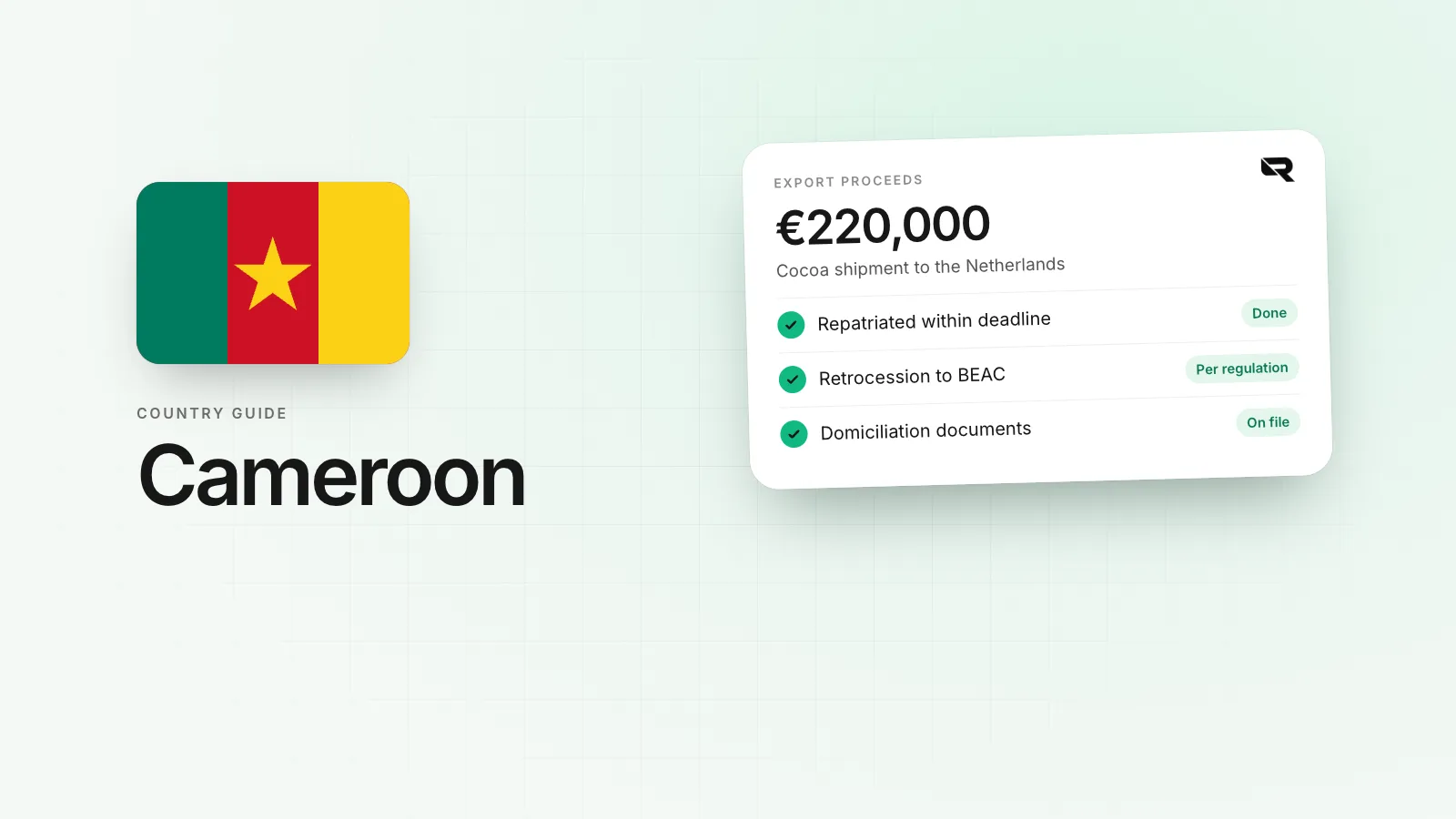
A Douala cocoa exporter ships to a processor in Amsterdam. The euros arrive at its Cameroonian bank within the deadline. The bank checks the domiciliation documents, applies the CEMAC rules, retrocedes the required share to the BEAC and credits the exporter. Its finance director has watched enforcement tighten every year since 2019.
The CEMAC regulation
Cameroon shares the CFA franc (XAF) and a foreign exchange regulation with Gabon, Congo, Chad, the Central African Republic and Equatorial Guinea. The CEMAC regulation adopted in December 2018 and in force from 2019 is applied by the BEAC and commercial banks.
Repatriation
Exporters must bring export proceeds into the CEMAC zone within the deadline the regulation sets, through banks where the export is domiciled. Banks monitor domiciled exports and report gaps.
Retrocession
A share of foreign currency repatriated by exporters is retroceded to the BEAC, which manages the zone's reserves. The exporter receives francs for that share.
Accounts abroad
Residents generally need BEAC authorisation to hold accounts outside the zone. The BEAC has tightened enforcement, including for oil and mining companies, which had specific arrangements.
Documents
Export domiciliation with a bank, customs export declarations, invoices and contracts. Keep them together per shipment.
The franc
The XAF is pegged to the euro at 655.957, so euro revenue carries no exchange rate risk. Dollar revenue does.
Paying into Cameroon: the local rail
| What | Detail |
|---|---|
| Local rail | SYSTAC batch clearing and SYGMA real-time gross settlement; GIMAC for transfers between banks and mobile money |
| Run by | Banque des États de l'Afrique Centrale (BEAC); GIMAC |
| Settlement | SYSTAC the same or next business day; GIMAC transfers in minutes |
Source: BEAC: payment systems. Checked when this guide was last updated; the scheme's own page has the current figures.
Where Rivet fits
Rivet opens business accounts for registered companies after verification. Cameroon-registered companies must repatriate export proceeds under CEMAC rules and generally need BEAC authorisation for accounts abroad, so check with your bank first. Where available, partners abroad who bank with Rivet can pay Cameroonian bank accounts through Rivet's payouts. Rivet is not a bank; regulated partner institutions hold the funds.
Questions people ask
What is the CEMAC exchange regulation?
The regulation on foreign exchange adopted by the CEMAC in December 2018, applied by the BEAC and banks in Cameroon, Gabon, Congo, Chad, the Central African Republic and Equatorial Guinea.
How long do exporters have to repatriate proceeds?
The regulation sets a deadline from the export date. Check the current BEAC instructions with your bank.
What is retrocession?
The transfer of a share of repatriated foreign currency by banks to the BEAC, which builds the zone's reserves.
Can Cameroonian companies hold accounts abroad?
Generally only with BEAC authorisation. The rules restrict residents' foreign accounts.
Sources
William covers what happens once a company starts moving money: getting the business verified, paying contractors and suppliers abroad, and keeping card spend under control. William writes for the founder or finance lead who has to make it work this week, and links every rule cited to the text it comes from.
More from William Sunjo M. →This article is general information, not legal, tax or financial advice. Rules and fees change; check the sources above and the provider’s current terms before you act on them.
- cameroon
- cemac
- beac
- export proceeds
- repatriation
- xaf