1099 vs W-2: classifying workers correctly
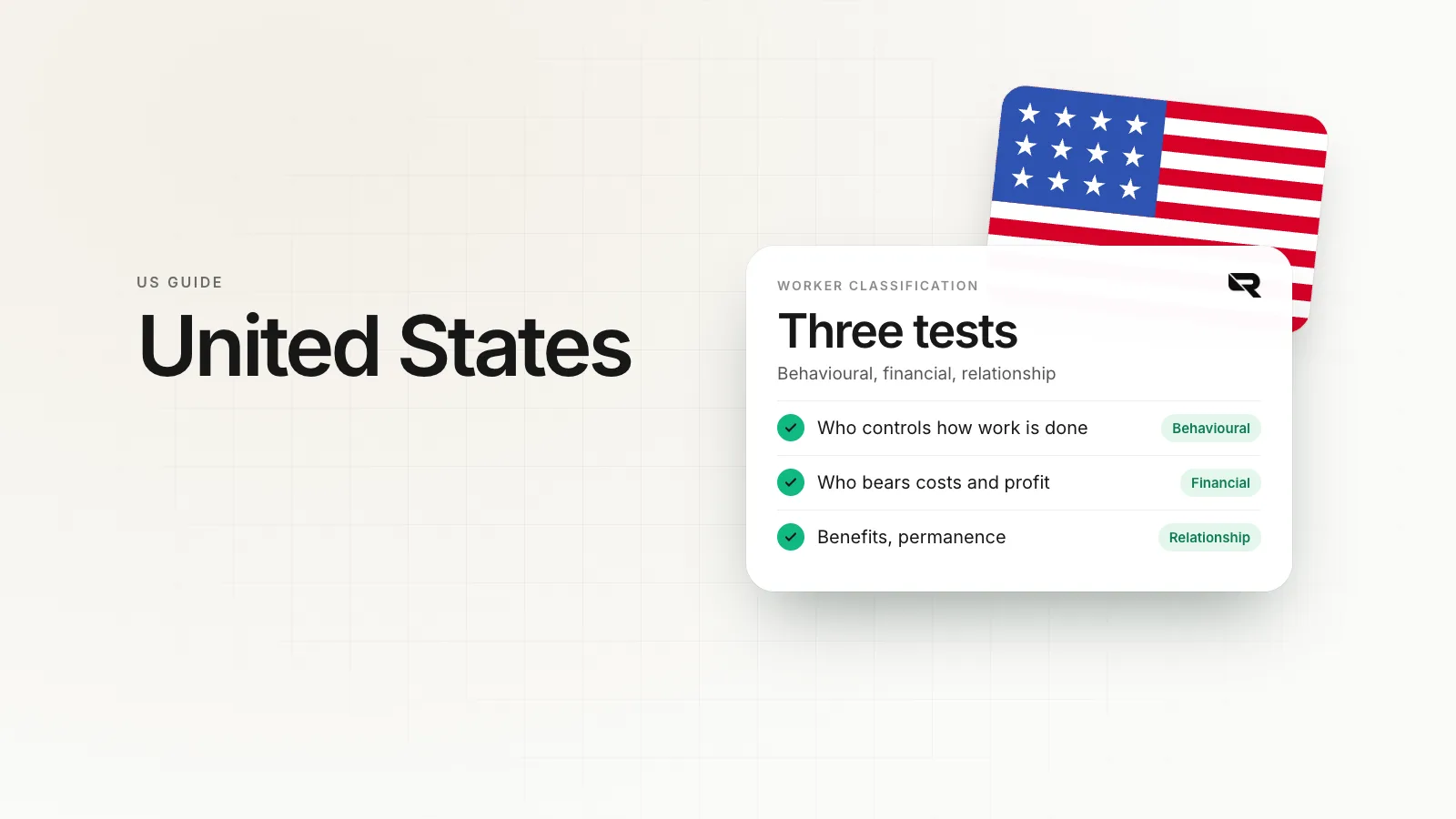
The label on the contract does not decide whether someone is a contractor. The IRS looks at behavioural control, financial control and the relationship. Getting it wrong is expensive.
- Published
- Reading time
- 1 min read
"1099 vs W2" is one of the top completions after "1099". Founders ask because a contractor has worked full time for a year and now looks like an employee.
The IRS tests
| Test | Questions |
|---|---|
| Behavioural control | Do you control how, when and where the work is done? Do you train them? |
| Financial control | Do they invest in their own tools, set their own prices, work for others, risk a loss? |
| Relationship | Is there a written contract? Benefits? Is the work ongoing and core to your business? |
No single factor decides. The overall picture does.
State tests
California, Massachusetts, New Jersey and others use the ABC test for some purposes, which is harder to meet.
The cost of getting it wrong
Back payroll taxes, the employer share of FICA, penalties, interest, and in some states, back wages and benefits.
Workers abroad
A developer in Poland or Brazil is not a 1099 worker. Their country's law governs. Contractor agreements, invoices and local payments are the usual setup; for full-time roles, an employer of record may be safer.
Paying contractors properly
Pay against invoices, not on a payroll schedule with fixed hours, and let contractors set their own tools and hours. The payment pattern is part of the evidence.
Paying into the United States: the local rail
| What | Detail |
|---|---|
| Local rail | ACH for batch payments; RTP and FedNow for instant transfers |
| Run by | Nacha for ACH; The Clearing House for RTP; the Federal Reserve for FedNow |
| Settlement | Same-day ACH within the business day, standard ACH the next; RTP and FedNow in seconds, 24/7, where both banks take part |
Source: Nacha: Same Day ACH. Checked when this guide was last updated; the scheme's own page has the current figures.
Where Rivet fits
Rivet pays contractors in the US and 120+ countries against invoices, on local rails, with each payout recorded to the payee. Rivet is not a bank; regulated partner institutions hold the funds. See how to pay international contractors.
Questions people ask
What is the difference between 1099 and W-2?
A W-2 employee is on payroll with tax withheld and benefits. A 1099 contractor runs their own business and invoices you. The facts of the relationship decide which applies.
Can I ask the IRS to decide?
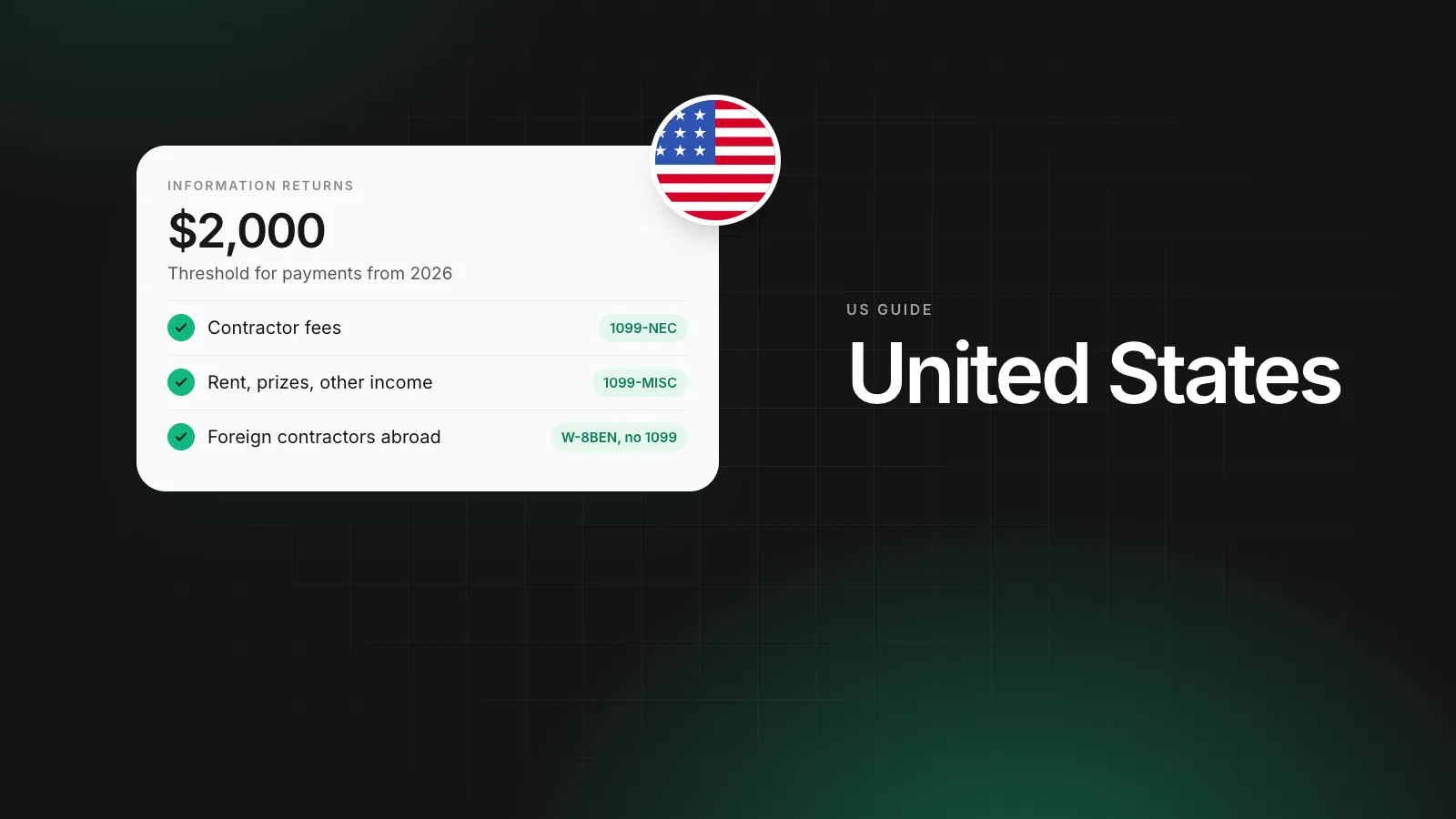
Yes. Form SS-8 asks the IRS to determine a worker's status, though it can take months.
What about the ABC test?
A stricter test used by some states. A worker is an employee unless they are free from control, work outside the usual course of your business, and run an independent business.
How do I treat workers abroad?
Under the employment law of their country. Many companies use contractor agreements or an employer of record.
Sources
Alexia compares the accounts, cards and payment tools companies weigh before they switch, and writes Rivet's market guides for founders in a specific country. Prices in Alexia's comparisons come from each provider's own pricing page on the date given in the article, rules come from the regulator or tax authority that sets them, and every source is listed at the end.
More from Alexia M. →This article is general information, not legal, tax or financial advice. Rules and fees change; check the sources above and the provider’s current terms before you act on them.
- 1099 vs w2
- contractor vs employee
- worker classification
- irs
- abc test
- us