Tunisian IT exporters under the Central Bank's exchange rules
Tunis has a large pool of engineers serving European clients, especially in France. Tunisia's exchange regulation, administered by the Banque Centrale de Tunisie, requires export proceeds to come home and limits residents' foreign holdings. A new exchange code has been under discussion for years.
- Published
- Reading time
- 1 min read
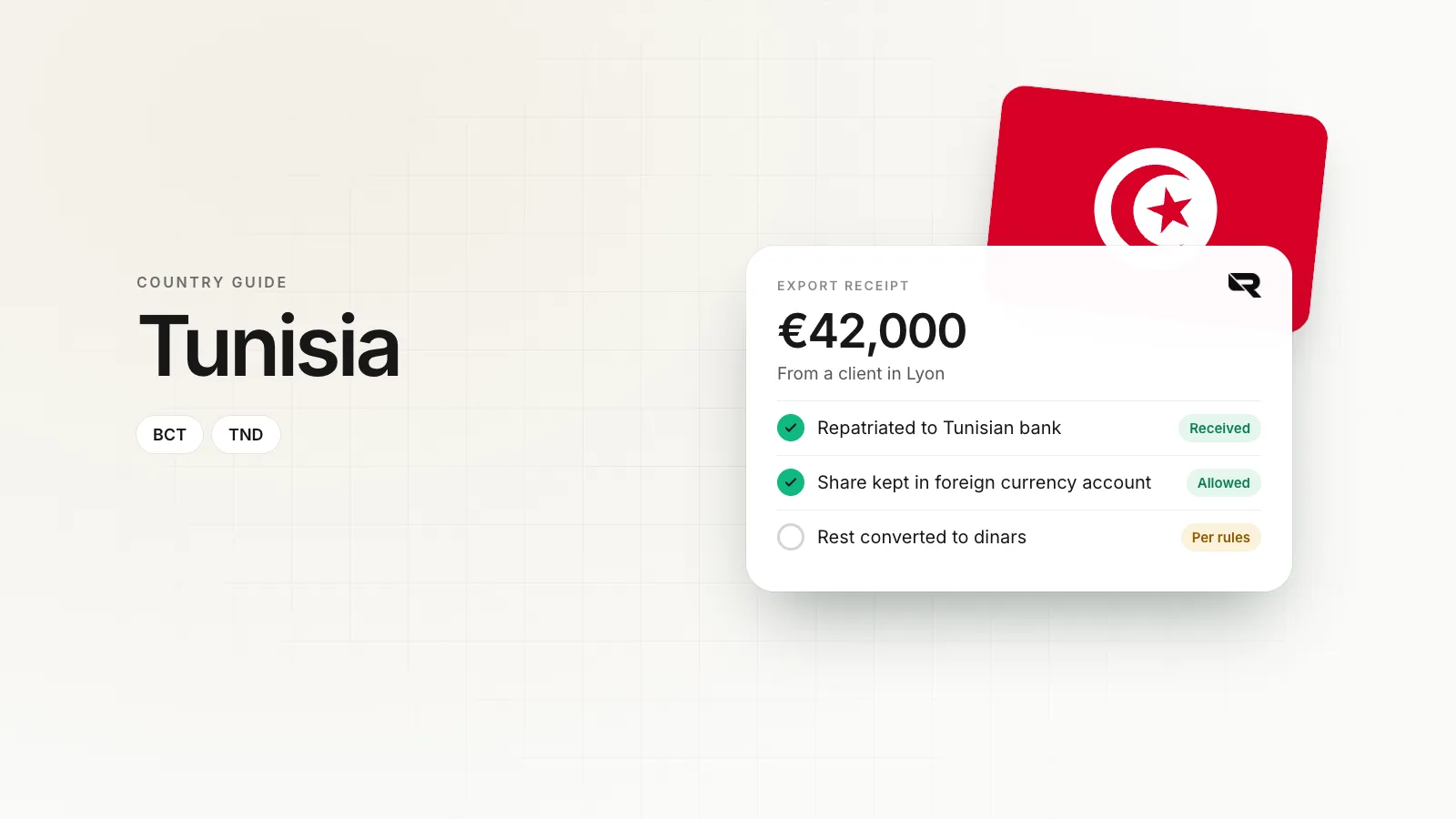
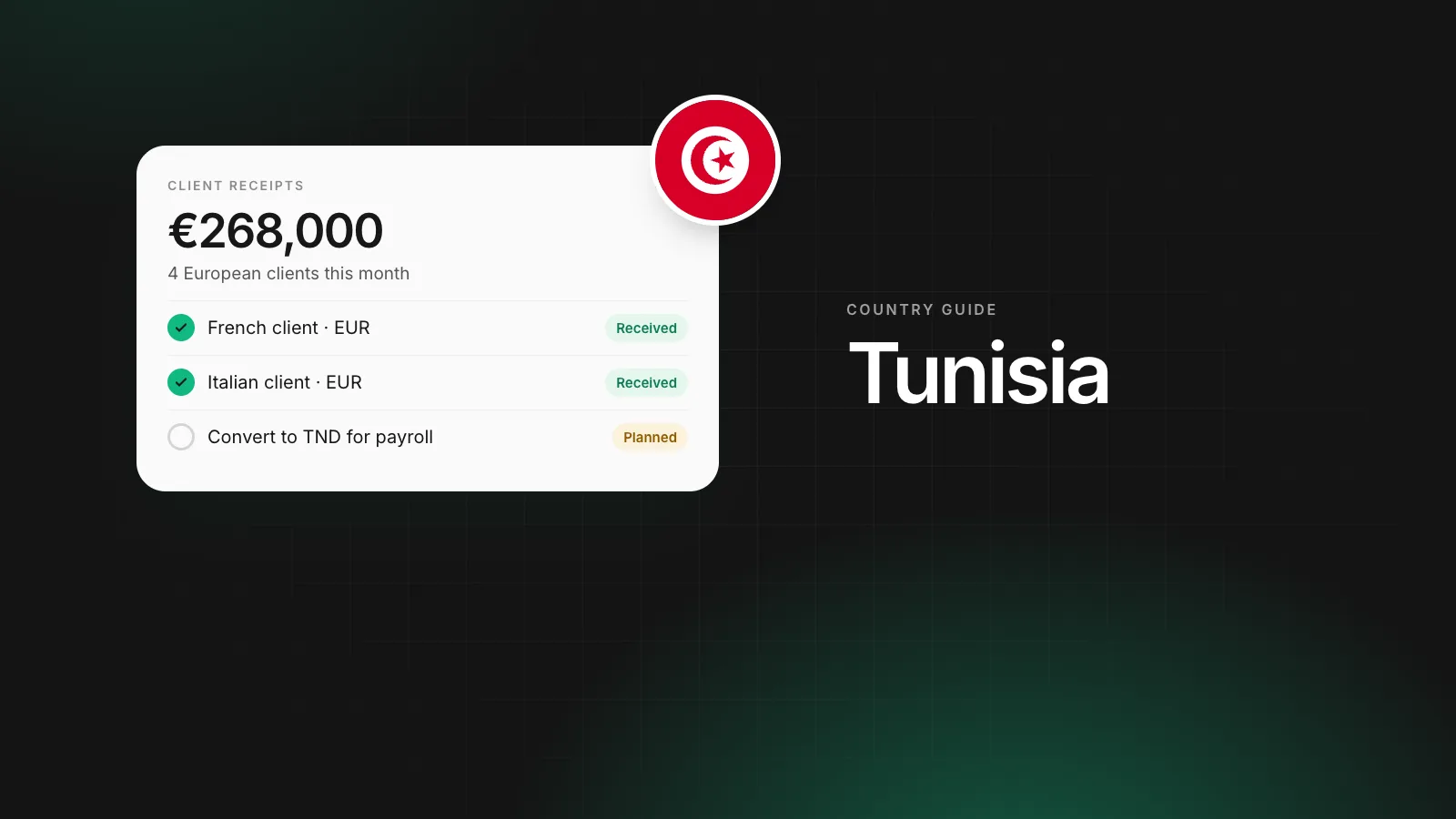
A Sfax software company builds applications for a Lyon insurer and a Paris retailer. Each euro payment arrives at its Tunisian bank within the regulation's deadline. Part is kept in a foreign currency account to pay for cloud services and software licences; the rest is converted to dinars for salaries.
A non-convertible dinar
The Tunisian dinar is not freely convertible. The Banque Centrale de Tunisie (BCT) administers the exchange regulation, which sets how residents receive, hold and spend foreign currency.
Repatriation
Exporters, including IT service exporters, must repatriate export proceeds to Tunisia within the regulation's deadline, through Tunisian banks.
Keeping foreign currency
Exporters can keep a share of proceeds in foreign currency accounts or convertible dinar accounts and use them for permitted payments abroad, such as software, services and equipment. This matters for IT companies with many foreign subscriptions.
Accounts abroad
Residents generally need BCT authorisation to hold accounts abroad. A revised exchange code, discussed for several years, aims to liberalise some rules. Check its status before planning.
Totally exporting companies
Companies under Tunisia's totally exporting regime have specific rules and benefits. See our separate guide for those companies.
Where Rivet fits
Rivet opens business accounts for registered companies after verification. Tunisia-registered companies must repatriate proceeds under BCT rules and generally need authorisation for accounts abroad, so check with your bank first. Rivet is not a bank; regulated partner institutions hold the funds.
Questions people ask
Can Tunisian companies hold accounts abroad?
Generally only with Central Bank authorisation, under the exchange regulation.
Do exporters have to repatriate proceeds?
Yes, within the deadline set by the regulation, through Tunisian banks.
Can exporters keep foreign currency?
Yes, a share can be held in foreign currency accounts or convertible dinar accounts, and used for permitted payments.
Is the exchange regulation changing?
A new exchange code has been discussed for several years to liberalise some rules. Check its status with your bank or adviser.
Sources
William covers what happens once a company starts moving money: getting the business verified, paying contractors and suppliers abroad, and keeping card spend under control. William writes for the founder or finance lead who has to make it work this week, and links every rule cited to the text it comes from.
More from William Sunjo M. →This article is general information, not legal, tax or financial advice. Rules and fees change; check the sources above and the provider’s current terms before you act on them.
- tunisia
- bct
- it exports
- foreign exchange
- eur
- tnd