Tanzania's move to shilling pricing: what changes for businesses that earn in dollars
For years many Tanzanian hotels, landlords and schools priced in dollars. In 2025 the Bank of Tanzania issued rules to make the shilling the currency for domestic transactions. Exports and genuinely international transactions are treated differently, which matters for tourism and export businesses.
- Published
- Reading time
- 1 min read
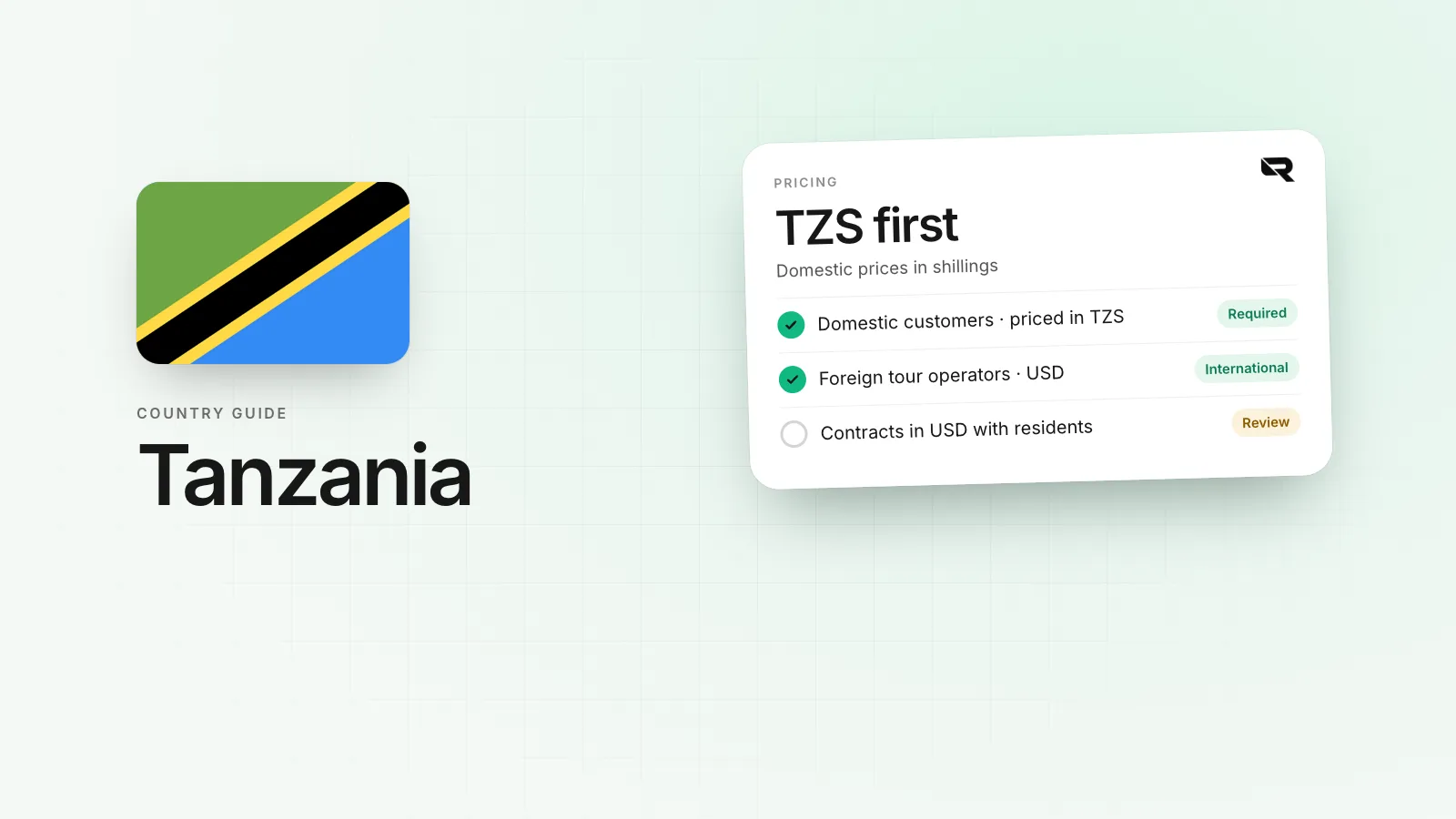
An Arusha hotel group priced rooms for Tanzanian guests in dollars for years, like many in the tourism hubs. In 2025 it reprinted its rate card in shillings. Its foreign tour operator contracts stayed in dollars. Its office lease, signed in dollars with a Tanzanian landlord, was rewritten in shillings.
The change
The Bank of Tanzania moved to restrict the use of foreign currency in domestic transactions, with regulations issued in 2025. The core idea: goods and services sold within Tanzania to residents are priced and paid in shillings.
What is affected
- Hotels and restaurants pricing local guests in dollars.
- Landlords with dollar leases to residents.
- Schools charging fees in dollars.
- Retailers and service providers quoting dollar prices locally.
What is not
Transactions with non-residents and international transactions are treated differently. Foreign tour operators paying for safaris, exporters receiving payment for goods sold abroad, and foreign clients paying for services can generally continue in foreign currency, within the regulations' exceptions.
What to do
- Review price lists and contracts with residents.
- Convert dollar contracts with residents to shillings within the transition period.
- Keep foreign currency pricing for non-resident clients and exports where permitted.
- Separate domestic and international revenue in your records.
Paying into Tanzania: the local rail
| What | Detail |
|---|---|
| Local rail | Tanzania Instant Payment System (TIPS) |
| Run by | Bank of Tanzania |
| Settlement | Seconds, 24/7, between banks and mobile money |
Source: Bank of Tanzania: TIPS. Checked when this guide was last updated; the scheme's own page has the current figures.
Where Rivet fits
Rivet opens business accounts for registered companies after verification. Tanzania-registered companies should follow Bank of Tanzania rules on foreign currency and accounts abroad. Where available, partners abroad who bank with Rivet can pay Tanzanian bank accounts through Rivet's payouts. Rivet is not a bank; regulated partner institutions hold the funds.
Questions people ask
Do Tanzanian businesses have to price in shillings?
For domestic transactions with residents, the Bank of Tanzania's rules require shilling pricing and payment, with exceptions set out in the regulations.
Can tourism businesses still charge foreign clients in dollars?
Transactions with non-residents and payments from abroad can generally remain in foreign currency. Check the exceptions in the current regulations.
What about existing dollar contracts?
Contracts with residents denominated in dollars, such as leases, may need to be converted to shillings within the transition period set by the rules.
Can companies hold foreign currency accounts?
Yes, at Tanzanian banks, under Bank of Tanzania rules.
Sources
William covers what happens once a company starts moving money: getting the business verified, paying contractors and suppliers abroad, and keeping card spend under control. William writes for the founder or finance lead who has to make it work this week, and links every rule cited to the text it comes from.
More from William Sunjo M. →This article is general information, not legal, tax or financial advice. Rules and fees change; check the sources above and the provider’s current terms before you act on them.
- tanzania
- tzs
- bank of tanzania
- foreign currency
- pricing
- tourism