Swedish webshops selling to Norway: VOEC, customs and getting paid in kroner
Norway is Sweden's closest neighbour and its own customs territory. A Swedish webshop shipping there either registers for VOEC and charges Norwegian VAT at checkout, or leaves customers to pay VAT and fees on delivery.
- Published
- Reading time
- 2 min read
A Gothenburg outdoor clothing webshop gets a quarter of its traffic from Norway. Orders arrive, parcels ship, and a week later some come back: the customers refused to pay Norwegian VAT and a handling fee to the carrier at their door. The shop priced in Swedish kronor and had never registered for VOEC.
Norway is a customs border
Norway is in the EEA but outside the EU customs union and VAT area. Goods from Sweden are imports. Two routes exist for parcels to Norwegian consumers.
Route one: VOEC
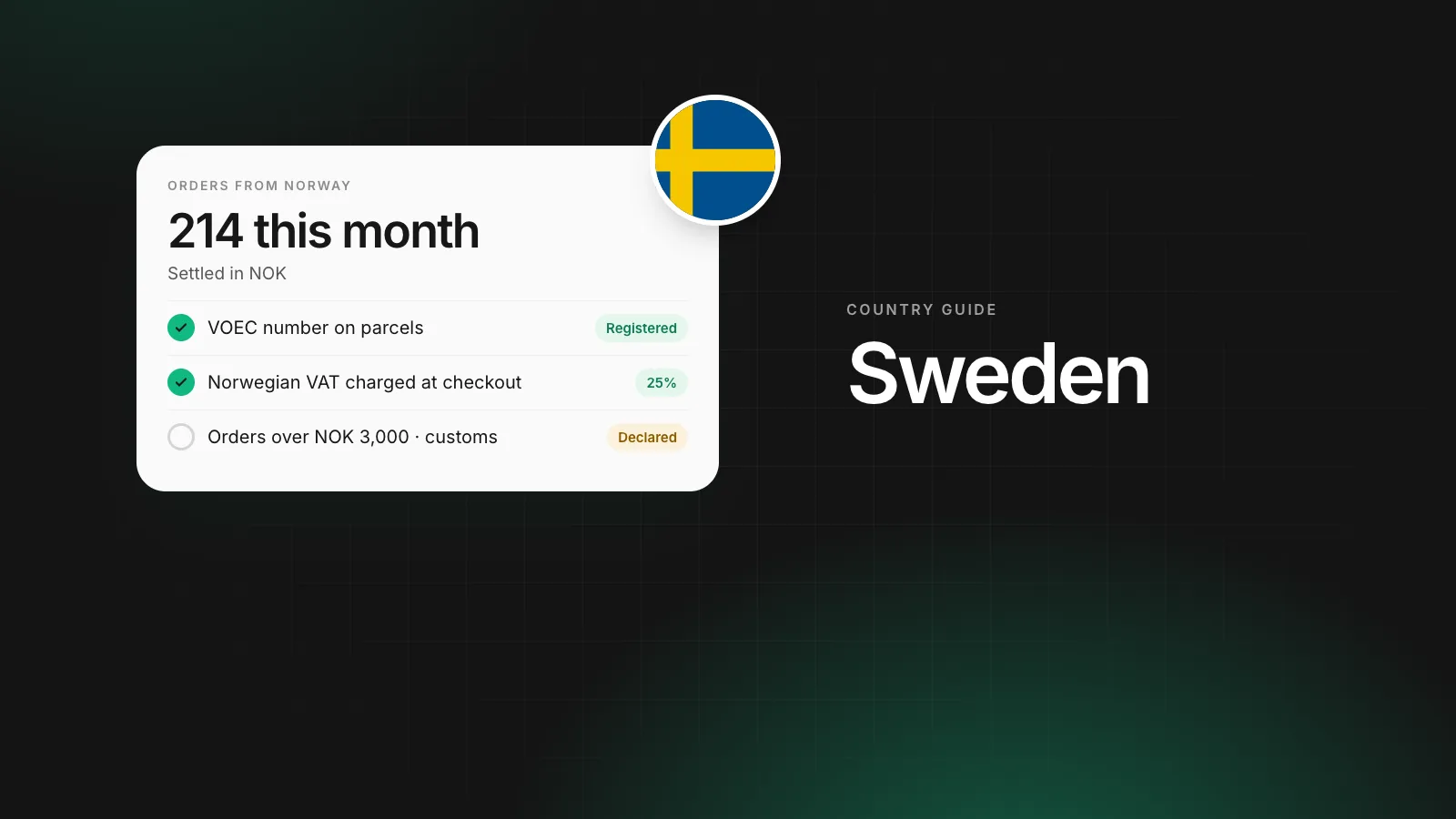
VOEC (VAT on E-commerce) is Norway's scheme for foreign sellers of low-value goods. Once registered:
- you charge 25 percent Norwegian VAT at checkout on items worth less than NOK 3,000 each (lower rates apply to food),
- you print the VOEC number on the parcel,
- parcels clear without the customer paying anything more on delivery,
- you report and pay the VAT quarterly to Skatteetaten.
Registration becomes compulsory once your sales of such goods to Norwegian consumers pass NOK 50,000 in twelve months. Many shops register earlier because delivery fees cost them customers.
Route two: ordinary import
Items of NOK 3,000 or more, and sales by sellers outside VOEC, go through normal customs clearance. VAT, any duty and the carrier's fee are collected on import, usually from the customer. Some shops sell on delivered-duty-paid terms and handle clearance themselves through a forwarder.
On the Swedish side
Exports to Norway are zero-rated for Swedish moms, provided you keep evidence that the goods left the EU. The carrier's records usually serve.
Pricing and settlement in kroner
Norwegian shoppers prefer prices in Norwegian kroner. Showing kroner at checkout lifts conversion and removes a currency question for the customer.
The settlement side matters too. If your payment provider pays out Norwegian kroner and your account only holds Swedish kronor, every payout is converted at whatever rate applies that day. A Norwegian krone balance lets payouts land as they are, so you can pay Norwegian costs, such as returns handling or marketing, from it and convert the rest when you choose.
Paying into Sweden: the local rail
| What | Detail |
|---|---|
| Local rail | Swish, on the Betalningar i Realtid (BiR) rail; Bankgirot for batch payments |
| Run by | Getswish AB; Bankgirot |
| Settlement | Swish in seconds, 24/7; Bankgirot payments the same business day |
Source: Bankgirot. Checked when this guide was last updated; the scheme's own page has the current figures.
Where Rivet fits
Rivet is not a checkout or a VOEC filing service. On the Scale plan, a Rivet business account holds balances in 30 currencies, including Norwegian kroner, beside the US dollar details every plan has and the euro and sterling details from Growth. Balances can be converted at a rate shown before you confirm or paid out to suppliers in 120+ countries. Rivet is not a bank; regulated partner institutions hold the funds.
For Norway's currency in more detail, see the NOK business payments guide.
Questions people ask
What is VOEC?
VAT on E-commerce, Norway's simplified scheme for foreign sellers of low-value goods to Norwegian consumers. Registered sellers charge Norwegian VAT at checkout and report it quarterly.
When must a Swedish webshop register for VOEC?
When its sales of low-value goods to Norwegian consumers exceed NOK 50,000 in a twelve-month period. Below that, normal import rules apply.
What happens without VOEC?
The carrier collects Norwegian VAT and a handling fee from the customer on delivery. Many customers refuse parcels or stop ordering.
Should I price in Norwegian kroner?
Norwegian shoppers convert less when they see kroner. If you sell in kroner, a krone balance lets settlements land as they are.
Sources
William covers what happens once a company starts moving money: getting the business verified, paying contractors and suppliers abroad, and keeping card spend under control. William writes for the founder or finance lead who has to make it work this week, and links every rule cited to the text it comes from.
More from William Sunjo M. →This article is general information, not legal, tax or financial advice. Rules and fees change; check the sources above and the provider’s current terms before you act on them.
- sweden
- norway
- voec
- e-commerce
- nok
- customs