Sri Lankan exporters after the crisis: repatriation and conversion rules
In 2022 Sri Lanka ran out of foreign currency. The Central Bank required exporters to bring proceeds home quickly and convert part into rupees. As the economy stabilised, many of those rules were relaxed. Exporters still bring proceeds home; the conversion rule is the part that changed.
- Published
- Reading time
- 1 min read
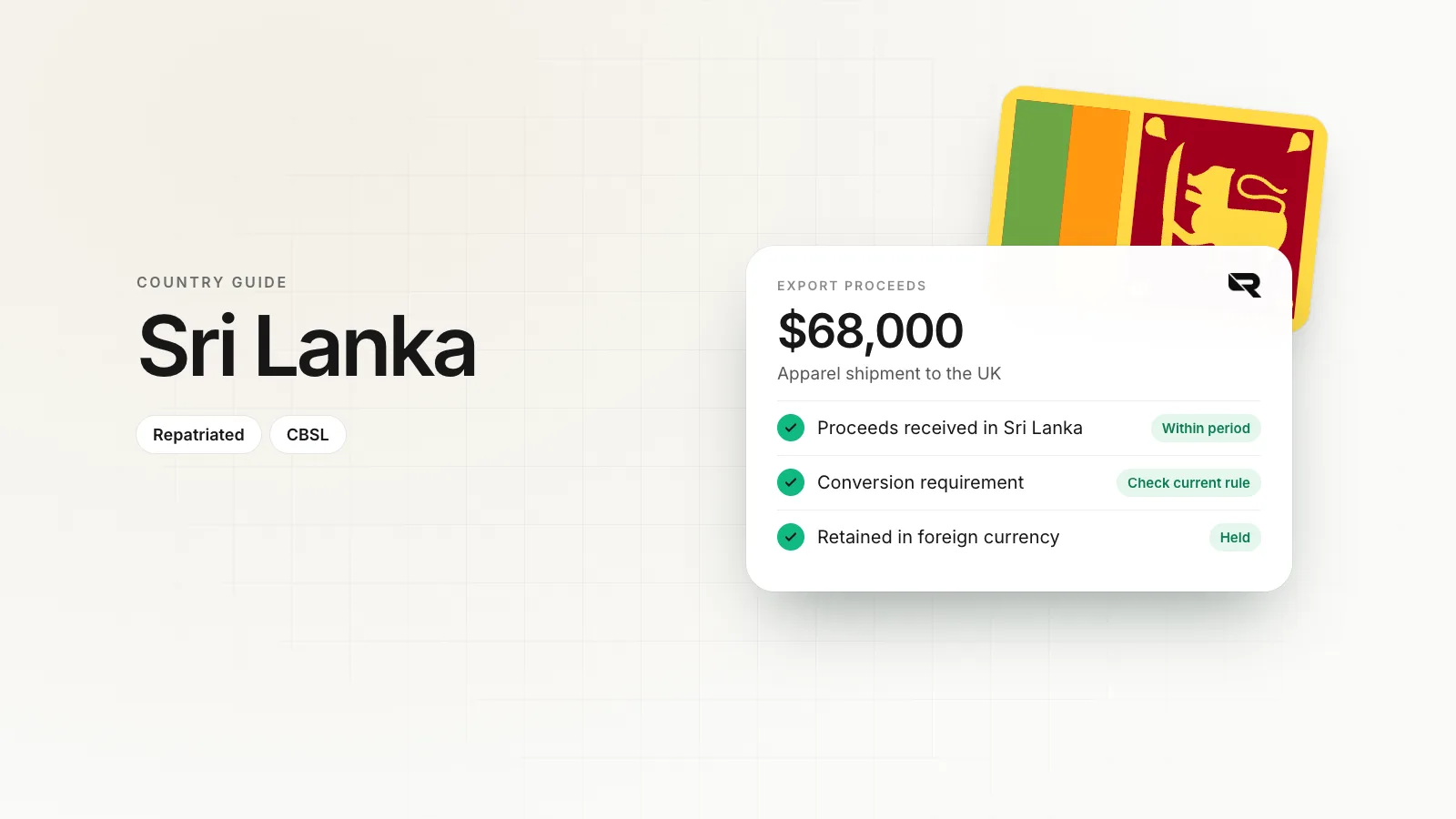
A Colombo apparel exporter shipped $68,000 of activewear to a UK brand in mid-2022. Within weeks of receiving payment, it had to convert a share into rupees at the official rate, under rules the Central Bank introduced as reserves ran out. In 2026 it receives the same kind of payment and keeps it in dollars until it needs rupees.
The crisis rules
Sri Lanka's 2022 economic crisis left the country short of foreign currency. Under the Foreign Exchange Act, the Central Bank of Sri Lanka (CBSL) issued rules requiring exporters to:
- repatriate export proceeds within a set period,
- convert a share of repatriated proceeds into rupees.
The easing
As reserves recovered with IMF support and debt restructuring, the CBSL reduced the conversion requirement and later withdrew it. Repatriation remains: exporters still bring proceeds to Sri Lanka through banks. Check the latest CBSL directions, as rules may change again.
What exporters do now
- Repatriate proceeds within the deadline.
- Hold them in foreign currency accounts in Sri Lanka.
- Convert to rupees when needed for salaries, local suppliers and taxes.
Service exporters
Sri Lanka's IT and business process companies follow repatriation rules too. Their tax treatment has also changed since 2022; check how service export income is taxed now.
Paying into Sri Lanka: the local rail
| What | Detail |
|---|---|
| Local rail | LankaPay CEFTS (Common Electronic Fund Transfer Switch) |
| Run by | LankaClear, under the Central Bank of Sri Lanka |
| Settlement | Seconds, 24/7 |
Source: LankaPay: CEFTS. Checked when this guide was last updated; the scheme's own page has the current figures.
Where Rivet fits
Rivet opens business accounts for registered companies after verification. A Sri Lanka-registered company must repatriate export proceeds under the Foreign Exchange Act, so check with your bank before receiving funds abroad. Partners abroad that bank with Rivet can pay Sri Lankan bank accounts through Rivet's payouts. Rivet is not a bank; regulated partner institutions hold the funds.
Questions people ask
Do Sri Lankan exporters still have to convert proceeds into rupees?
The mandatory conversion requirement introduced in 2022 was reduced and later withdrawn as conditions improved. Check the latest CBSL rules before relying on this.
How long do exporters have to repatriate proceeds?
The period is set by regulations under the Foreign Exchange Act. Ask your bank for the current deadline for goods and services.
Can exporters hold proceeds in foreign currency?
Yes, in foreign currency accounts at Sri Lankan banks, once repatriated.
Do service exporters follow the same rules?
Service exporters also repatriate proceeds, with rules set under the same Act. Check how they apply to your services.
Sources
William covers what happens once a company starts moving money: getting the business verified, paying contractors and suppliers abroad, and keeping card spend under control. William writes for the founder or finance lead who has to make it work this week, and links every rule cited to the text it comes from.
More from William Sunjo M. →This article is general information, not legal, tax or financial advice. Rules and fees change; check the sources above and the provider’s current terms before you act on them.
- sri lanka
- exporters
- export proceeds
- cbsl
- repatriation
- lkr