Serbian IT exporters: receiving foreign payments under Serbia's foreign exchange rules
Serbia's IT exports have grown into one of its largest service exports. Every euro and dollar a Serbian company earns abroad passes through rules set by the Law on Foreign Exchange Operations and the National Bank of Serbia. Knowing them avoids frozen receipts and fines.
- Published
- Reading time
- 2 min read
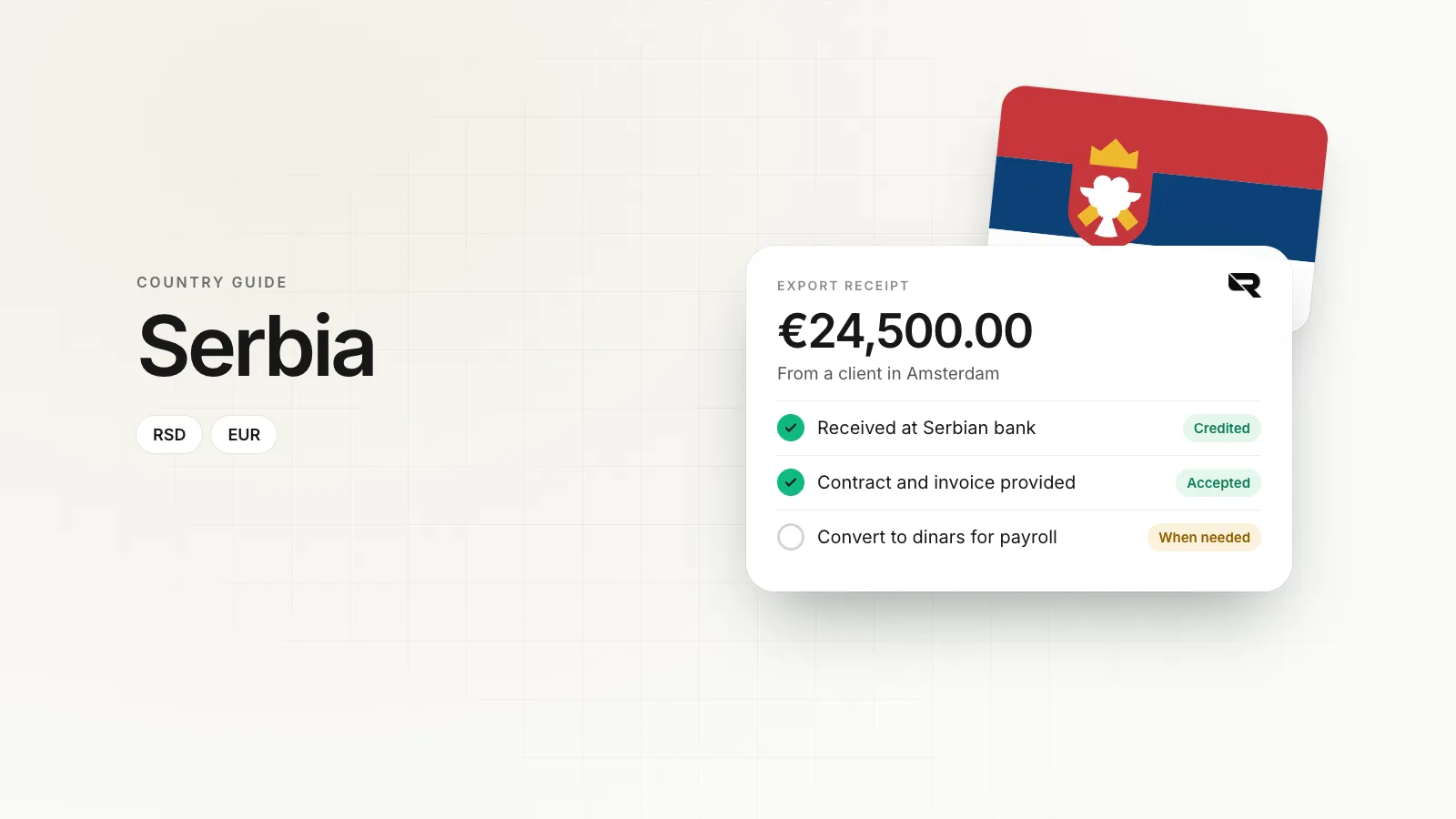
A Novi Sad software company bills a client in Amsterdam €24,500 a month and a client in Austin $18,000. Both pay into foreign currency accounts at its Serbian bank. The bank asks for the contracts once, and for an invoice with each receipt. The company keeps euros for a Croatian subcontractor and converts the rest to dinars before payroll.
The legal frame
Serbia's Law on Foreign Exchange Operations, with regulations from the National Bank of Serbia, governs how residents handle foreign currency. Two rules matter most for IT exporters:
- Export proceeds are collected through accounts at banks in Serbia.
- Residents may hold accounts abroad only in the cases the law and NBS regulations allow.
So a Serbian doo or preduzetnik (entrepreneur) receives payment from foreign clients at its Serbian bank, into a foreign currency account.
What the bank asks for
Banks classify each receipt. For exports of services, they want:
- The contract with the foreign client.
- An invoice for the receipt.
- Matching references on the payment.
Larger or unusual receipts may prompt more questions. Keep the documents ready and consistent.
Holding and converting
Serbian companies can hold euros and dollars in their Serbian accounts. Conversion to dinars happens when the company chooses, at the bank's rate. Paying foreign subcontractors and software from the foreign currency balance avoids converting twice.
Making foreign clients' payments smoother
The client side still matters. A US client paying a Serbian IBAN sends an international wire, which takes longer and can lose intermediary fees before it reaches your Serbian bank. Agree in the contract who bears charges. EU clients may pay by SEPA where your Serbian bank receives SEPA transfers; ask your bank.
Foreign entities
Some Serbian founders contract with foreign clients through a company registered abroad, often in the US, UK or another EU country. That company follows the rules of its own country. The Serbian founders remain subject to Serbian tax and foreign exchange rules personally, so take advice in Serbia before setting one up.
Paying into Serbia: the local rail
| What | Detail |
|---|---|
| Local rail | IPS NBS instant payments |
| Run by | National Bank of Serbia |
| Settlement | Seconds, 24/7 |
Source: National Bank of Serbia: IPS. Checked when this guide was last updated; the scheme's own page has the current figures.
Where Rivet fits
Rivet opens business accounts for registered companies after verification. Serbian law decides whether a company registered in Serbia may hold funds abroad, so check with your bank first. For companies registered elsewhere and run by Serbian founders, a Rivet business account gives US dollar details on every plan and euro details with an IBAN plus sterling details from the Growth plan, and pays contractors in 120+ countries. Rivet is not a bank; regulated partner institutions hold the funds.
Questions people ask
Can a Serbian company receive payment from a foreign client directly into an account abroad?
Generally not. Serbian law requires residents to collect export proceeds through banks in Serbia, with limited exceptions set by the National Bank of Serbia. Check with your bank before agreeing other arrangements.
Must Serbian companies convert euros to dinars?
No. Companies can hold foreign currency in their Serbian accounts and convert when they choose.
What do Serbian banks need for each receipt?
A contract or invoice that shows the payment is for exported services. Banks may ask for more for larger amounts.
How do Serbian founders working with US clients often structure things?
Some contract through the Serbian company and receive dollars at a Serbian bank. Others run a separate company registered abroad, which follows that country's rules.
Sources
Rashidatou writes Rivet's guides to how money moves between countries: the payment rails, what each one costs, and the account details a company needs to get paid in another currency. Every figure in Rashidatou's articles is traced to the scheme rulebook, the regulator or the provider's published price list, and those sources are listed at the end.
More from Rashidatou K. →This article is general information, not legal, tax or financial advice. Rules and fees change; check the sources above and the provider’s current terms before you act on them.
- serbia
- it exports
- foreign exchange
- rsd
- preduzetnik
- doo