Qatari SMEs with dollar revenue: the riyal peg, holding dollars and paying abroad
With the riyal pegged at 3.64 to the dollar, a Qatari company paid in dollars hardly thinks about exchange rates. Its costs appear elsewhere: international transfer fees, intermediary deductions and conversions into euros, pounds and rupees for suppliers and staff.
- Published
- Reading time
- 1 min read
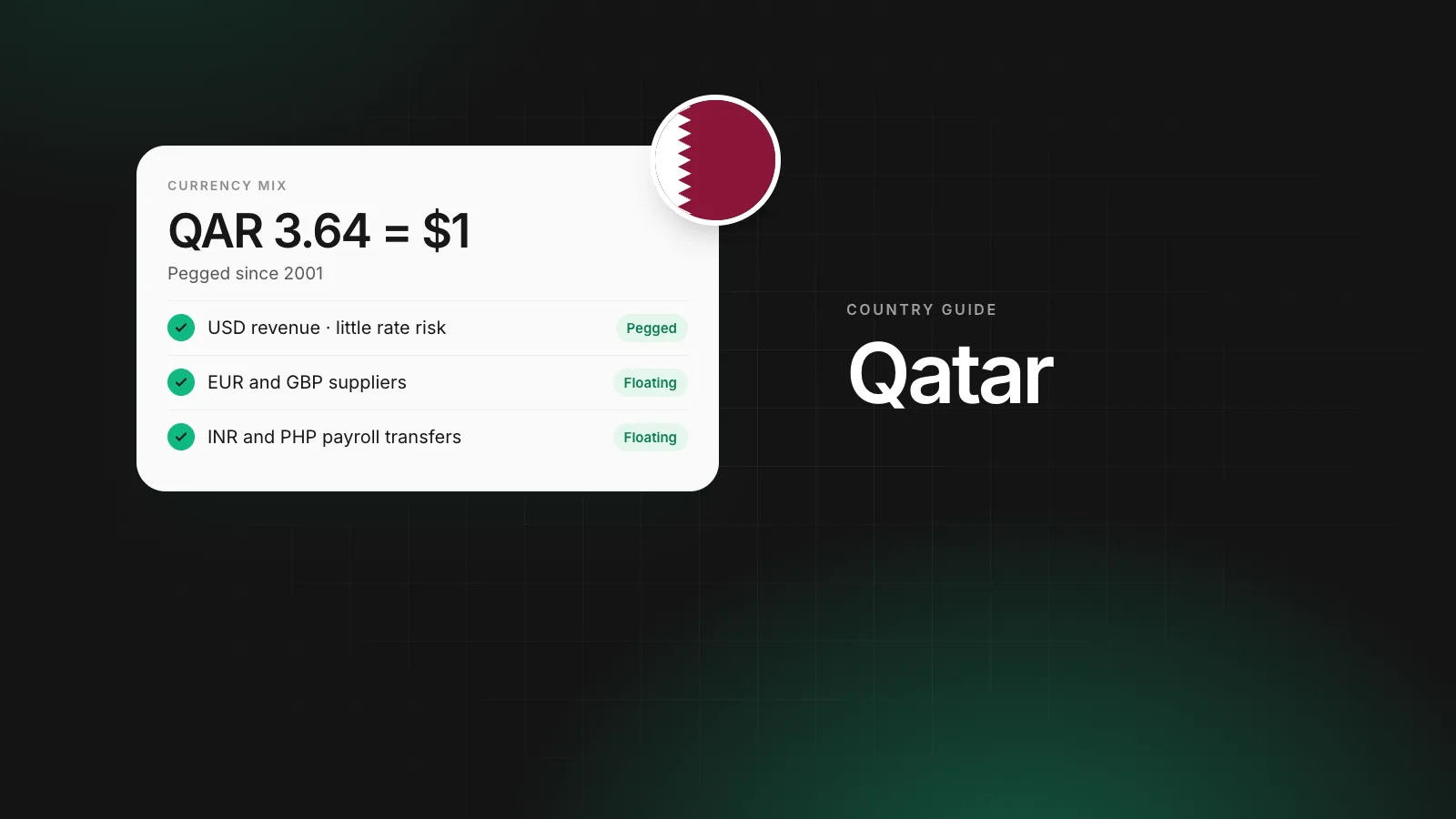
A Doha event production company invoices US and Gulf clients in dollars and riyals. It buys equipment from Germany in euros, books acts through London agents in pounds and pays freelance crews from India and the Philippines. Dollar revenue, thanks to the peg, barely moves in riyal terms. Everything else does.
The peg
Qatar Central Bank has kept the riyal at 3.64 to the dollar since 2001. For a Qatari company, dollar revenue is close to riyal revenue. Converting between them costs a spread, but the rate itself does not swing.
Where the costs are
- International transfers. A dollar wire from a US client can lose intermediary fees on the way. The invoice was paid; less arrived.
- Floating currencies. Euro, pound, rupee and peso costs move against the riyal. A German supplier paid in euros costs more riyals when the euro rises.
- Conversion spreads. Converting riyals to euros at a bank's rate each time a supplier invoice is due adds up.
Practical steps
- Ask US clients to pay by ACH to US account details where possible, so dollars arrive in full.
- Hold dollars for dollar costs; there is no reason to convert them to riyals and back.
- Buy euros and pounds for supplier payments in planned amounts, rather than at each invoice.
- Pay freelancers in their own currency on local rails, so they receive the agreed amount.
Paying into Qatar: the local rail
| What | Detail |
|---|---|
| Local rail | Fawran instant payments |
| Run by | Qatar Central Bank |
| Settlement | Seconds, 24/7 |
Source: Qatar Central Bank: Fawran. Checked when this guide was last updated; the scheme's own page has the current figures.
Where Rivet fits
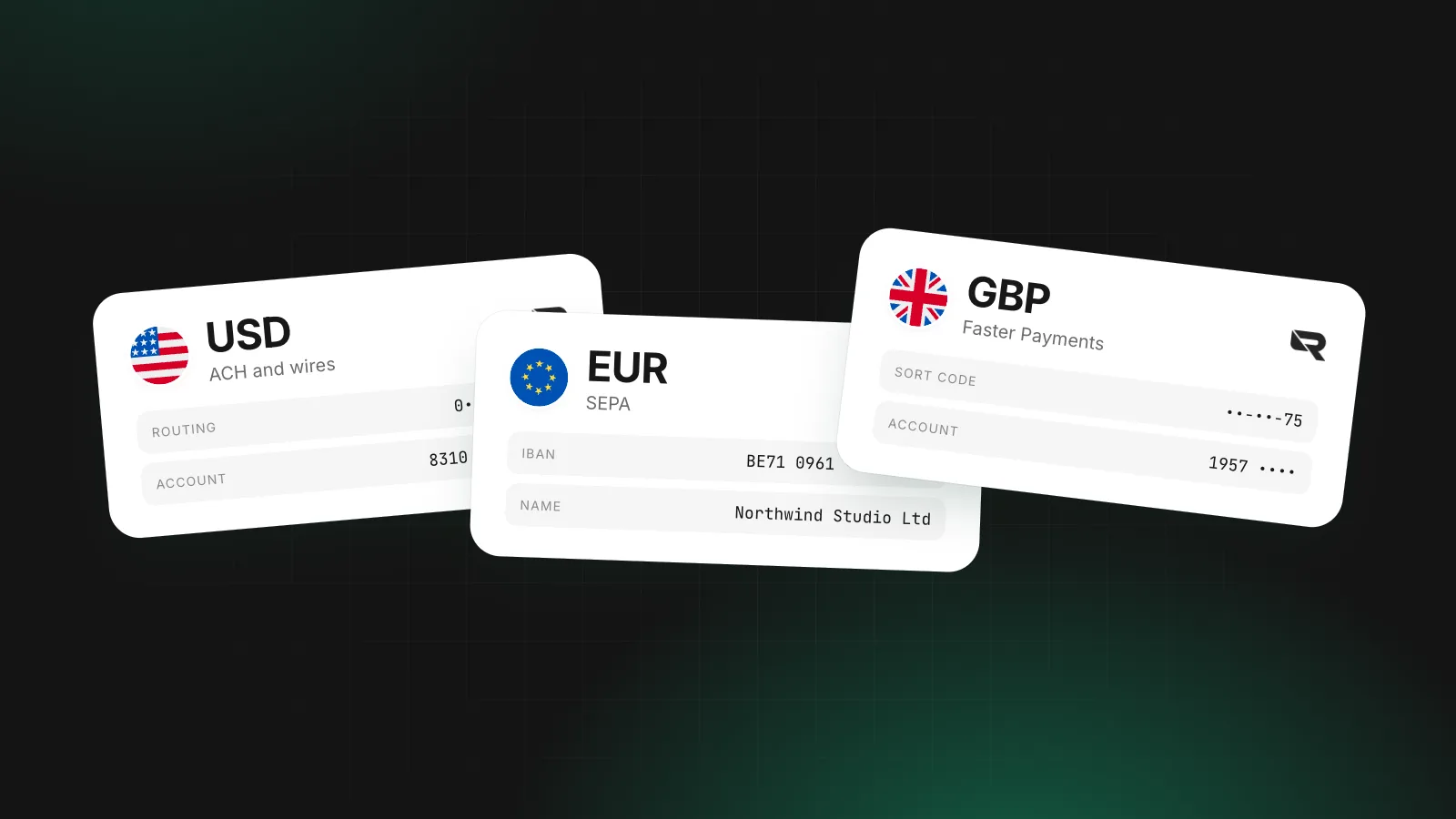
A Rivet business account accepts registered companies after verification, including Qatari companies, subject to local rules. Approved companies get US account details in their own name on every plan and euro and sterling details from the Growth plan, and can pay suppliers and freelancers in 120+ countries at a rate shown before confirming. Rivet is not a bank; regulated partner institutions hold the funds.
Questions people ask
Is the riyal pegged to the dollar?
Yes. Qatar Central Bank has maintained a peg of 3.64 riyals per US dollar since 2001.
Does a Qatari company need to convert dollar revenue?
Converting at the peg costs little in rate terms, but holding dollars can avoid conversion spreads if you pay dollar costs.
Where does currency risk come from?
From costs and revenue in floating currencies, such as euros, pounds, rupees and pesos.
Why do dollar payments to Qatar arrive short?
International wires can pass through intermediary banks that deduct fees, even though no exchange rate applies.
Sources
Rashidatou writes Rivet's guides to how money moves between countries: the payment rails, what each one costs, and the account details a company needs to get paid in another currency. Every figure in Rashidatou's articles is traced to the scheme rulebook, the regulator or the provider's published price list, and those sources are listed at the end.
More from Rashidatou K. →This article is general information, not legal, tax or financial advice. Rules and fees change; check the sources above and the provider’s current terms before you act on them.
- qatar
- qar
- usd peg
- smes
- payments
- suppliers