Kenyan flower and vegetable exporters: payment terms with European buyers
Every night cargo planes leave Nairobi for Amsterdam and London carrying roses and green beans. The produce is sold within days. Payment can take weeks. Kenyan exporters who get paid on time choose terms and buyers carefully.
- Published
- Reading time
- 2 min read
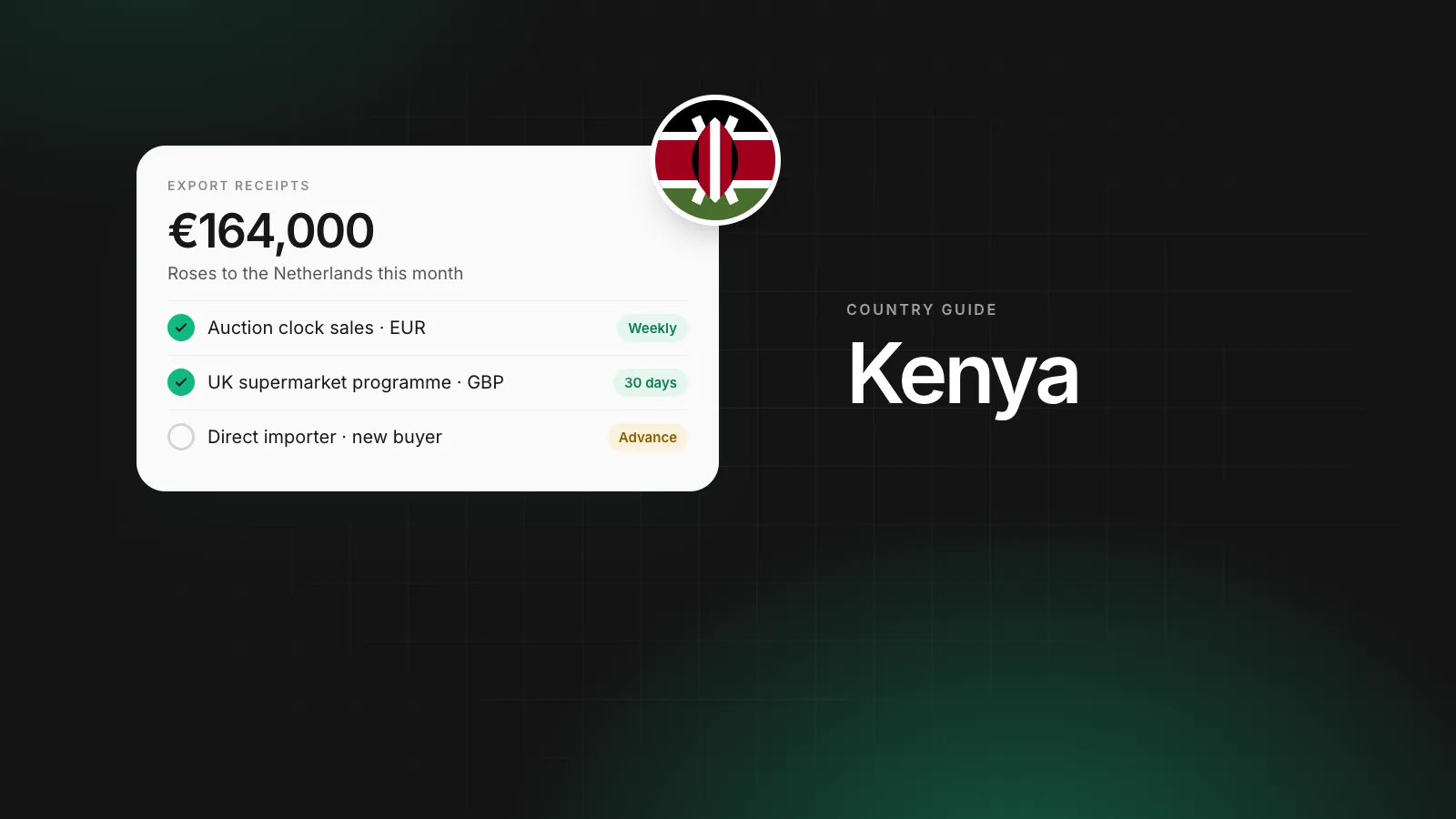
A Naivasha rose farm sells through the Dutch auction in Aalsmeer and directly to an importer in Germany. A sister farm grows green beans for a UK supermarket programme. Auction sales settle weekly in euros. The German importer pays in 45 days. The UK programme pays in 30 days in pounds. All three run on cash the farm spends every day.
The channels
- Dutch auctions. Flowers sold on the auction clock settle through the auction's system, usually weekly, in euros, after commission and costs.
- Direct importers. Importers in Germany, the Netherlands and elsewhere buy on agreed terms, often 30 to 60 days.
- Supermarket programmes. UK and European supermarkets buy through importers on programme contracts with set volumes and prices, typically 30 days or longer.
Protect perishable shipments
A box of roses or beans is worth nothing after a week. If an importer does not pay, there is nothing to recover.
- Advances from new importers until they have a record.
- Credit limits per buyer.
- References from other exporters and checks on the buyer's registration.
- Credit insurance for larger exposures.
Currencies
Euros and pounds arrive into Kenyan accounts. Holding them lets farms pay euro costs directly, such as imported planting material, chemicals, packaging and freight, and convert the surplus to shillings on a schedule.
Paying into Kenya: the local rail
| What | Detail |
|---|---|
| Local rail | Pesalink |
| Run by | Integrated Payment Services Limited, owned by the Kenya Bankers Association |
| Settlement | Seconds, 24/7, up to KES 999,999 per transfer |
M-Pesa carries most small-value business receipts; Pesalink links bank accounts.
Source: Pesalink. Checked when this guide was last updated; the scheme's own page has the current figures.
Where Rivet fits
A Rivet business account accepts registered companies after verification, including Kenyan exporters. Approved companies get euro details with an IBAN and sterling details from the Growth plan, so European buyers pay by SEPA and Faster Payments, plus US account details on every plan. Balances can be held, used to pay suppliers in 120+ countries, or converted at a rate shown before you confirm. Rivet is not a bank; regulated partner institutions hold the funds.
Questions people ask
How do Dutch flower auctions pay Kenyan exporters?
Through the auction's settlement system, usually weekly after sales, in euros, minus commission and costs.
What terms do UK supermarkets offer?
Programme contracts with fixed volumes and prices, typically paid on 30-day or longer terms through their importers.
How can exporters protect against non-payment?
Use advances for new importers, set credit limits, check buyers' references and consider credit insurance.
Should exporters hold euros?
If they pay for imported inputs, freight or packaging in euros, yes. Convert the surplus to shillings when it suits.
Sources
William covers what happens once a company starts moving money: getting the business verified, paying contractors and suppliers abroad, and keeping card spend under control. William writes for the founder or finance lead who has to make it work this week, and links every rule cited to the text it comes from.
More from William Sunjo M. →This article is general information, not legal, tax or financial advice. Rules and fees change; check the sources above and the provider’s current terms before you act on them.
- kenya
- flowers
- horticulture
- exports
- eur
- gbp