Côte d'Ivoire's exporters and BCEAO exchange rules: repatriation and documents
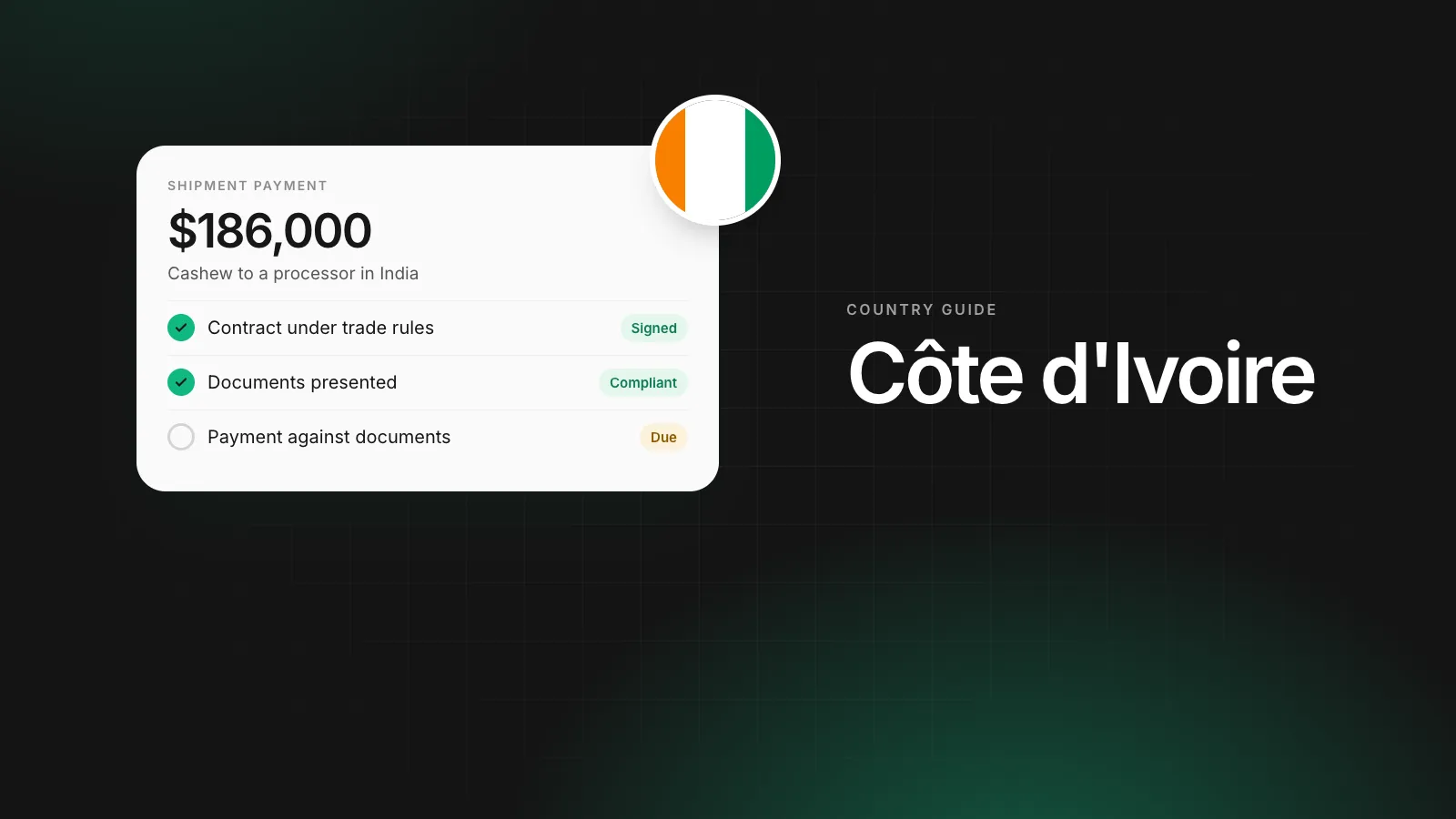
Côte d'Ivoire is the world's largest cocoa producer and a major exporter of cashew, rubber and oil. Its exporters follow the WAEMU foreign exchange regulation: exports are domiciled with a bank, proceeds come home within a deadline, and foreign currency is surrendered to the system.
- Published
- Reading time
- 1 min read
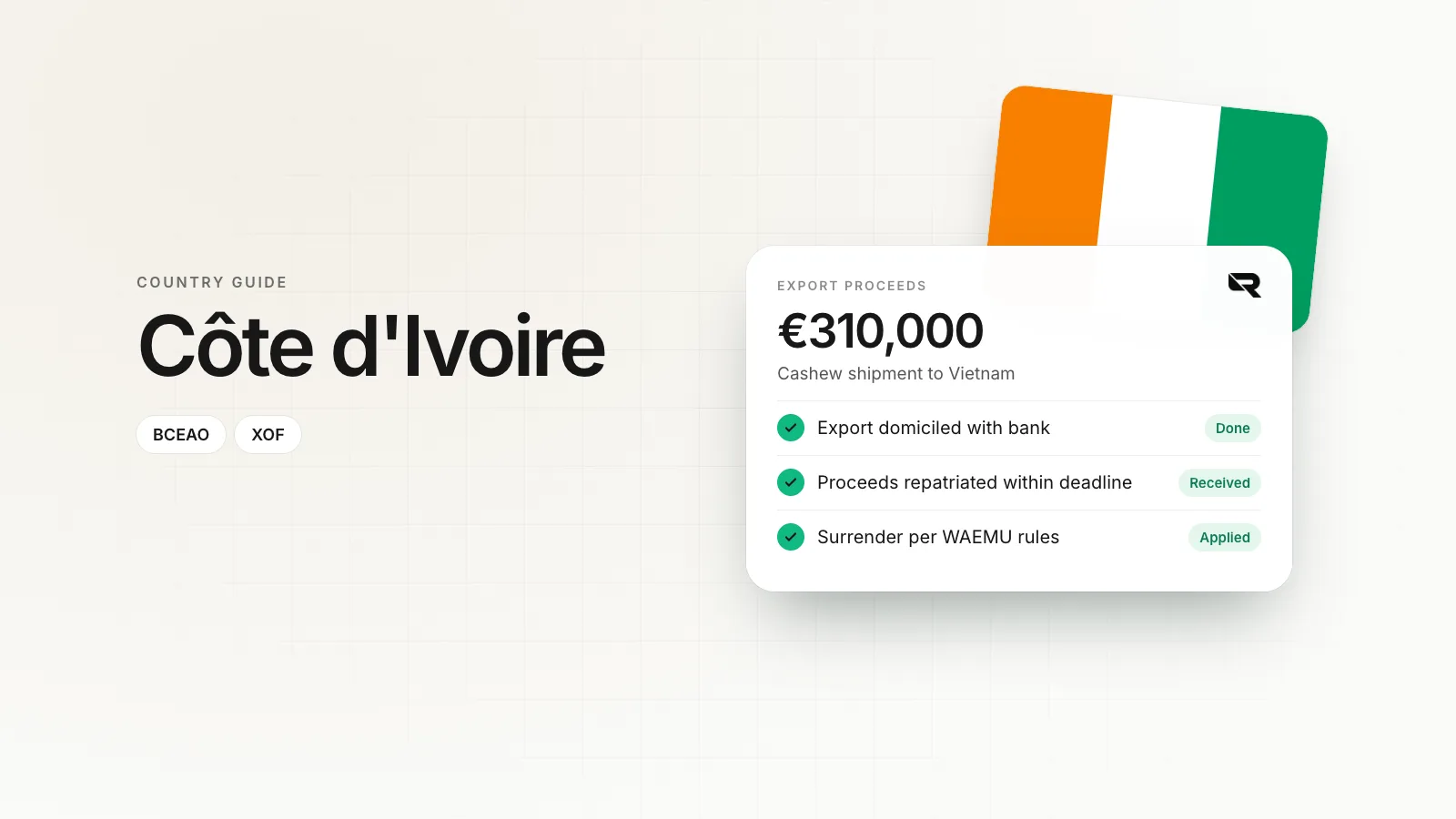
An Abidjan cashew exporter ships to a processor in Vietnam, and its cocoa arm sells to grinders in the Netherlands. Each export is domiciled with its bank, which tracks the repatriation of proceeds against the WAEMU exchange regulation. When the dollars and euros arrive, the bank applies the surrender rules and credits CFA francs.
The WAEMU regulation
Côte d'Ivoire shares the West African CFA franc (XOF) with Senegal, Mali, Burkina Faso, Niger, Togo, Benin and Guinea-Bissau. The WAEMU regulation on external financial relations, applied by the BCEAO and banks, governs foreign exchange for residents.
Domiciliation and repatriation
Exports above thresholds are domiciled with a bank. Exporters must repatriate proceeds within the deadline set by the regulation, counted from the due date of payment. Banks report overdue proceeds.
Surrender
Repatriated foreign currency is generally surrendered through banks for CFA francs, with exceptions that allow retention for specific needs such as imports. Ask your bank how the rules apply to your proceeds.
Accounts abroad
Residents generally need authorisation from the Ministry of Finance, after BCEAO opinion, to hold accounts outside the WAEMU.
The franc
The XOF is pegged to the euro at 655.957, so euro proceeds carry no exchange rate risk. Dollar proceeds do.
Where Rivet fits
Rivet opens business accounts for registered companies after verification. Ivorian companies must repatriate proceeds under WAEMU rules and generally need authorisation for accounts abroad, so check with your bank first. Where available, partners abroad who bank with Rivet can pay Ivorian bank accounts through Rivet's payouts. Rivet is not a bank; regulated partner institutions hold the funds.
Questions people ask
Which exchange regulation applies in Côte d'Ivoire?
The WAEMU regulation on external financial relations, applied by the BCEAO across the eight WAEMU states.
How long do exporters have to repatriate proceeds?
The regulation sets a deadline from the due date of payment. Check the current BCEAO instructions with your bank.
Do exporters have to convert foreign currency?
Repatriated foreign currency is generally surrendered through banks for CFA francs, with exceptions such as retention for specific needs. Ask your bank.
Can Ivorian companies hold accounts abroad?
Generally only with authorisation from the Ministry of Finance after BCEAO opinion.
Sources
William covers what happens once a company starts moving money: getting the business verified, paying contractors and suppliers abroad, and keeping card spend under control. William writes for the founder or finance lead who has to make it work this week, and links every rule cited to the text it comes from.
More from William Sunjo M. →This article is general information, not legal, tax or financial advice. Rules and fees change; check the sources above and the provider’s current terms before you act on them.
- côte d'ivoire
- bceao
- waemu
- exporters
- repatriation
- xof