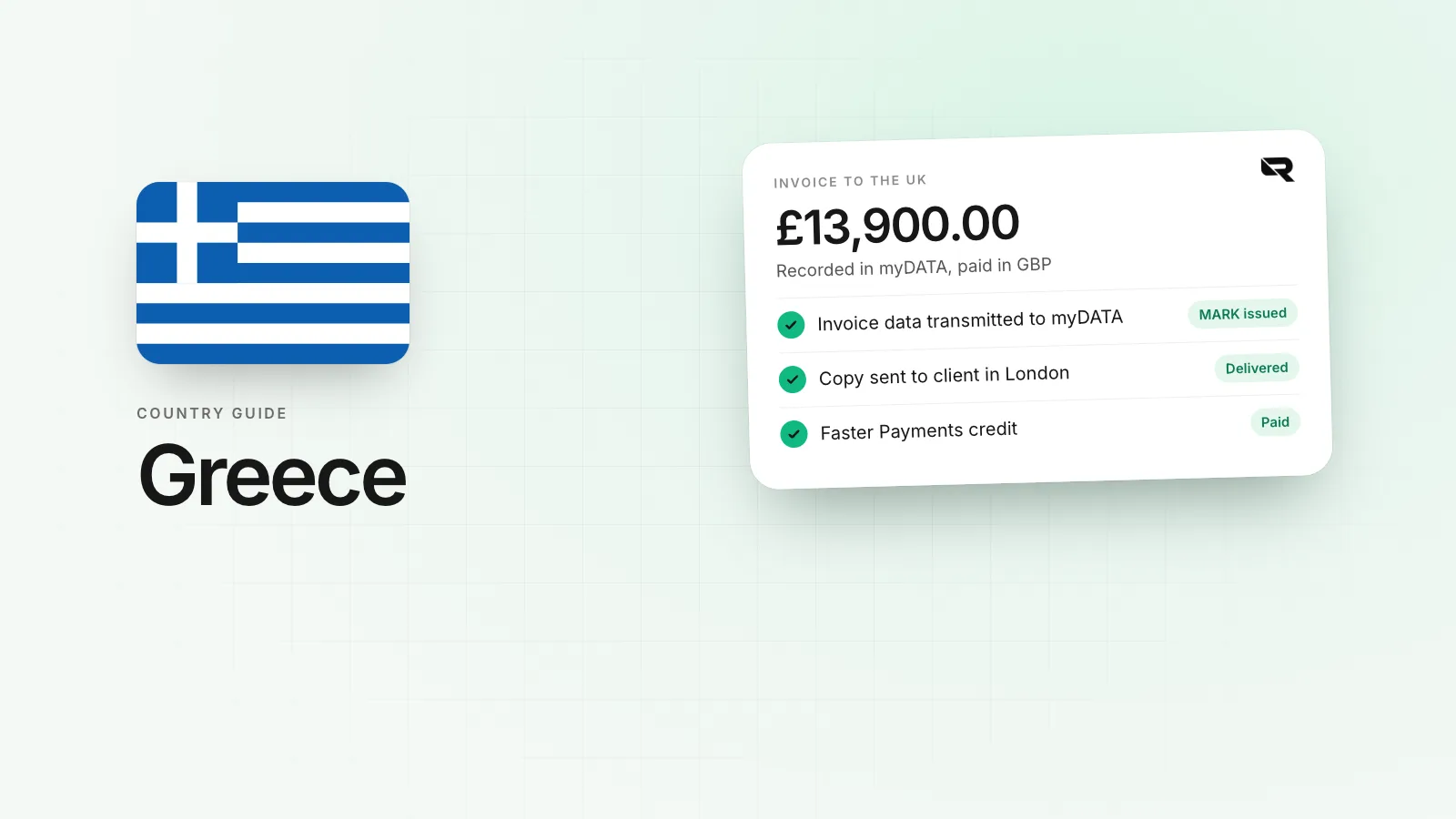
Greek hotels and tourism businesses: collecting from foreign tour operators and booking platforms
A Greek island hotel earns most of its year in five months, from guests booked through British and German tour operators and global booking platforms. Payments arrive in several currencies on several schedules, and sterling usually loses a slice on the way.
- Published
- Reading time
- 2 min read
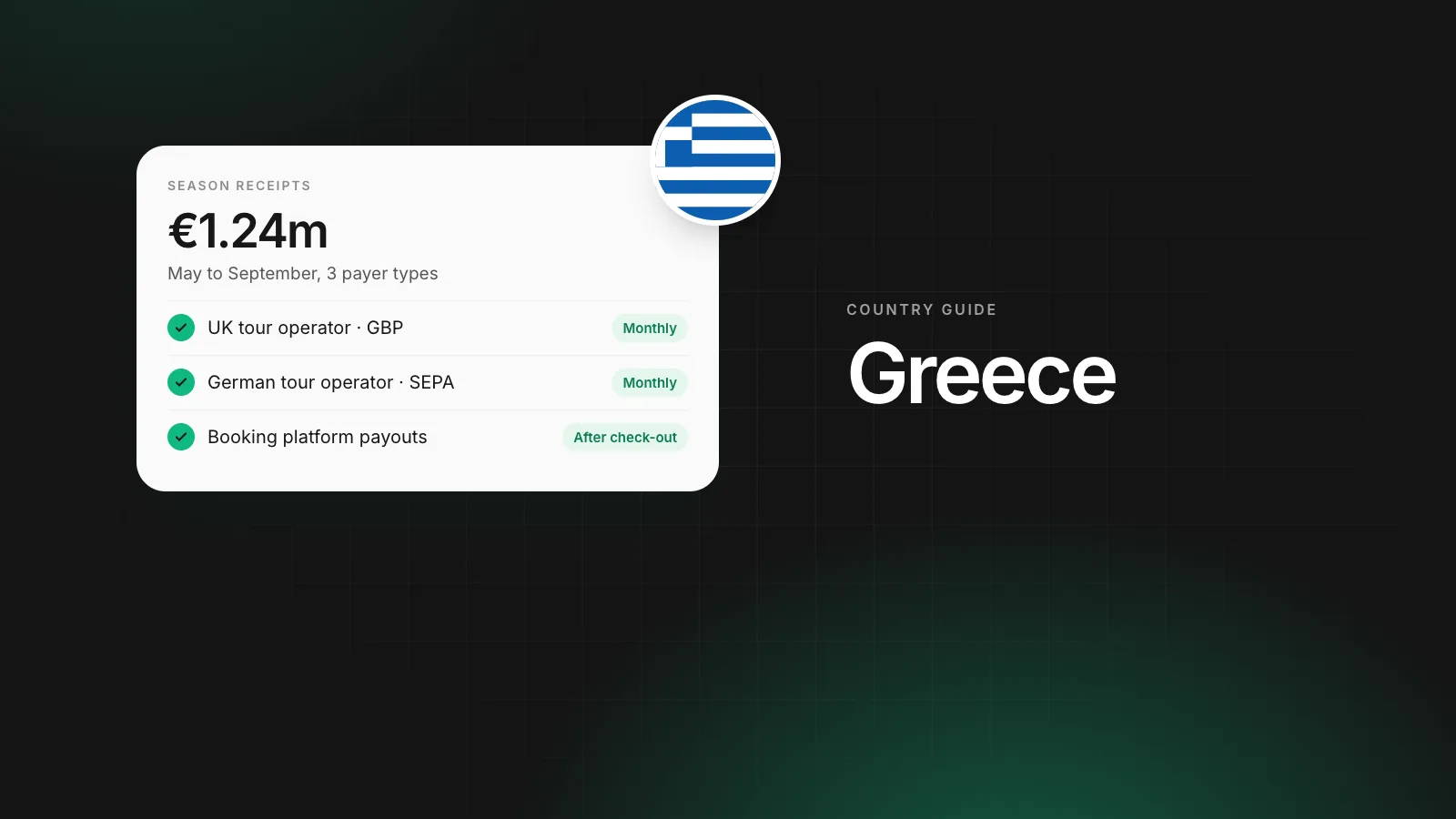
A 90-room hotel on Rhodes sells half its rooms through a British tour operator, a third through a German one and the rest through booking platforms and direct bookings. From May to October money arrives from all three, in pounds and euros, on different schedules. From November to April almost nothing arrives, and the bank loan, insurance and renovation bills keep coming.
Who pays, and how
Tour operators pay under contract. A typical allotment agreement pays monthly in arrears, sometimes with a pre-season advance. UK operators often contract in pounds, German ones in euros.
Booking platforms work in one of two ways. With pay-at-hotel, the guest pays the hotel at check-in or check-out. With platform-collected payments, the platform charges the guest and pays the hotel after the stay, minus commission, often by bank transfer or virtual card.
Direct bookings come through the hotel's own booking engine and card terminal.
The sterling problem
A British operator paying £180,000 into a Greek euro account sends an international transfer. The Greek bank converts it on arrival at its own rate. On a season's worth of payments, the margin adds up to a meaningful sum, and the hotel has no say over the day it converts.
A sterling balance changes that. The payment arrives as pounds. The hotel converts when it needs euros, at a rate it sees before confirming, or pays UK costs in pounds directly: a UK sales agent, marketing or a travel fair stand.
Reconciling three payer types
Monthly operator statements, platform payout reports and card settlements rarely match the hotel's own booking records line by line. A clear routine helps:
- Match each operator payment to its statement, by month and booking reference.
- Match platform payouts to the bookings they cover, net of commission.
- Chase differences while the season is still running, not in January.
Plan the off-season in July
The cash for winter comes from summer. A simple rule many seasonal businesses use: move a fixed share of each month's receipts to a reserve as soon as they arrive, sized to cover November to April fixed costs. Holding the reserve partly in pounds, if you have pound costs, adds flexibility.
Paying into Greece: the local rail
| What | Detail |
|---|---|
| Local rail | SEPA Instant Credit Transfer (IRIS for mobile transfers) |
| Run by | European Payments Council scheme, run by each bank |
| Settlement | Under ten seconds, 24/7 |
| Published fee | By the EU Instant Payments Regulation, no more than the bank charges for a standard SEPA transfer |
Source: European Payments Council: SEPA Instant Credit Transfer. Checked when this guide was last updated; the scheme's own page has the current figures.
Where Rivet fits
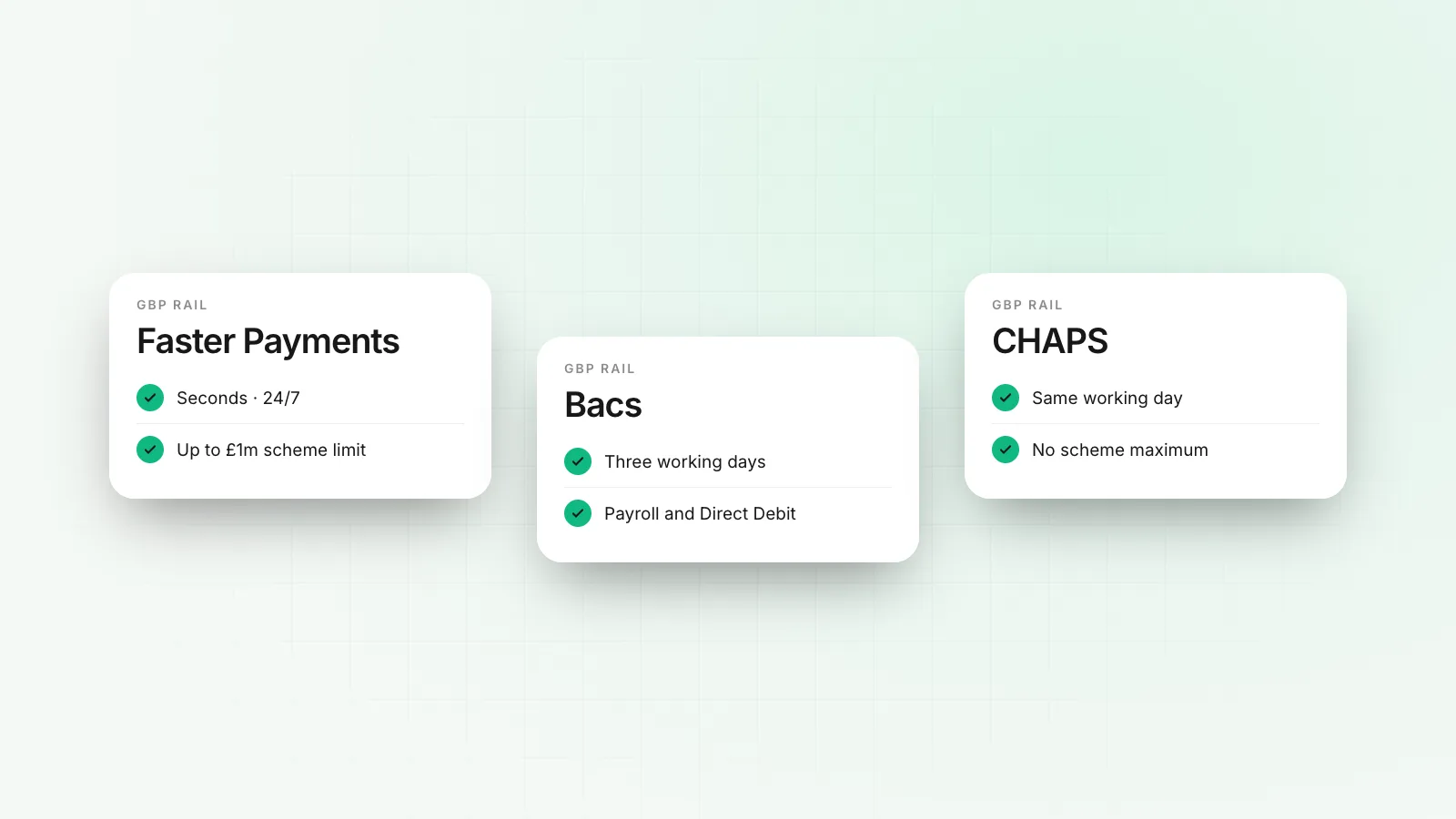
A Rivet business account on the Growth plan gives a Greek company sterling details, so UK tour operators pay by Faster Payments, and euro details with an IBAN, both in its own name, plus US dollar details on every plan for American partners. Balances can be held, converted at a rate shown before you confirm, or used to pay suppliers in 120+ countries. Rivet is not a bank; regulated partner institutions hold the funds.
Questions people ask
How do UK tour operators pay Greek hotels?
Under the allotment or contract, usually by bank transfer monthly in arrears, often in pounds. Paid to a euro account, the transfer is converted by the bank on arrival.
When do booking platforms pay hotels?
It depends on the model. With pay-at-hotel, the guest pays you directly. With platform-collected payments, the platform pays out after the guest's stay, net of its commission.
Should a Greek hotel keep pounds?
If it has costs in pounds, such as UK marketing or agents, yes. Otherwise, a sterling balance still lets you convert in larger amounts at a rate you see first.
How should a hotel plan for the off-season?
Set aside a share of each summer month's receipts for winter fixed costs: loans, insurance, maintenance and pre-season staff.
Sources
Rashidatou writes Rivet's guides to how money moves between countries: the payment rails, what each one costs, and the account details a company needs to get paid in another currency. Every figure in Rashidatou's articles is traced to the scheme rulebook, the regulator or the provider's published price list, and those sources are listed at the end.
More from Rashidatou K. →This article is general information, not legal, tax or financial advice. Rules and fees change; check the sources above and the provider’s current terms before you act on them.
- greece
- hotels
- tourism
- tour operators
- gbp
- seasonal cash flow