Ecuador's ISD tax: what companies pay on money leaving the country, and when exports trigger it
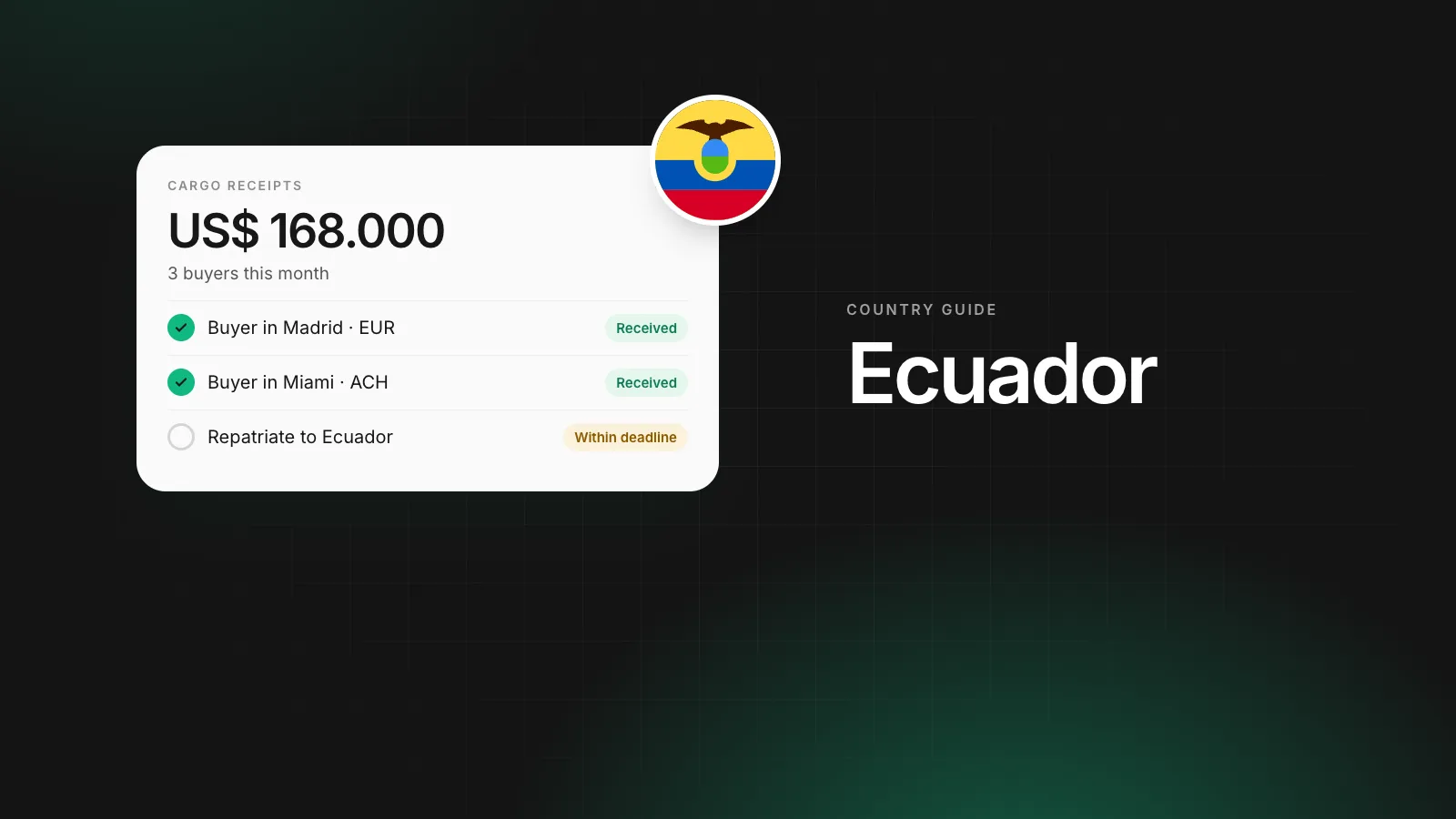
Ecuador uses the US dollar, so there is no exchange rate to manage. There is a tax on money leaving the country instead: the ISD. It applies to many payments abroad, and Ecuadorian law presumes it on export proceeds that are not brought home.
- Published
- Reading time
- 2 min read
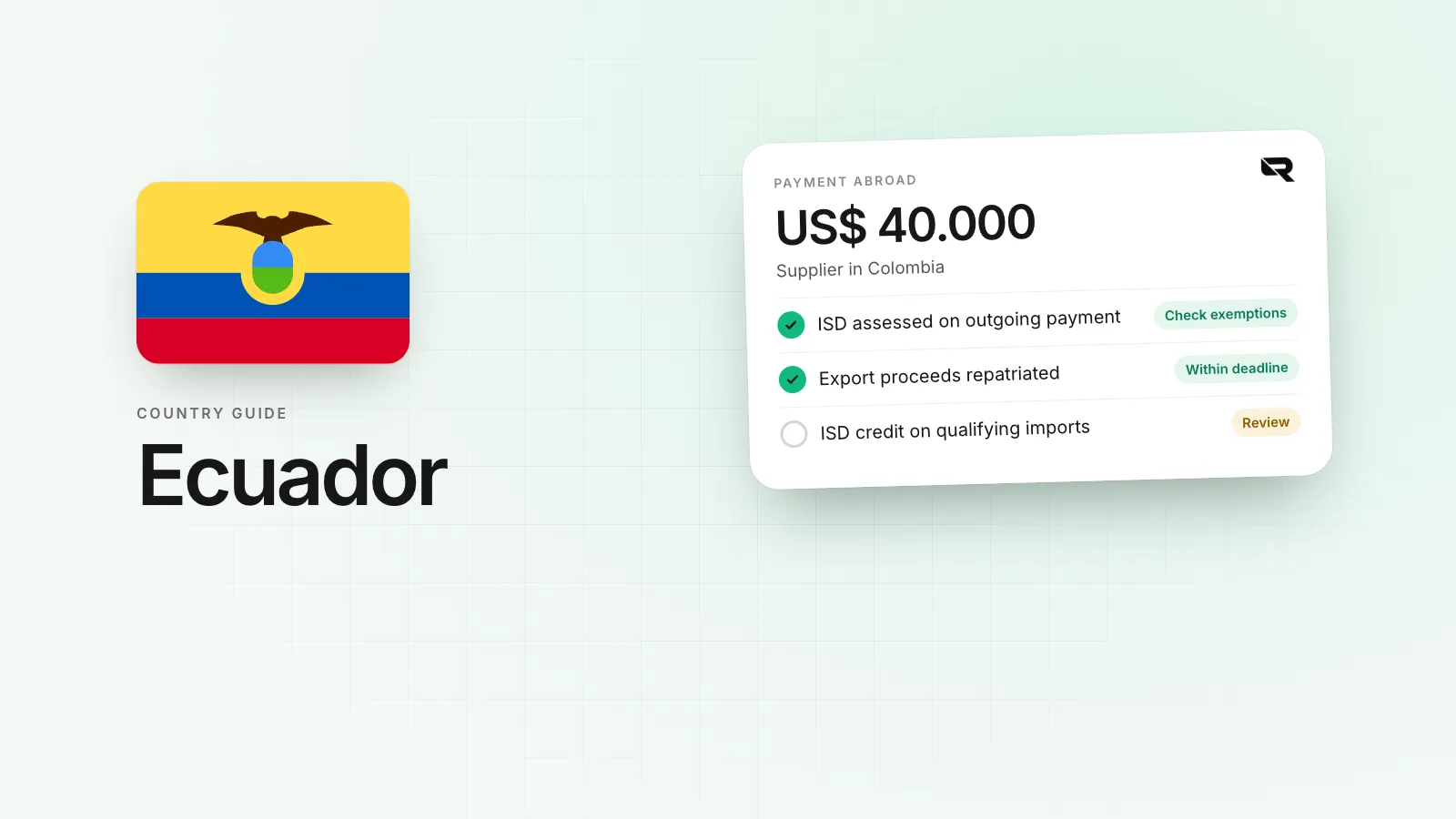
A Guayaquil shrimp exporter sells to buyers in Spain and the US and buys feed ingredients from Colombia and Peru. It has no exchange rate to worry about: Ecuador uses the dollar. It does have the ISD, a tax on money leaving the country, which applies to its supplier payments and, under a presumption in the law, to export revenue it leaves abroad too long.
What the ISD is
The Impuesto a la Salida de Divisas taxes transfers, payments and withdrawals of money abroad. Banks withhold it on outgoing transfers. It has been a feature of Ecuador's tax system since 2008, with rates changed several times by law and decree. Check the current rate with the SRI before planning large payments.
Payments abroad
Supplier payments, service fees, loan repayments and dividends to foreign shareholders can all be subject to ISD, unless an exemption applies. Exemptions and credit mechanisms have covered, among others, certain imports of raw materials, inputs and capital goods, and some payments under specific regimes. They change, so check each type of payment.
The export presumption
This is the part exporters most often miss. Ecuadorian law presumes that export proceeds which do not enter Ecuador within the legal period have left the country. That presumption can make them subject to ISD, with exceptions such as amounts used to pay certain foreign costs. An exporter that keeps sales revenue in an account abroad can face the tax as if it had sent the money out.
Ask your accountant how the presumption applies to your exports before holding proceeds abroad.
No exchange rate, still costs
Dollarisation removes exchange risk with the US and makes pricing simple. It does not remove the costs of moving money: international transfer fees, intermediary deductions and the ISD on the way out.
Paying into Ecuador: the local rail
| What | Detail |
|---|---|
| Local rail | Sistema de Pagos Interbancarios (SPI) |
| Run by | Banco Central del Ecuador |
| Settlement | Within the business day, in US dollars |
Source: Banco Central del Ecuador: sistema de pagos. Checked when this guide was last updated; the scheme's own page has the current figures.
Where Rivet fits
Rivet does not calculate or withhold ISD. A Rivet business account accepts registered companies after verification, including Ecuadorian companies, and pays out to 120+ countries, including to an Ecuadorian bank to repatriate export proceeds within the deadline. Ecuadorian companies should confirm with their accountant how ISD applies before holding funds abroad. Rivet is not a bank; regulated partner institutions hold the funds.
Questions people ask
What is the ISD rate?
The rate has been changed several times by law and decree in recent years. Check the current rate and any exemptions with the SRI or your accountant before planning payments.
Do exporters pay ISD on money kept abroad?
Ecuadorian law presumes that export proceeds not entering Ecuador within the legal period have left the country, which can make them subject to ISD, with some exceptions.
Are imports exempt from ISD?
Some imports, such as certain raw materials, inputs and capital goods, have had exemptions or credit mechanisms. The lists and conditions change, so check them for each import.
Does dollarisation remove currency costs?
It removes exchange risk with the US. Transfers abroad still carry bank fees and ISD.
Sources
William covers what happens once a company starts moving money: getting the business verified, paying contractors and suppliers abroad, and keeping card spend under control. William writes for the founder or finance lead who has to make it work this week, and links every rule cited to the text it comes from.
More from William Sunjo M. →This article is general information, not legal, tax or financial advice. Rules and fees change; check the sources above and the provider’s current terms before you act on them.
- ecuador
- isd
- impuesto a la salida de divisas
- exports
- sri
- usd