Dominican Republic e-CF: the electronic invoicing rollout under Law 32-23
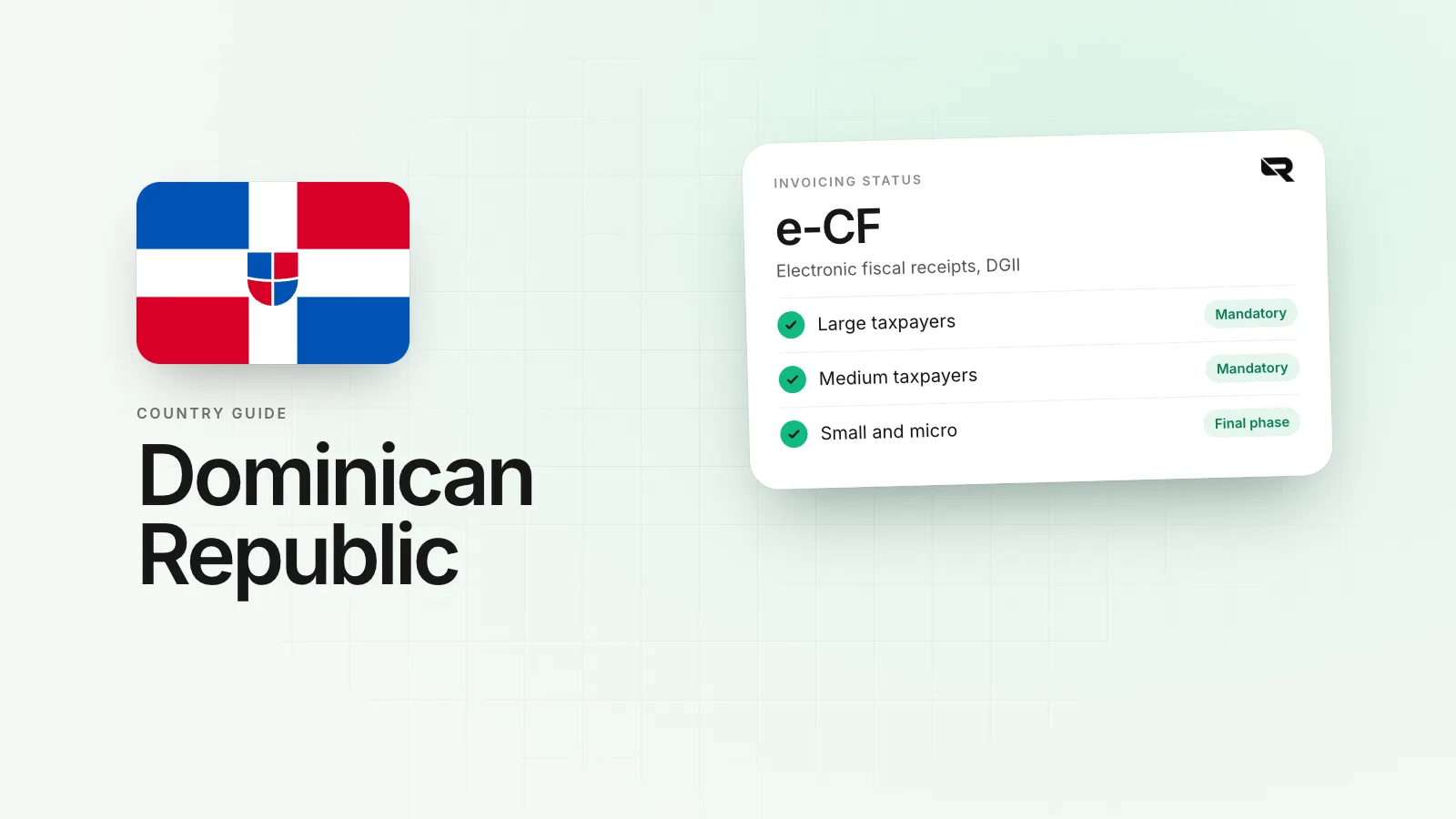
Law 32-23 makes electronic fiscal receipts (e-CF) mandatory for Dominican taxpayers in phases, from large taxpayers first to small and micro businesses last, by 2026. Every invoice, export invoices included, moves from printed NCF sequences to e-CF validated with the DGII.
- Published
- Reading time
- 2 min read
A Santo Domingo cigar exporter has printed invoices with NCF sequences authorised by the DGII for years. Under Law 32-23, it now issues electronic fiscal receipts instead: XML documents, digitally signed and validated with the DGII. Its US and German buyers receive a PDF with a QR code. The change sits in the back office; the buyers barely notice.
Law 32-23
The Dominican Republic's electronic invoicing law, Law 32-23, makes electronic fiscal receipts (comprobantes fiscales electrónicos, e-CF) mandatory, replacing printed NCF sequences. The rollout runs in phases set by the DGII:
- large taxpayers first,
- medium taxpayers next,
- small and micro businesses in the final phase, in 2026.
Check your company's classification and deadline with the DGII.
How e-CF works
An e-CF is an XML document in the DGII's format, signed with a digital certificate and sent for validation. Each validated e-CF carries a security code and can be printed or sent as a PDF with a QR code. Companies issue them through their own certified system, through an authorised provider, or, for smaller taxpayers, through the DGII's free invoicing tool.
Export invoices
Exporters issue the e-CF type for exports to foreign buyers. It identifies the buyer and can be in dollars. Exports are generally zero-rated for ITBIS, with the customs export records supporting the treatment.
What to do
- Confirm your phase and deadline.
- Choose how you will issue e-CFs: own system, provider or DGII tool.
- Obtain the digital certificate.
- Test the export e-CF type before your next export invoice.
The payment side
e-CF changes invoices, not payments. US and European buyers still pay by international transfer to Dominican accounts, which can be slow. US account details let US buyers pay by ACH; euro details let European buyers pay by SEPA.
Where Rivet fits
Rivet does not issue e-CFs. A Rivet business account accepts registered companies after verification, including Dominican companies, with US account details on every plan and euro and sterling details from the Growth plan, and payouts in 120+ countries. Rivet is not a bank; regulated partner institutions hold the funds.
Questions people ask
What is an e-CF?
A comprobante fiscal electrónico: an electronic fiscal receipt issued in a set XML format, signed digitally and validated with the DGII.
When must my company use e-CF?
It depends on your size classification under Law 32-23 and DGII rules. Large taxpayers came first, medium next, and small and micro businesses in the final phase.
Is there an e-CF type for exports?
Yes. The DGII defines e-CF types, including one for exports.
Can I issue e-CFs myself?
Through your own certified system, an authorised provider, or the DGII's free invoicing option for smaller taxpayers.
Sources
William covers what happens once a company starts moving money: getting the business verified, paying contractors and suppliers abroad, and keeping card spend under control. William writes for the founder or finance lead who has to make it work this week, and links every rule cited to the text it comes from.
More from William Sunjo M. →This article is general information, not legal, tax or financial advice. Rules and fees change; check the sources above and the provider’s current terms before you act on them.
- dominican republic
- e-cf
- law 32-23
- dgii
- invoicing
- exports