Bulgaria joined the euro in 2026: what changed for business accounts, invoices and contracts
On 1 January 2026 Bulgaria became the euro area's 21st member. Lev accounts were converted at the fixed rate of 1.95583, contracts in leva are read in euros, and Bulgarian companies now invoice EU clients in the same currency as their costs.
- Published
- Reading time
- 2 min read
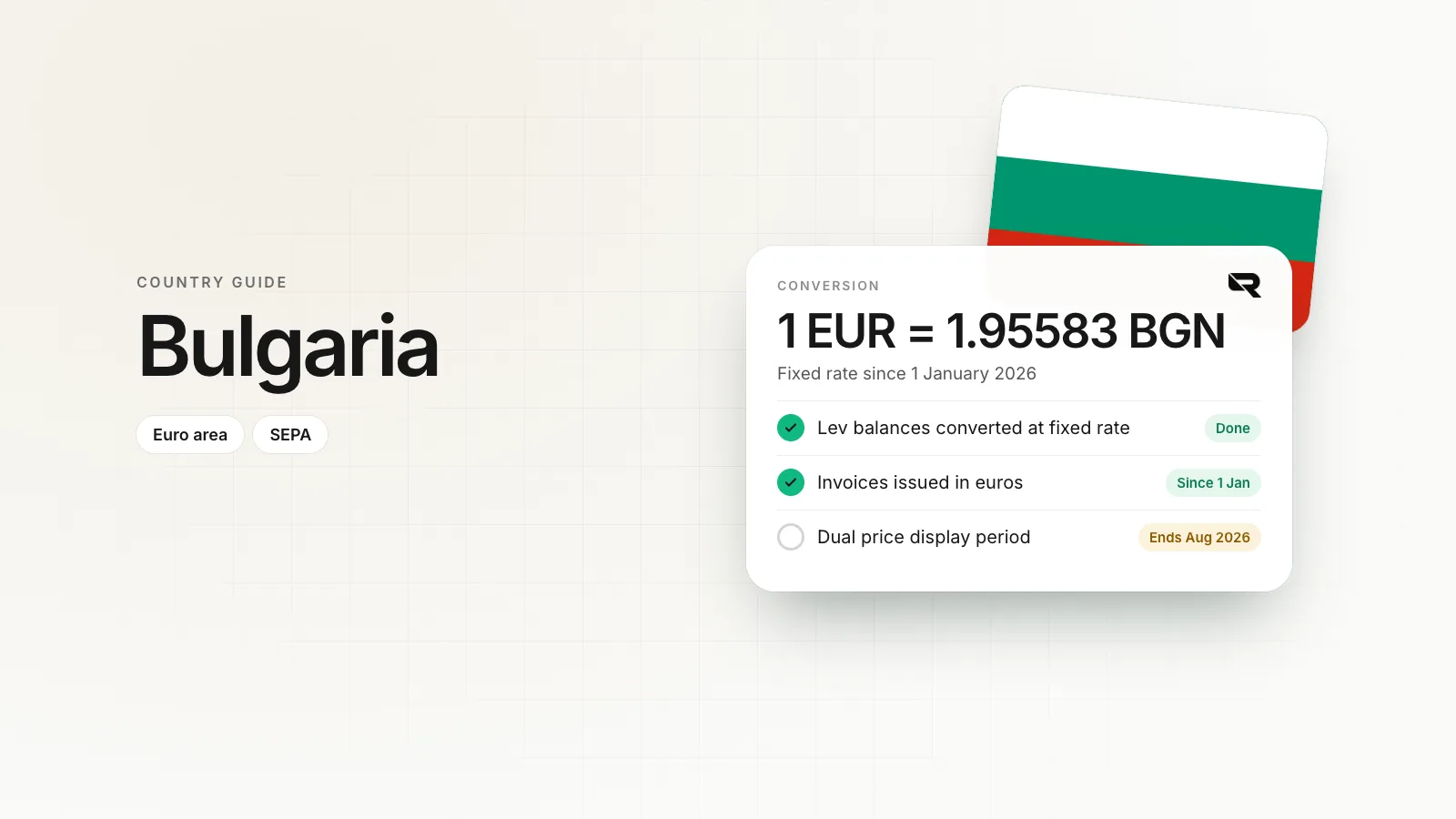
On 31 December 2025 a Plovdiv furniture exporter had BGN 400,000 in its account. On 2 January 2026 it had €204,516.75. Nothing was spent; Bulgaria had joined the euro area, and every lev balance was converted at the fixed rate of 1.95583.
The rate had been fixed in practice for years under Bulgaria's currency board. What changed is that the conversion step between leva and euros is gone for good.
What happened on 1 January 2026
- Bank accounts in leva became euro accounts at the fixed rate, automatically and free of charge. Account numbers and IBANs stayed the same.
- Leva and euro notes and coins circulated together until the end of January 2026. After that, leva can still be exchanged at banks and the Bulgarian National Bank.
- Prices are shown in both currencies during a transition period running into August 2026.
Contracts and invoices
Contracts that refer to leva stay valid. The euro adoption law reads lev amounts as euros at the fixed rate, with rounding to the cent. Many companies used the changeover to amend contracts anyway, so that payment terms and prices are written in euros.
Invoices issued from 1 January 2026 are in euros. Accounting systems switched their base currency, and opening balances were converted at the fixed rate.
What gets easier
For a Bulgarian company selling to EU clients, the change is large. A German or Italian buyer pays euros by SEPA, and those euros no longer need converting into leva. Euro-priced costs, such as EU raw materials, machinery and software, are paid in the company's own currency.
What does not change
Clients outside the euro area still pay in their own currencies. A US client still prefers to pay in dollars, a UK client in pounds. A Bulgarian company billing American clients still faces international wires, possible intermediary deductions and a bank conversion on arrival, now into euros instead of leva.
Paying into Bulgaria: the local rail
| What | Detail |
|---|---|
| Local rail | SEPA Instant Credit Transfer (Bulgaria adopted the euro on 1 January 2026) |
| Run by | European Payments Council scheme, run by each bank |
| Settlement | Under ten seconds, 24/7 |
| Published fee | By the EU Instant Payments Regulation, no more than the bank charges for a standard SEPA transfer |
Source: European Payments Council: SEPA Instant Credit Transfer. Checked when this guide was last updated; the scheme's own page has the current figures.
Where Rivet fits
A Rivet business account gives a Bulgarian company US account details in its own name on every plan, so American clients pay by ACH, and from the Growth plan euro details with an IBAN and sterling details. Payments are matched to invoices and dollar or pound balances can be held or converted to euros at a rate shown before you confirm. Rivet is not a bank; regulated partner institutions hold the funds.
Questions people ask
What happened to company bank accounts in leva?
Banks converted them to euros automatically on 1 January 2026 at the fixed rate, without charge, and account numbers stayed the same.
Do old contracts in leva need to be rewritten?
No. The law provides that amounts in leva in existing contracts are read as euros at the fixed rate. Some companies amend them anyway for clarity.
How long did leva stay in circulation?
Leva and euros circulated together for one month, until the end of January 2026. Dual display of prices continues for a longer transition period.
Does the euro change how US clients pay?
No. American clients still prefer to pay dollars domestically by ACH. Euro membership helps with EU clients and suppliers.
Sources
William covers what happens once a company starts moving money: getting the business verified, paying contractors and suppliers abroad, and keeping card spend under control. William writes for the founder or finance lead who has to make it work this week, and links every rule cited to the text it comes from.
More from William Sunjo M. →This article is general information, not legal, tax or financial advice. Rules and fees change; check the sources above and the provider’s current terms before you act on them.
- bulgaria
- euro adoption
- bgn
- eur
- invoices
- contracts