Austrian companies selling to Switzerland: customs, Swiss VAT and getting paid in francs
Switzerland is next door and one of Austria's largest export markets, but it sits outside the EU's customs union and VAT system. Goods need customs papers, some sellers need a Swiss VAT number, and Swiss buyers often prefer to pay in francs.
- Published
- Reading time
- 2 min read
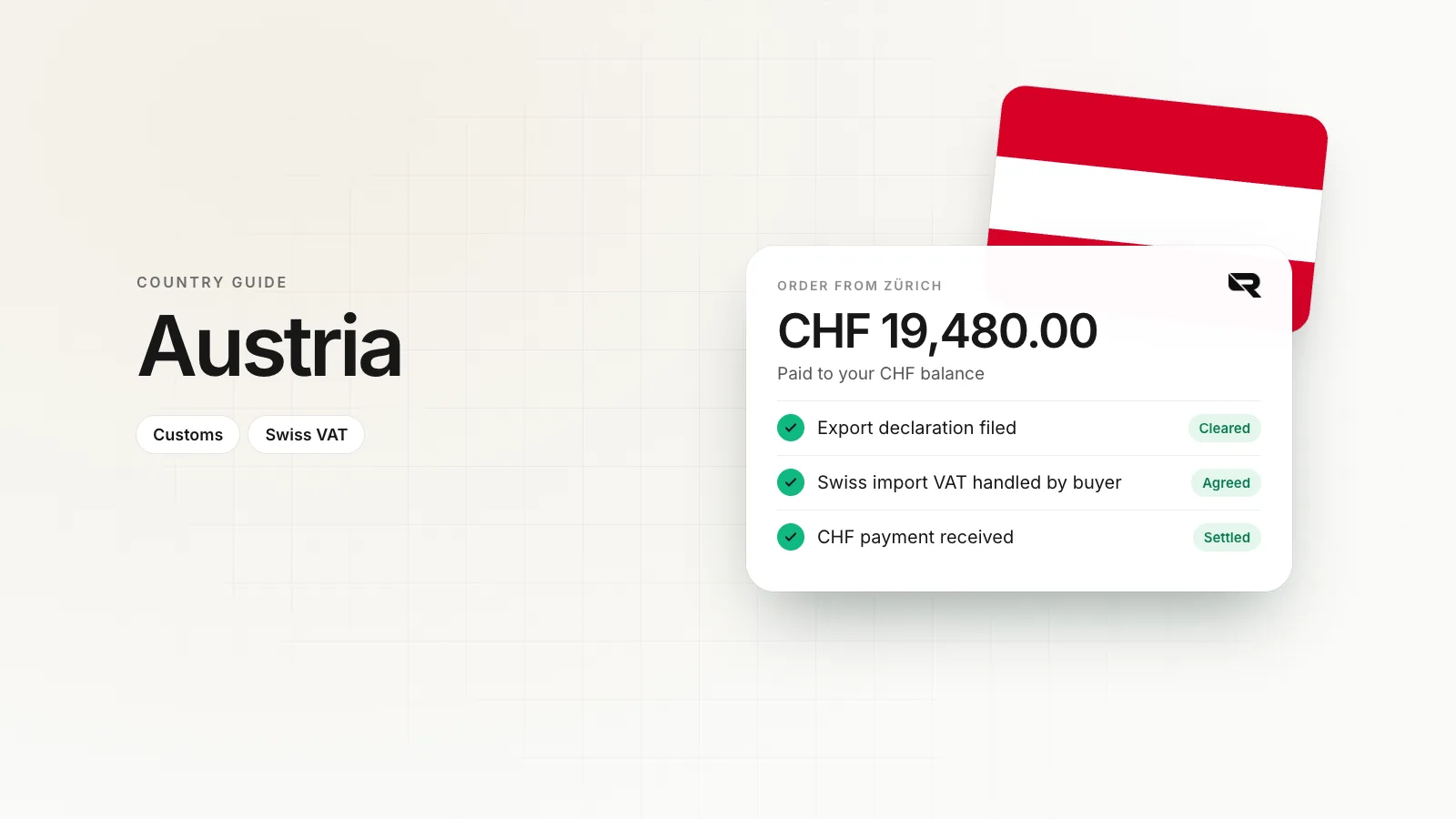
A Vorarlberg metalworking company delivers to customers in St. Gallen, a 40-minute drive. Every delivery crosses a customs border. Switzerland is outside the EU's customs union and VAT area, so the trip that looks like a domestic one comes with export papers, Swiss import VAT, and a buyer who would rather pay in francs.
Customs on both sides
Each shipment needs an EU export declaration and a Swiss import declaration. Most companies use a freight forwarder or customs agent who files both. Keep the export confirmation: it is your evidence for treating the sale as a zero-rated export in your Austrian VAT return.
Since 1 January 2024, Switzerland has abolished import duties on industrial goods. Metal parts, machinery and most manufactured goods now enter duty-free. Agricultural products still carry duties, sometimes high ones.
Swiss VAT
Swiss import VAT is charged on most goods at the border, normally paid by the importer, which on most B2B terms is your Swiss customer.
Some Austrian sellers have to register for Swiss VAT themselves. The general test is that a foreign company supplying goods or services in Switzerland with worldwide turnover of at least CHF 100,000 becomes liable. In practice this catches companies that deliver and install goods on site, supply goods already in Switzerland, or send many low-value parcels to consumers. Check with the Swiss Federal Tax Administration before your first such contract.
Services to Swiss businesses are usually outside Austrian VAT, and the invoice says so.
Getting paid in francs
Larger Swiss companies may accept euro invoices. Many smaller ones prefer francs, and a franc price can help you win the order.
If francs land in a euro account, the bank converts on arrival at its own rate. A franc balance lets the payment arrive as invoiced. You then pay Swiss costs, such as a forwarding agent, Swiss staff or trade fair fees, in francs, and convert the rest when it suits you.
Paying into Austria: the local rail
| What | Detail |
|---|---|
| Local rail | SEPA Instant Credit Transfer |
| Run by | European Payments Council scheme, run by each bank |
| Settlement | Under ten seconds, 24/7 |
| Published fee | By the EU Instant Payments Regulation, no more than the bank charges for a standard SEPA transfer |
Source: European Payments Council: SEPA Instant Credit Transfer. Checked when this guide was last updated; the scheme's own page has the current figures.
Where Rivet fits
A Rivet business account gives an Austrian company euro details with an IBAN from the Growth plan and US dollar details on every plan. On the Scale plan it holds balances in 30 currencies, including Swiss francs, which can be converted at a rate shown before you confirm or used to pay suppliers in 120+ countries. Rivet is not a bank; regulated partner institutions hold the funds, and local details in francs depend on availability.
Questions people ask
Is there duty on Austrian goods entering Switzerland?
Switzerland abolished import duties on industrial goods from 1 January 2024. Agricultural products can still carry duty. Swiss import VAT applies to most goods.
Does an Austrian company need Swiss VAT registration?
If it supplies goods or services in Switzerland and its worldwide turnover is at least CHF 100,000, it may have to register. Sellers delivering goods that are not taxed at import, and some online sellers, are the main cases. Check with the Swiss Federal Tax Administration.
Do services to Swiss businesses carry Austrian VAT?
For most services to Swiss businesses, no; the place of supply is Switzerland and the Swiss client accounts for any Swiss VAT.
Should I invoice Swiss buyers in francs?
Many Swiss buyers prefer it, especially smaller ones. With a franc balance, you can pay Swiss costs from it and convert the rest when the rate suits you.
Sources
Rashidatou writes Rivet's guides to how money moves between countries: the payment rails, what each one costs, and the account details a company needs to get paid in another currency. Every figure in Rashidatou's articles is traced to the scheme rulebook, the regulator or the provider's published price list, and those sources are listed at the end.
More from Rashidatou K. →This article is general information, not legal, tax or financial advice. Rules and fees change; check the sources above and the provider’s current terms before you act on them.
- austria
- switzerland
- exports
- chf
- swiss vat
- customs